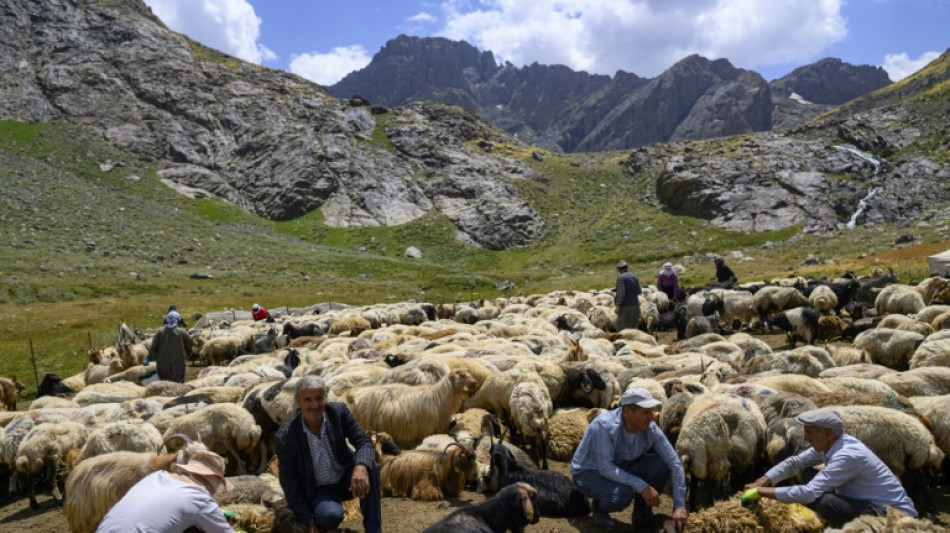
Kurdish farmers return to mountains in peace as PKK tensions calm / Photo: Yasin AKGUL - AFP

 New levy on non-EU parcels kicks in November 1
 James Blunt reportedly sought extra underwear during Celebrity Traitors filming
 Trump says Canada trade deal coming 'soon'

 Police urge home-security checks as darker evenings return

 Kane primed to pip Yamal, Mbappe to Ballon d'Or glory
 UK households advised to prepare for three days without essential services

 Chiefs and 49ers suffer first losses of NFL season, Vikings stay unbeaten
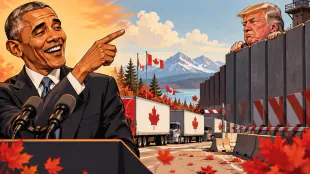
 Obama mocks Trump tariffs on Canada during Michigan campaign stop
 Brewers erase four-run deficit as Rays lose World Series Game 2
 Shadab century and record last-wicket stand carry Pakistan past England

 Baylor dismisses Dave Aranda and appoints Joe Klanderman interim coach

 Stocks sink as traders brace for tech earnings, central bank decisions
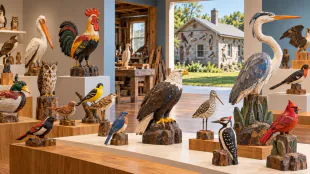 Albert Zahn’s carved birds find a lasting home in Wisconsin museums
 NPS Vatsalya offers three choices when a child turns 18

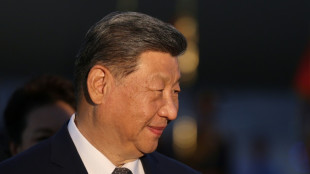 China's Communist Party elite gather for governance talks
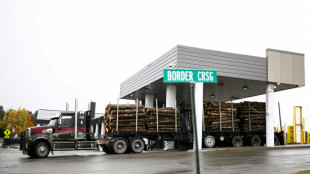 Maine logging, cross-border ties whipsawed by US-Canada tariff war

 From Carnegie to Claude: AI wealth could reshape philanthropy

 India and Russia plan 2027 pilot voyages on Northern Sea Route
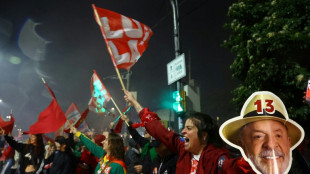 What challenges await Brazil's Lula in his fourth term?
 Brazil's Lula defies odds to clinch poll victory against Flavio Bolsonaro

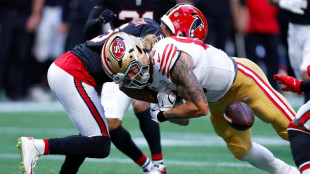 Falcons hand 49ers first defeat of NFL season, Vikings remain unbeaten

 Top Gold IRA Companies in the US Ranked in New Gold IRA Reviews Analysis Report

 Readers debate YES Bank bonds, climate commitments and candidate disclosure

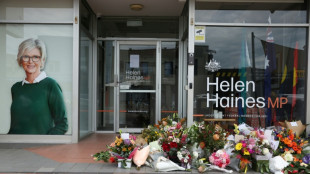 Australian politicians pay tribute to wounded lawmaker
 Modi opens RBI data centre and cybersecurity training institute

Deep in the mountains of Turkey's southeastern Hakkari province, bordering Iran and Iraq, Kurdish livestock owners and farmers have gradually returned with their animals after decades of armed conflict between Kurdish militants and the Turkish army.
"We've been coming here for a long time. Thirty years ago we used to come and go, but then we couldn't come. Now we just started to come again and to bring our animals as we want," said 57-year-old Selahattin Irinc, speaking Kurdish, while gently pressing his hand on a sheep's neck to keep it from moving during shearing.
On July 11 a symbolic weapons destruction ceremony in Iraqi Kurdistan marked a major step in the transition of the Kurdistan Workers' Party (PKK) from armed insurgency to democratic politics -- part of a broader effort to end one of the region's longest-running conflicts.
The PKK, listed as a terror group by Turkey and much of the international community, was formed in 1978 by Ankara University students, with the ultimate goal of achieving the Kurds' liberation. It took up arms in 1984.
The conflict has caused 50,000 deaths among civilians and 2,000 among soldiers, according to Turkey's President Recep Tayyip Erdogan.
Alongside with several other men and women, Irinc practices animal husbandry in the grassy highlands at the foot of the Cilo Mountains and its Resko peak, which stands as the second-highest in the country with an altitude of 4,137 meters (13,572 feet).
A place of scenic beauty, with waterfalls, glacial lakes and trekking routes, Cilo has gradually opened its roads over the past few years to shepherds and tourists alike as the armed conflict with PKK died down on the backdrop of peace negotiations.
But the picturesque mountains had long been the scene of heavy fighting between the Turkish army and PKK fighters who took advantage of the rough terrain to hide and strike. It left the Kurdish farmers often at odds with the army.
"In the past we always had problems with the Turkish soldiers. They accused us of helping PKK fighters by feeding them things like milk and meat from our herd," another Kurdish livestock owner, who asked not to be named, told AFP, rejecting such claims.
"Now it's calmer," he added.
- 'Last generation' -
Although the peace process brought more openness and ease to the region, tensions did not vanish overnight.
Checkpoints remain present around the city of Hakkari, and also to the main access point to the trekking path leading to Cilo glacier, a major tourist attraction.
"Life is quite good and it's very beautiful here. Tourists come and stay in the mountains for one or two days with their tents, food, water and so on," said farmer Mahir Irinc.
But the mountains are a hard, demanding environment for those making a living in their imposing shadow, and the 37-year-old thinks his generation might be the last to do animal husbandry far away from the city.
"I don't think a new generation will come after us. We will be happy if it does, but the young people nowadays don't want to raise animals, they just do whatever job is easier," he lamented.
An open truck carrying more than a dozen Kurdish women made its way to another farm in the heart of the mountains, where sheep waited to be fed and milked.
The livestock graze at the foot of the mountains for three to four months, while the weather is warm, before being brought back to the village.
"We all work here. Mothers, sisters, our whole family. Normally I'm preparing for university, but today I was forced to come because my mother is sick," explained 22-year-old Hicran Denis.
"I told my mother: don't do this anymore, because it's so tiring. But when you live in a village, livestock is the only work. There's nothing else," she said.
E.Flores--AT