'Like a dream': Druze reunited across Golan Heights buffer zone / Photo: Jalaa MAREY - AFP

 Carragher says Fernandes benching was intended as public punishment

 Canada-EU summit seeks deepened alliance as US ties fray

 Senegal to host Youth Games, Africa's first ever Olympics

 ITV drama Adultery examines temptation, class and family consequences

 New levy on non-EU parcels kicks in November 1

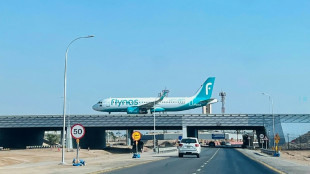 Saudi coalition says struck Houthi missile facilities after Riyadh airport attack

 Manchester United stand-in captain calls for change after Bournemouth loss

 Body recovered after ferry passenger reported overboard

 Dance in the Dark brings an immersive family adventure to Birmingham MAC

 China's Communist Party elite hold key talks on governance

 Redditch Santa fun run to return to Arrow Valley Park

 Obama links Trump trade policy to higher costs in Detroit speech

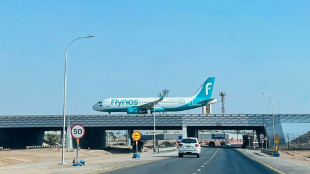 Saudi coalition says intercepted missile after Houthis hit Riyadh airport

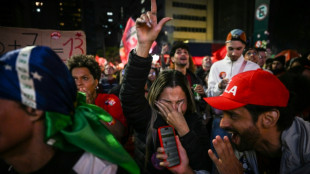 'I feel so happy!': Ecstasy, relief among Brazil's Lula supporters

 Brazil's Lula clinches poll victory, Bolsonaro seeks to annul election

 Doncic dominates for Lakers as James' Sixers fall to Pistons

 UP schools close for Valmiki Jayanti as coastal states monitor cyclone risk

 France's debt woes in focus as ECB meets

 US midterm political advertising crosses $10 billion

 Data center next door divides old Massachusetts mill town

 AI ad blitz distorts US midterms

 Israel's Eisenkot vows unity as Netanyahu paints him as soft on Iran

 First international flight takes off from new Sydney airport

 Jio’s next phase turns attention from subscriber growth to returns

 Eric Ries sets out how mission-driven companies can endure

Dozens of Druze crowded the Israeli-controlled side of the armistice line in the occupied Golan Heights on Thursday, hoping to catch a glimpse of relatives on the Syrian-held side who might try to cross the barbed-wire frontier.
Young men drove around the area near the de facto border, waving the Druze flag with its five colourful stripes representing the pillars of their Druze faith, an esoteric offshoot of Shiite Islam.
The area has been occupied by Israel since the 1967 Arab-Israeli War, separating the Golan Druze from their relatives across the demilitarised buffer zone.
In the crowds, everyone asked for news of their families across the frontier, where days of violence in Syria's Druze-majority Sweida province have left hundreds dead since Sunday, according to a monitor.
"Because of the dramatic situation in Syria, the murders, massacres and the violence, many people headed towards the border," said Qamar Abu Saleh, a 36-year-old educator, who lives in Majdal Shams.
"They opened the fence and entered, and people from Syria also started crossing here.
"It was like a dream, and we still can't believe it happened", she said enthusiastically, adding she came that day in the hope that the border would permanently reopen.
"It was completely crazy," Amali Shufek, another resident, told AFP.
Shufek, in her 50s, hoped to meet her uncle's family living on the Syrian-controlled side just a few kilometres away.
She left her parents on chairs facing the fence, again guarded by the Israeli army, hoping it would open again so that she might meet her cousins.
"I've only seen photos of them," she added.
- Talking all night -
Nearby, a group of men hugged one another while a small Druze child from across the frontier waved an Israeli flag.
The boy's father, who did not disclose his name for security reasons, said they had come from the village of Hader, and that he had just spent a few hours with his cousins in Majdal Shams.
"We didn't sleep all night, we only talked," he said.
"I have goose bumps just seeing him here", said his cousin who lives on the Israeli-controlled side, adding that he wished for peace in the area so that these visits could become commonplace.
In the afternoon, several Druze under Israeli army supervision were escorted through a hole in the ceasefire line fence back to Syrian-controlled territory.
Israel, which is home to over 150,000 Druze, including those in the occupied Golan Heights, has presented itself as a defender of the minority group and bombed Syrian forces during the clashes in Sweida.
Those living in Israel hold Israeli citizenship, but most of the roughly 23,000 from the occupied Golan do not and still identify as Syrians.
Some analysts say that Israel is using the Druze as a pretext to pursue its own military goal of keeping Syrian government forces as far from their shared frontier as possible.
Following former Syrian president Bashar al-Assad's overthrow in December, the Israeli military took control of the UN-monitored demilitarised zone in the Golan Heights and conducted hundreds of strikes on military targets in Syria.
Israel and Syria signed an armistice in 1974 after the Arab-Israeli war of the previous year, but never a formal peace treaty.
Though Israel has made contact with Syria's new Islamist-led authorities, it has treaded with caution and is now showing clear antagonism towards them.
- 'Same family' -
A few local elders and Druze clerics wearing traditional clothing — a white veil covering the mouth for women and a red tarboush cap wrapped in a white cloth for men — had also come to watch the horizon.
While the Druze are spread across Syria, Lebanon and Israel, they "all belong to the same family", Salim Safadi, a resident of a nearby village, told AFP.
"I think we have some sort of agreement with Israel; when they have a problem we help them, and when we have a problem they help us," the 60-year-old lawyer said, pointing to the fact that many Druze serve in Israel's armed forces and police.
He said he felt grateful for Israel's intervention in Syria's clashes, and that it was its involvement that brought the ceasefire announced Wednesday.
"We condemn what is happening in Syria, it's a barbaric act", said Intisar Mahmud, a woman in her sixties shocked by the recent days' events.
"Even animals don't do this -- they killed innocents", she added.
"We ask the entire world to stand by our relatives in Syria", she said, adding that the current borders did not always exist and calling on people of the region to be like "the fingers of one hand".
M.White--AT