Five things to know about 60 years of US sanctions on Cuba

 Hungary cuts anti-LGBTQ legislation from Orban-era law
 'Our future is being robbed': Greta Thunberg joins France student protests
 Late superstar Anita Mui's ashes missing in Hong Kong
 'No choice': IMF says developing countries must cut spending despite war shock
 Boasting South Korea footballers spark rethink of military service exemptions
 Five dead as Hurricane Simon, Rachel pummel Mexico's Pacific coast
 Seoul, Tokyo stocks plunge as Asia suffers fresh tech rout
 Damaged and drained, Indonesia's peatlands go up in smoke
 Dominant Australia wary of Pacific threat at Rugby League World Cup
 Pope to be admitted to hospital for lung operation
 Samoa's McFarland welcomes 'massive' arrival of ex-All Blacks for World Cup run-in
 Brewers beat Dodgers 7-4 to extend MLB playoff lead
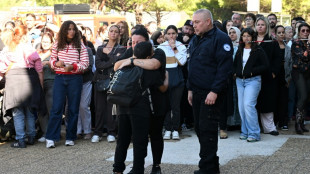 Teenager shoots headmaster, teacher at French school

 InterContinental Hotels Group PLC Announces Transaction in Own Shares - October 13
 Akkodis Brings Multilingual Intelligence to Mercedes-AMG PETRONAS Formula One Team races
 'Breaking Bad' actor RJ Mitte dead: representatives
 Former DR Congo president Kabila forms new force with M23 armed group
 Tom Cruise's 'Digger' tanks, leaving studio with $250 mn hole
 US actress Selma Blair arrested after flight altercation
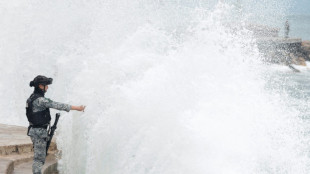 One dead as Hurricane Simon creeps along Mexico's Pacific coast
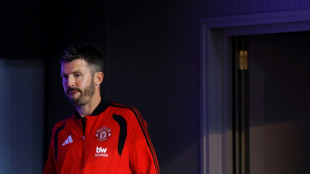 Carrick's Man United 'hungry and eager' to fix worst start in decades
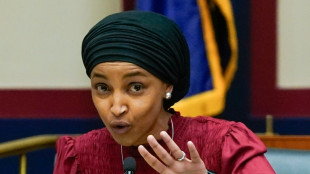 Fury as US federal agents search anti-Trump lawmaker's home

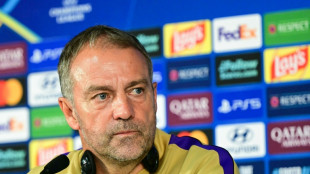 One goal enough for Flick as Barca enter Galatasaray cauldron
 A7 to unveil a service that will re-invent the international payments market
 'Status quo' with EU 'not good enough', UK PM says as summit date set
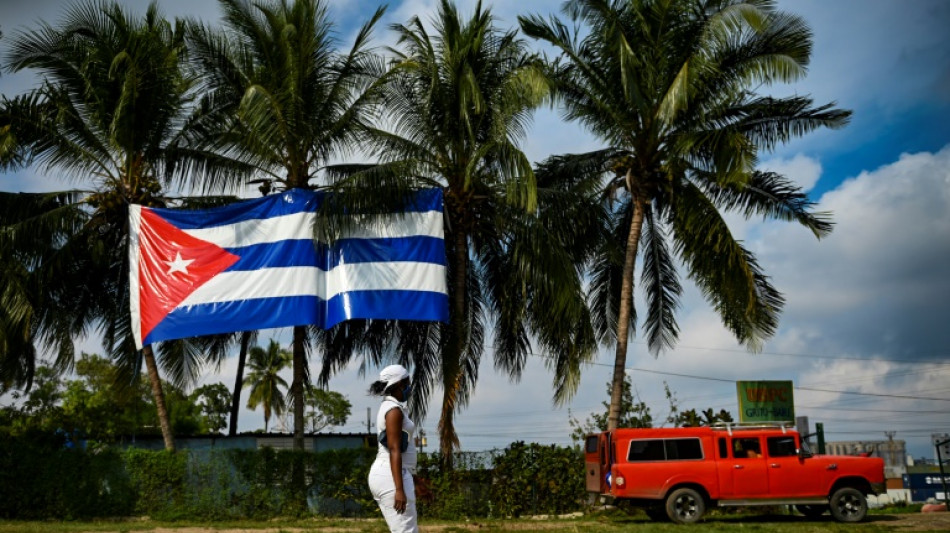
Decreed in February 1962 and still in place today, American sanctions against Cuba is one of the world's longest-running boycotts by one country against another.
Here are five things to know about the six-decade old trade ban.
- Objective: Regime change -
Executive order 3447 signed by John F Kennedy on February 3, 1962, proclaimed "an embargo upon all trade between the United States and Cuba," citing the island nation's "alignment with the communist powers."
On the eve of the embargo's entry into force on February 7, Kennedy ordered for himself a shipment of 1,200 Cuban cigars -- a product since illegal for US citizens.
John Kavulich, president of the US-Cuba Trade and Economic Council, said the goal of such embargoes -- publicly at least -- is "a change in behavior of the regime."
In recent years, Washington has justified the sanctions by pointing to rights violations by Havana and its support for the government of Venezuela's Nicolas Maduro.
Cuba has not budged on either issue.
- Expanded -
"Not only the justification has evolved, but also the types of actions" taken against Cuba, said Alina Lopez Hernandez, a Cuban researcher and editorial writer.
"For as long as it was bilateral, it was easier for Cuba," she said. It was a subject "barely mentioned (by the Cuban government) in the first three decades of the revolution" when Havana had Soviet backing.
But since the Torricelli laws and Helms-Burton laws of 1992 and 1996 that ramped up the punitive measures, companies and foreign banks operating in Cuba have faced harsh penalties for doing business there.
"With these two laws (the embargo) lost its bilateral character, it became externalized and became a blockade," said Lopez.
The Cuban government, which also uses the term blockade, estimates its economy has been damaged to the extent of some $150 billion.
Since 2000, food has been excluded from the sanctions, but Cuba must pay cash.
- 30 years of UN opprobrium -
Every year since 1992, Cuba has presented a motion condemning the sanctions at the UN General Assembly. The first time, 59 countries voted for it, now most are in favor.
Only the United States and Israel vote consistently against the motion, except in 2016 under a brief period of diplomatic detente under then-President Barack Obama.
The Helms-Burton act, said Ric Herrero of the Cuba Study Group, "was intended to create an international embargo against Cuba."
But the UN's consistent rejection shows how this has been "a resounding failure."
- How to lift it? -
America's policy towards Cuba has been dictated by internal politics ever since the end of the Cold War, when Cuba lost strategic value, said Herrero.
Traditionally, the electoral weight of Florida -- a state that can sway US elections and has a strong presence of Cuban immigrants -- has stood in the way of relaxation.
However, "the Democrats are not competitive right now in Florida so there's no real expectation the Democrats are gonna win Florida," Herrero said.
The pressure, instead, is coming from New Jersey and its Democratic senator Bob Menendez, a child of Cuban immigrants who supports the embargo.
"Because you have a 50-50 split in the Senate, you need his vote in order to pass your legislative agenda and in order to keep him happy this administration has been willing to follow his lead on Cuba," said Herrero.
Even Obama, who had relaxed some sanctions, could not lift them entirely due to the Helms Burton law which interdicts any president from changing the embargo by decree.
- Internal blockade -
In Cuba, it is called an "internal blockade" -- "the bureaucracy, excessive centralization, the lack of incentives for producers," said economist Omar Everleny Perez.
"Economically, the (American) blockade is one of the causes of the situation in Cuba, but not the only one."
Unable to produce what it needs, the island nation imports 80 percent of what it consumes.
Steps to liberalize the private sector have come late and have been slow to change the situation on the ground, with much of the economy still in state hands.
For Lopez, "internal policies weigh more on the situation of Cuba than the (US) blockade, because the strengthening of the embargo dates back to the 1990s but the bad policies are historic, they date back to the 1960s."
D.Lopez--AT