Deal or no deal: What happens with Trump's July tariff deadline? / Photo: ANDREW CABALLERO-REYNOLDS - AFP/File

 Townsend urges Scotland to use Nations Championship as World Cup springboard

 Microsoft offers voluntary exit packages to 60,000 staff

 S.Africa ambassador calls for talks with US over 'tense' ties

 'Smells of freedom': Serbians hopeful after landmark election

 South Africa select 'enforcer' Coetzee for Australia decider

 Botanists comb Gabon's rich rainforests with nature on the line

 New levy on non-EU parcels kicks in Sunday
 Stocks climb ahead of tech earnings, central bank calls

 Part of London's Oxford Street pedestrianised 'forever'

 Canadian youth seek climate action in landmark trial

 Trump blasts Norway over Nobel Peace Prize snub

 Japan PM vows swift response to wave of cyberattacks

 Stocks mostly rise before tech earnings, central bank calls

 France's Macron to visit Marseille after protest violence

 German union slams Audi boss's appearance at Trump rally
 UK set for 'limited' budget giveaways as borrowing costs surge

 Anthropic's AI model accessed US voter data: Axios

 Malaysia's Johor reopens schools as haze eases

 Carragher says Fernandes benching was intended as public punishment

 Canada-EU summit seeks deepened alliance as US ties fray

 Senegal to host Youth Games, Africa's first ever Olympics

 ITV drama Adultery examines temptation, class and family consequences

 New levy on non-EU parcels kicks in November 1

 Saudi coalition says struck Houthi missile facilities after Riyadh airport attack

 Manchester United stand-in captain calls for change after Bournemouth loss
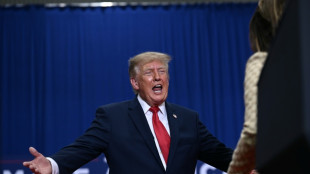
A week before US President Donald Trump reimposes steep tariffs on dozens of economies, including the EU and Japan, many are still scrambling to reach a deal that would protect them from the worst.
The tariffs taking effect July 9 are part of a package Trump imposed in April citing a lack of "reciprocity" in trading ties.
He slapped a 10 percent levy on most partners, with higher customized rates to kick in later in countries the United States has major trade deficits with.
But these were halted until July to allow room for negotiations.
Analysts expect countries will encounter one of three outcomes: They could reach a framework for an agreement; receive an extended pause on higher tariffs; or see levies surge.
- 'Framework' deals -
"There will be a group of deals that we will land before July 9," said Treasury Secretary Scott Bessent last Friday on CNBC.
Policymakers have not named countries in this group, although Bessent maintains that Washington has been focused on striking deals with about 18 key partners.
"Vietnam, India and Taiwan remain promising candidates for a deal," Asia Society Policy Institute (ASPI) vice president Wendy Cutler told AFP.
Without a deal, Vietnam's "reciprocal tariff" rises from the baseline of 10 percent to 46 percent, India's to 26 percent and Taiwan's to 32 percent.
Josh Lipsky, international economics chair at the Atlantic Council, cited Indian negotiators' extension of their US trip recently in noting that it "seems like a frontrunner."
"Japan was in that category, but things have set back a little," Lipsky said, referring to Trump's criticism Monday over what the president called Japan's reluctance to accept US rice exports.
The deals, however, will unlikely be full-fledged trade pacts, analysts said, citing complexities in negotiating such agreements.
Since April, Washington has only announced a pact with Britain and a deal to temporarily lower tit-for-tat duties with China.
- Extended pause -
Bessent has also said that countries "negotiating in good faith" can have their tariffs remain at the 10 percent baseline.
But extensions of the pause on higher rates would depend on Trump, he added.
"With a new government, (South) Korea looks well positioned to secure an extension," Cutler of ASPI said.
Lipsky expects many countries to fall into this bucket, receiving an extended halt on higher tariffs that could last until Labor Day, which falls on September 1.
Bessent earlier said that Washington could wrap up its agenda for trade deals by Labor Day, a signal that more agreements could be concluded but with talks likely to extend past July.
- Tariff reimposition -
For countries that the United States finds "recalcitrant," however, tariffs could spring back to the higher levels Trump previously announced, Bessent has warned.
These range from 11 percent to 50 percent.
Cutler warned that "Japan's refusal to open its rice market, coupled with the US resistance to lowering automotive tariffs, may lead to the reimposition of Japan's 24 percent reciprocal tariff."
Trump himself said Tuesday that a trade deal was unlikely with Japan and the country could pay a tariff of "30 percent, 35 percent, or whatever the number is that we determine."
Lipsky believes the European Union is at risk of having tariffs snap back to steeper levels too -- to the 20 percent unveiled in April or the 50 percent Trump more recently threatened.
An area of tension could be Europe's approach to digital regulation.
Trump recently said he would terminate trade talks with Canada -- which is not impacted by the July 9 deadline -- in retaliation for the country's digital services tax, which Ottawa eventually said it would rescind.
This week, EU trade chief Maros Sefcovic is in Washington in a push to seal a trade deal, with the EU commission having received early drafts of proposals that officials are working on.
E.Rodriguez--AT