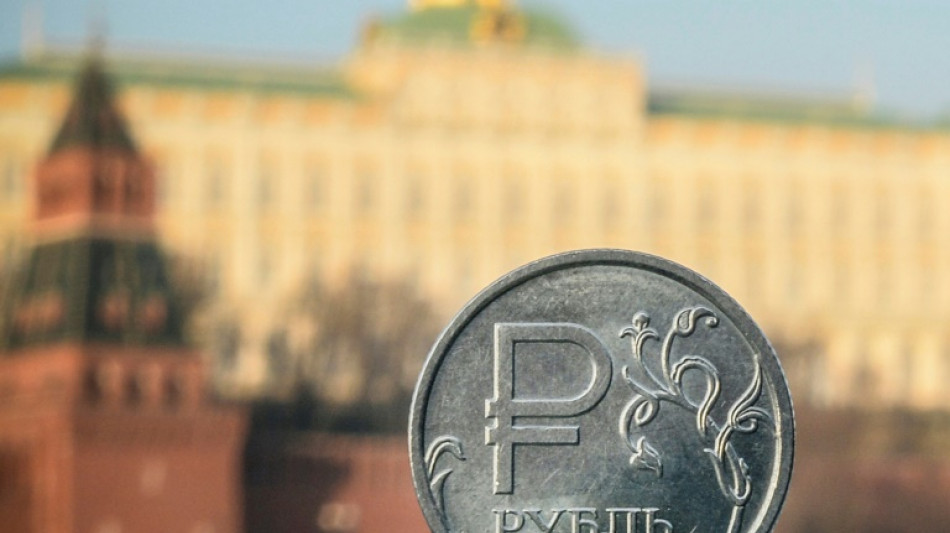
Russia fails to pay debt but denies default / Photo: Alexander NEMENOV - AFP

 Australia's new Ghost Shark submarines grow some 'teeth'
 'I call it a bribe': Pennsylvania residents spurn $10,000 data center checks
 In a former US steel city, ordinary people struggle to get by
 'Liar,' 'clown': Lula and Bolsonaro spar in Brazil poll debate
 Record El Nino? Depends who's counting
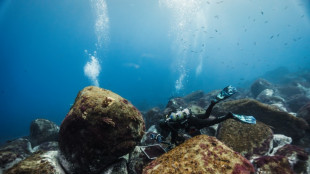 On the front line of ocean conservation off Portugal's Madeira

 Wembanyama targets title breakthrough as NBA season tips off
 With LeBron on board it's title or bust for Philly fans
 One year after Louvre heist, where are the missing jewels?

 Knicks face tall task in NBA championship repeat bid
 Warriors' Curry 'fine' after limping out of practice - Kerr

 Zelensky speaks to US envoys as Trump lashes out
 'Surprise package' Lazio crush Juve to keep pace with Serie A leaders Inter

 China growth expected to miss official target in third quarter

 Lazio crush Juventus to move level with Serie A leaders Inter

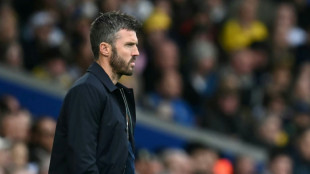 Leeds draw feels like 'fresh start' for Man Utd's Carrick
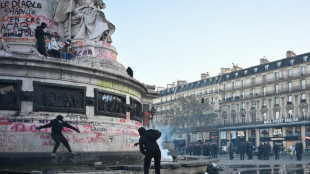 Macron denounces 'unbridled' violence as France hit by new clashes

 Hurzeler lauds 'hard worker' Gomez after Brighton goal from halfway line
 Toulouse hold off Exeter, Northampton save English Champions Cup blushes
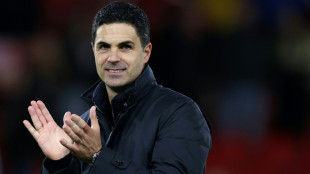
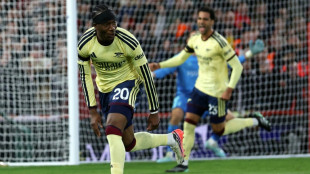 Arsenal snatch late win to keep pressure on Man City as Man Utd held
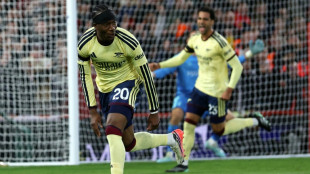 Arsenal strike late to keep pressure on Man City as Man Utd held

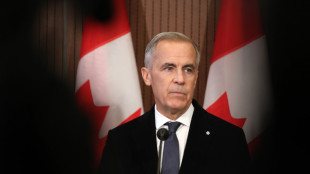 Four soldiers dead, dozens injured in fire at Canada military base
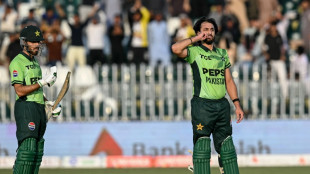 Ton-up Agha helps Pakistan down Sri Lanka in tri-series opener

 Man Utd draw at Leeds keeps pressure on Carrick
 Barca defenders Garcia, Kounde injured before key games
Russia said Monday that two of its debt payments were blocked from reaching creditors, pushing the country closer to its first foreign default in a century due to sanctions over the Ukraine offensive.
The announcement came on the 124th day of Russia's military intervention in Ukraine, with Western sanctions so far failing to force the Kremlin to change its course.
The Western economic penalties have largely severed the country from the international financial system, making it difficult for Moscow to service its debt.
The Russian authorities insist they have the funds to honour the country's debt, calling the predicament a "farce" and accusing the West of seeking to drive Moscow into a default artificially.
"There are no grounds to call this situation a default," Kremlin spokesman Dmitry Peskov told reporters after a key payment deadline expired Sunday.
"These claims about default, they are absolutely wrong," he said, adding that Russia settled the debt in May.
Russia lost the last avenue to service its foreign-currency loans after the United States removed an exemption last month that allowed US investors to receive Moscow's payments.
- 'Vicious circle of decline' -
A 30-day grace period for the payment of $100 million in interest payments expired on Sunday night, most of which had to be paid in foreign currency.
Russia had attempted to make the payments, but the finance ministry said Monday that the money had not been transferred to creditors.
International settlement and clearing systems "received funds in full in advance" but the payments were not transferred to the final recipients due to "the actions of third parties," the ministry said in a statement.
"The actions of foreign financial intermediaries are beyond the Russian finance ministry's control," the statement said.
While some experts dismiss the event as a technical default, others say it will have far-reaching consequences.
"This default is important as it will impact on Russia's ratings, market access and financing costs for years to come," said Timothy Ash, an emerging markets strategist at BlueBay Asset Management.
"And that means lower investment, lower growth, lower living standards, capital and human flight (brain drain), and a vicious circle of decline for the Russian economy."
- 'Locked Russia out' -
But Liam Peach, emerging Europe economist at Capital Economics, a research group, said a default was a "a largely symbolic event that is unlikely to have an additional macroeconomic impact".
"Sanctions have already done the damage and locked Russia out of global capital markets," Peach said in a note.
The sanctions included freezing the Russian government's stockpile of $300 billion in foreign currency reserves held abroad, making it more complicated for Moscow to settle its foreign debts.
After the United States closed the payment loophole last month, Russia said it would pay in rubles that could be converted into foreign currency, using a Russian financial institution as a paying agent, even though the bonds do not allow payments in the local currency.
The country last defaulted on its foreign debt in 1918, when Bolshevik revolution leader Vladimir Lenin refused to recognise the massive debts of the deposed tsar's regime.
Russia defaulted on domestic debt in 1998 when, due to a drop in commodity prices, it faced a financial squeeze that prevented it from propping up the ruble and paying off debts that accumulated during the first war in Chechnya.
The International Monetary Fund's number two official, Gita Gopinath, said in March that a Russian default would have "limited" impact on the global financial system.
H.Gonzales--AT