
US Supreme Court curtails power of individual judges to block Trump / Photo: Stefani Reynolds - GETTY IMAGES/AFP

 Nadal returns for Vegas hardcourt event

 Fainga'anuku named as loose forward for All Blacks northern tour

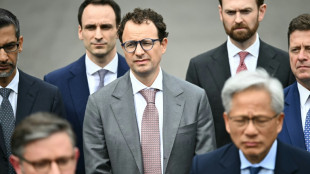 Anthropic points to AI dangers, soaring sales in IPO filing
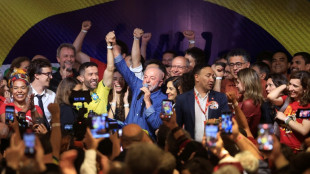
 Sinner to play rescheduled Saudi Six Kings in December

 Brazilian lawmaker Andre Janones, Lula's social media 'general'

 Swiss Ebola patient repatriated from Nigeria

 Nations far from a deal as UN nature talks enter final stretch

 Brazil markets battered, tech in focus elsewhere

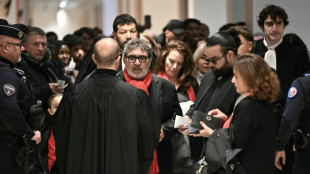 French court adjourns trial over 2020 death of delivery driver
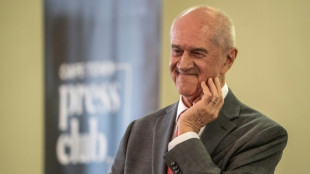
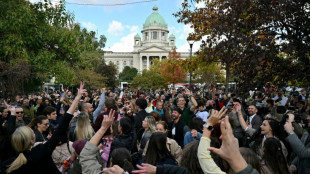 Serbian student movement eyes power after election triumph

 Machado ready to meet Venezuela leader after shock return

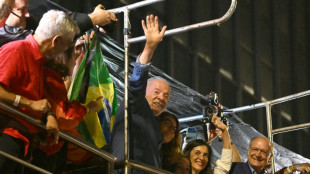 Lula celebrates election win as Brazil markets tumble

 France's Macron accuses social media of sowing discord ahead of election

 Anthropic unveils IPO filing showing soaring sales and AI risks

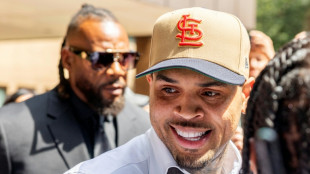 US singer Chris Brown avoids jail over London nightclub brawl

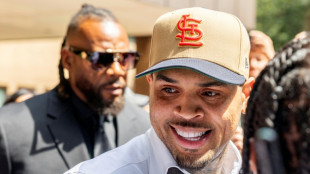 US singer Chris Brown avoids jail over UK nightclub brawl

 Man Utd crisis deepens as Carrick faces axe
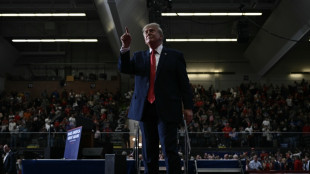
 Serbian student movement eyes power after resounding snap poll victory
 Eala breezes past world number 411 in Tokyo opener

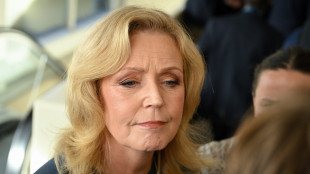 Swedish Centre Party leader says government coalition talks failed
 Barca's big-game defeats pose familiar questions
 Russia says open to mini Ukraine ceasefires, but no let up in war

 Bangladesh measles crisis 'warning sign' of other outbreaks: report

 'Historic victory': World leaders celebrate Lula's re-election

 Stock markets mixed ahead of tech earnings, central bank decisions

A divided US Supreme Court handed President Donald Trump a major victory on Friday by curbing the power of lone federal judges to block executive actions.
In a 6-3 ruling stemming from Trump's bid to end birthright citizenship, the court said nationwide injunctions issued by district court judges "likely exceed the equitable authority that Congress has granted to federal courts."
The top court did not rule on the constitutionality of Trump's executive order seeking to end automatic citizenship for children born on American soil.
But the broader decision on the scope of judicial rulings removes a big roadblock to Trump's often highly controversial policy agenda and has far-reaching ramifications for the ability of the judiciary to rein in Trump or future American presidents.
Trump celebrated by telling reporters he had "a whole list" of policies he could now proceed on without opposition in the courts.
Trump's executive order on birthright citizenship is just one of a number of his moves that have been blocked by judges around the country -- both Democratic and Republican appointees – since he took office in January.
Courts have, for example, blocked or slowed down his hardline immigration crackdown, firing of federal employees, efforts to end diversity programs and punitive actions against law firms and universities.
Past presidents have also complained about national injunctions shackling their agenda, but such orders have sharply risen under Trump, who saw more in his first two months than Democrat Joe Biden did during his first three years in office.
Justice Amy Coney Barrett, a Trump appointee who authored the majority opinion joined by the other five conservative justices, said "the universal injunction was conspicuously nonexistent for most of our Nation's history."
"Federal courts do not exercise general oversight of the Executive Branch," Barrett wrote.
"When a court concludes that the Executive Branch has acted unlawfully, the answer is not for the court to exceed its power, too," she said.
The three liberal justices dissented with Justice Sonia Sotomayor saying "no right is safe in the new legal regime the Court creates."
"The Court's decision is nothing less than an open invitation for the Government to bypass the Constitution," Sotomayor said.
"The Executive Branch can now enforce policies that flout settled law and violate countless individuals' constitutional rights, and the federal courts will be hamstrung to stop its actions fully," she said.
- 'GIANT WIN' -
Trump, in a post on Truth Social, welcomed the ruling as a "GIANT WIN."
The case was ostensibly about Trump's executive order ending birthright citizenship, which was deemed unconstitutional by courts in Maryland, Massachusetts and Washington state.
But it actually focused on whether a single federal district court judge has the right to issue a nationwide block to a presidential decree with a universal injunction.
The issue has become a rallying cry for Trump and his Republican allies, who accuse the judiciary of impeding his agenda against the will of voters.
Steven Schwinn, a law professor at the University of Illinois Chicago, said the court's ruling "sharply undermines the power of federal courts to rein-in lawless actions by the government."
"The ruling will likely create a patchwork of birthright citizenship rights," Schwinn told AFP, where it is recognized in some locations for people who have successfully sued and not recognized for people who have not sued.
"This patchwork approach to individual rights is inconsistent with our history and tradition of federal rights in the United States and is inconsistent with the rule of law," he said.
The Trump administration had asked the Supreme Court to restrict the application of a district court's injunction solely to the parties who brought the case and the district where the judge presides.
Trump's executive order on birthright citizenship decrees that children born to parents in the United States illegally or on temporary visas would not automatically become citizens.
The three lower courts ruled that to be a violation of the 14th Amendment, which states: "All persons born or naturalized in the United States, and subject to the jurisdiction thereof, are citizens of the United States."
W.Stewart--AT