Trump insists Iran nuclear programme set back 'decades' / Photo: Jack GUEZ - AFP

 Nadal returns for Vegas hardcourt event

 Fainga'anuku named as loose forward for All Blacks northern tour

 Anthropic points to AI dangers, soaring sales in IPO filing

 Sinner to play rescheduled Saudi Six Kings in December
 Brazilian lawmaker Andre Janones, Lula's social media 'general'

 Swiss Ebola patient repatriated from Nigeria
 Nations far from a deal as UN nature talks enter final stretch

 Brazil markets battered, tech in focus elsewhere

 French court adjourns trial over 2020 death of delivery driver

 Serbian student movement eyes power after election triumph

 Machado ready to meet Venezuela leader after shock return

 Lula celebrates election win as Brazil markets tumble
 France's Macron accuses social media of sowing discord ahead of election

 Anthropic unveils IPO filing showing soaring sales and AI risks

 US singer Chris Brown avoids jail over London nightclub brawl

 US singer Chris Brown avoids jail over UK nightclub brawl
 Man Utd crisis deepens as Carrick faces axe
 Serbian student movement eyes power after resounding snap poll victory

 Eala breezes past world number 411 in Tokyo opener

 Swedish Centre Party leader says government coalition talks failed
 Barca's big-game defeats pose familiar questions
 Russia says open to mini Ukraine ceasefires, but no let up in war
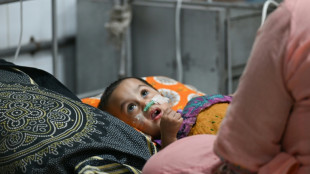 Bangladesh measles crisis 'warning sign' of other outbreaks: report

 'Historic victory': World leaders celebrate Lula's re-election

 Stock markets mixed ahead of tech earnings, central bank decisions

President Donald Trump insisted Wednesday that US strikes led to the "total obliteration" of Iran's nuclear capabilities and set the country's atomic programme back "decades", while Israel said it was still early to fully assess the damage.
Over a 12-day conflict, Israel pounded Iranian nuclear and military sites while Iran launched waves of missiles at its foe during their deadliest-ever confrontation.
The United States joined the fray in support of its ally, hitting two nuclear facilities with massive bunker-buster bombs over the weekend, while a guided missile from a submarine struck a third.
But leaked US intelligence cast doubt on the damage caused by American strikes, saying they had set back Tehran's nuclear programme by just a few months.
"They're not going to be building bombs for a long time," said Trump, adding that the strikes had set back the programme by "decades" and that the Iran-Israel ceasefire that he declared was going "very well".
Earlier, Israel's military said it was "still early" to assess the damage caused to Iran's nuclear programme.
"I believe we have delivered a significant hit to the nuclear programme, and I can also say that we have delayed it by several years," said Israeli military spokesman Brigadier General Effie Defrin.
The head of Israel's military, Eyal Zamir, on Tuesday said Israel and the United States had set back Iran's nuclear programme "by years".
But US media on Tuesday cited people familiar with the Defense Intelligence Agency intelligence report as saying the American strikes did not fully eliminate Iran's centrifuges or enriched uranium stockpiles.
The strikes sealed off entrances to some facilities without destroying underground buildings, according to the report.
Israel had said its bombing campaign, which began on June 13, was aimed at preventing Iran from acquiring a nuclear weapon, an ambition Tehran has consistently denied.
Israeli Prime Minister Benjamin Netanyahu, in an address to the nation after the ceasefire, announced that "we have thwarted Iran's nuclear project".
"And if anyone in Iran tries to rebuild it, we will act with the same determination, with the same intensity, to foil any attempt," he said.
- 'Legitimate rights' -
Iranian lawmakers on Wednesday voted in favour of suspending cooperation with the United Nations' nuclear watchdog, according to state TV.
"The International Atomic Energy Agency, which refused to even marginally condemn the attack on Iran's nuclear facilities, put its international credibility up for auction," parliament speaker Mohammad Bagher Ghalibaf said, according to the broadcaster.
The decision to suspend cooperation with the IAEA still requires the approval of the Guardian Council, a body empowered to vet legislation.
Iranian President Masoud Pezeshkian said Tuesday his country was willing to return to negotiations over its nuclear programme, but that it would continue to "assert its legitimate rights" to the peaceful use of atomic energy.
In an interview with the Al Araby Al Jadeed news outlet, Iranian Foreign Minister Abbas Araghchi said attacks on Iran's nuclear facilities would have "serious and profound repercussions" on the country's future.
He said Iran remained committed to the Non-Proliferation Treaty but that it had failed "protect us or our nuclear programme", adding that Iran's approach towards the non-proliferation regime "will undergo changes", without elaborating.
- Shadow war -
While Iran and Israel have been locked in a shadow war for decades, their 12-day conflict was by far the most destructive confrontation between them.
Israeli strikes hit nuclear and military targets -- killing scientists and senior military figures -- as well as residential areas, prompting waves of Iranian missile fire on Israel.
The war culminated in US strikes on underground Iranian nuclear sites using bunker-busting bombs -- which Israel lacks -- followed by an Iranian reprisal targeting a US military facility in Qatar, the largest in the Middle East.
Trump shrugged off that response as "weak", thanking Tehran for giving advance notice and announcing the contours of the ceasefire just hours later.
Some Israelis welcomed the truce.
"Finally, we can sleep peacefully. We feel better, less worried, for the kids, for the family. And I hope it stays that way. That's the most important," Yossi Bin, a 45-year-old engineer in Tel Aviv, told AFP.
In Iran, people remained uncertain whether the peace would hold.
Amir, 28, fled from Tehran to the Caspian Sea coast and told AFP by phone, "I really don't know... about the ceasefire but honestly, I don't think things will return to normal."
Israeli strikes on Iran killed at least 610 civilians and wounded more than 4,700, according to the health ministry.
Iran's attacks on Israel killed 28 people, according to official figures and rescuers.
burs-ser/dv
O.Gutierrez--AT