Trump plays deft hand with Iran-Israel ceasefire but doubts remain / Photo: Brendan SMIALOWSKI - AFP

 Nadal returns for Vegas hardcourt event

 Fainga'anuku named as loose forward for All Blacks northern tour

 Anthropic points to AI dangers, soaring sales in IPO filing
 Sinner to play rescheduled Saudi Six Kings in December
 Brazilian lawmaker Andre Janones, Lula's social media 'general'

 Swiss Ebola patient repatriated from Nigeria
 Nations far from a deal as UN nature talks enter final stretch

 Brazil markets battered, tech in focus elsewhere

 French court adjourns trial over 2020 death of delivery driver
 Serbian student movement eyes power after election triumph

 Machado ready to meet Venezuela leader after shock return

 Lula celebrates election win as Brazil markets tumble

 France's Macron accuses social media of sowing discord ahead of election

 Anthropic unveils IPO filing showing soaring sales and AI risks

 US singer Chris Brown avoids jail over London nightclub brawl

 US singer Chris Brown avoids jail over UK nightclub brawl
 Man Utd crisis deepens as Carrick faces axe
 Serbian student movement eyes power after resounding snap poll victory

 Eala breezes past world number 411 in Tokyo opener

 Swedish Centre Party leader says government coalition talks failed
 Barca's big-game defeats pose familiar questions
 Russia says open to mini Ukraine ceasefires, but no let up in war
 Bangladesh measles crisis 'warning sign' of other outbreaks: report

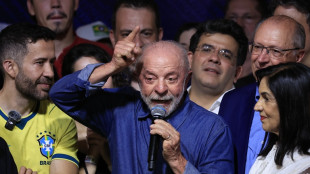 'Historic victory': World leaders celebrate Lula's re-election

 Stock markets mixed ahead of tech earnings, central bank decisions

With his surprise announcement of a ceasefire between Israel and Iran, US President Donald Trump has turned his flair for social media into diplomatic deftness, despite continued uncertainty in the Middle East.
Israel, Iran and Trump himself all declared victory after 12 days of conflict that culminated Saturday in the United States bombing Iran's key nuclear sites.
After facing criticism -- even within his base -- for breaking his campaign promises against military intervention abroad, Trump was able to show a quick way out, and to portray himself, despite the bombing, as a peacemaker.
"I don't think the Israeli government was able to sustain a long-term war, but I think the main factor here was President Trump. He did not want to see a new war in the region break out under his watch," said Will Todman, a senior fellow at the Middle East program at the Center for Strategic and International Studies.
"That is what changed the calculation for Israel and for Iran as well."
Trump startled even close aides and allies by announcing the ceasefire on social media late Monday -- the middle of the night in the Middle East -- just after Iran fired missiles at a US base in Qatar, in what appeared to be a choreographed response as the rockets were easily shot down.
Trump chose not to retaliate against Iran and on Tuesday, returned to his electronic bully pulpit to urge Israel to abort new attacks on Iran.
Iran needed an off-ramp as it suffered its worst assault since the 1980-88 war with Iraq. Trump also appeared to offer incentives to sanctions-bound Iran by suggesting an easing of US pressure on China to stop buying Iranian oil.
Israel's military, while proving itself to be the region's strongest, has been stretched by campaigns in Gaza, Syria and Lebanon, and with Iranian strikes this month, the Israeli population endured the most prolonged, deadly air attacks seen in decades.
After Israeli Prime Minister Benjamin Netanyahu hailed Trump's intervention, the president's warning Tuesday likely also showed him the limits to US support, Todman said.
- What was achieved? -
Trump hailed his intervention as a monumental success, although critics have long warned that an attack could make Iran rush, more clandestinely, to a nuclear bomb.
While Trump claimed Iran's nuclear program was "obliterated," a classified report found that the US bombing did not destroy the core parts of the three nuclear sites, according to CNN and The New York Times.
Brian Katulis, a senior fellow at the Middle East Institute, said it's too early to know if the ceasefire would hold, either.
He said that Gulf Arab powers, led by well-connected Qatar, did the hard work of quiet diplomacy as they sought a return to calm in their region.
"Trump vocally used his troll power to try to restrain the actions of Israel and Iran, but that matters less compared with the role that these countries continuously play," Katulis said of Gulf Arab states.
Katulis, who worked on the Middle East for former president Bill Clinton, said the Trump administration's tactical military operations, combined with "a heavy dose of strategic communications" confused Americans and global actors alike "about what it is we're actually trying to get done."
- Showing heft at home -
One area where Trump's diplomacy had clear -- if short-term -- benefits was at home.
A prolonged US military campaign "had the potential to really fracture President Trump's own base of support," said Jonathan Panikoff, a senior fellow at the Atlantic Council.
But now, "my guess is the majority of his MAGA and other Republican base will stay relatively unified, even if they were unthrilled in some quarters," he said.
While traditional hawks of Trump's Republican Party largely cheered the Iran strikes, they were widely but not universally denounced by rival Democrats.
Annelle Sheline, who resigned from the State Department to protest policies under former president Joe Biden and is now at the Quincy Institute for Responsible Statecraft, said it was critical for Trump to enforce the ceasefire.
She noted Israel has bombed Lebanon and Gaza during truces, saying Netanyahu believed he enjoyed "America's unconditional support."
"Trump demonstrated that he can rein in Israel when he chooses to do so. Now he must do the same to insist on a ceasefire in Gaza," she said.
R.Lee--AT