W. African leaders hold emergency summit after spate of coups

 Hungary cuts anti-LGBTQ legislation from Orban-era law
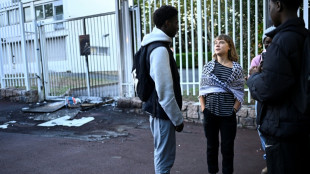 'Our future is being robbed': Greta Thunberg joins France student protests
 Late superstar Anita Mui's ashes missing in Hong Kong
 'No choice': IMF says developing countries must cut spending despite war shock
 Boasting South Korea footballers spark rethink of military service exemptions
 Five dead as Hurricane Simon, Rachel pummel Mexico's Pacific coast
 Seoul, Tokyo stocks plunge as Asia suffers fresh tech rout
 Damaged and drained, Indonesia's peatlands go up in smoke
 Dominant Australia wary of Pacific threat at Rugby League World Cup
 Pope to be admitted to hospital for lung operation
 Samoa's McFarland welcomes 'massive' arrival of ex-All Blacks for World Cup run-in
 Brewers beat Dodgers 7-4 to extend MLB playoff lead
 Teenager shoots headmaster, teacher at French school
 InterContinental Hotels Group PLC Announces Transaction in Own Shares - October 13
 Akkodis Brings Multilingual Intelligence to Mercedes-AMG PETRONAS Formula One Team races
 'Breaking Bad' actor RJ Mitte dead: representatives
 Former DR Congo president Kabila forms new force with M23 armed group
 Tom Cruise's 'Digger' tanks, leaving studio with $250 mn hole
 US actress Selma Blair arrested after flight altercation
 One dead as Hurricane Simon creeps along Mexico's Pacific coast
 Carrick's Man United 'hungry and eager' to fix worst start in decades
 Fury as US federal agents search anti-Trump lawmaker's home

 One goal enough for Flick as Barca enter Galatasaray cauldron
 A7 to unveil a service that will re-invent the international payments market
 'Status quo' with EU 'not good enough', UK PM says as summit date set
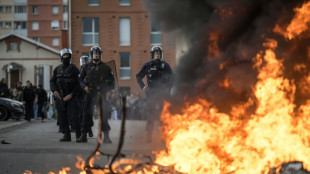
West African leaders hold a key summit on Thursday as a wave of coups buffet a region struggling with poverty and a long history of turbulence.
Emergency talks in the Ghanaian capital Accra were triggered after Burkina Faso on January 24 became the third member of the 15-nation Economic Community of West African States (ECOWAS) to be overtaken by the military.
Burkina followed Mali, where a coup in September 2020 was followed by a second in May 2021, and Guinea, where elected president Alpha Conde was ousted last September.
Adding to the region's turmoil was a gun attack on Tuesday on the president of Guinea-Bissau, Umaro Sissoco Embalo, stoking fears that years of efforts to steer West Africa towards stability and democracy are failing.
Thursday's one-day meeting, scheduled to start at 1000 GMT, will assess the outcome of two missions to Burkina following the coup.
Burkina was suspended from ECOWAS after rebel soldiers arrested President Roch Marc Christian Kabore amid public anger at his handling of a jihadist insurgency.
The question now is whether the country -- ranked a wretched 182nd out of 189 countries in the UN's worldwide development index -- will escape economic punishment.
ECOWAS has already slapped crippling sanctions on Mali and Guinea for dragging their feet on commitments to restore civilian rule.
Those measures have included the closure of borders by ECOWAS members, an embargo on trade and financial transactions and sanctions against individuals.
- Positive signs -
Military chiefs from ECOWAS flew to Ouagadougou on Saturday for talks with the junta, and this was followed on Monday by a diplomatic mission led by Ghana's foreign minister, Shirley Ayorkor Botchwey.
Early reactions from the envoys have been positive.
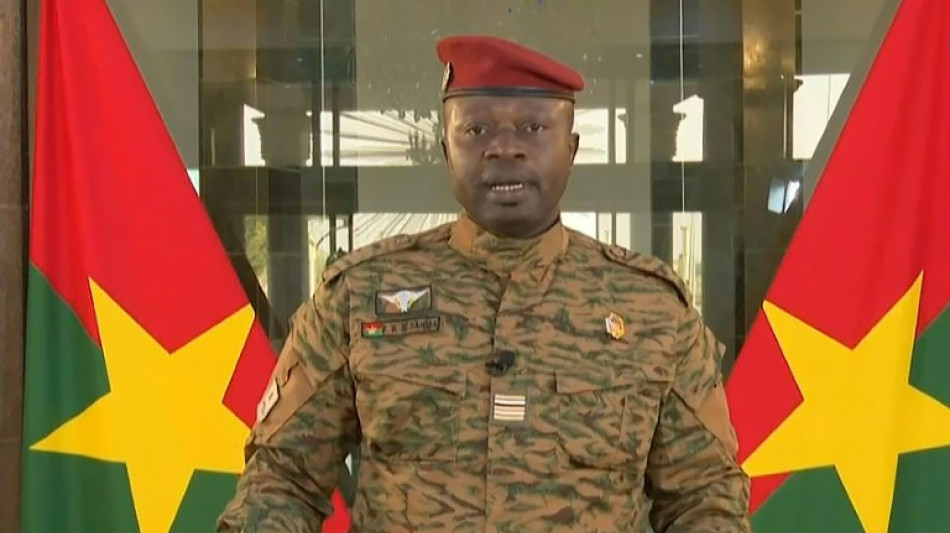
"They seemed very open to the suggestions and proposals that we made. For us it's a good sign," Botchwey told reporters after meeting with strongman Lieutenant-Colonel Paul-Henri Sandaogo Damiba and other junta members.
The talks were attended by the UN's special representative for West Africa and the Sahel (UNOWAS), Mahamat Saleh Annadif, who described a "very frank exchange".
The delegation notably met Kabore, whose wellbeing and demands for release from house arrest are major issues.
During the visit, the junta declared it had restored the constitution, which it had swiftly suspended following the coup, and named Damiba as president and head of the armed forces during a transition period.
And on Tuesday, Damiba met with political party chiefs, many of whom said they were keen to take part in the restoration of civilian rule.
But major questions remain unanswered, including the key issue of a date for elections. On January 24, the junta vowed to re-establish "constitutional order" within a "reasonable time".
In deciding whether to impose sanctions, ECOWAS leaders have to balance the credibility of their organisation against the fragility of some of their states, especially in the Sahel.
Mali and Burkina Faso are in the throes of a nearly decade-old jihadist emergency that has claimed thousands of lives and forced at least one and a half million people from their homes.
Escalating political friction with the junta in Mali has driven Bamako closer to the Kremlin and cast a shadow over France's anti-jihadist mission in the country.
W.Stewart--AT