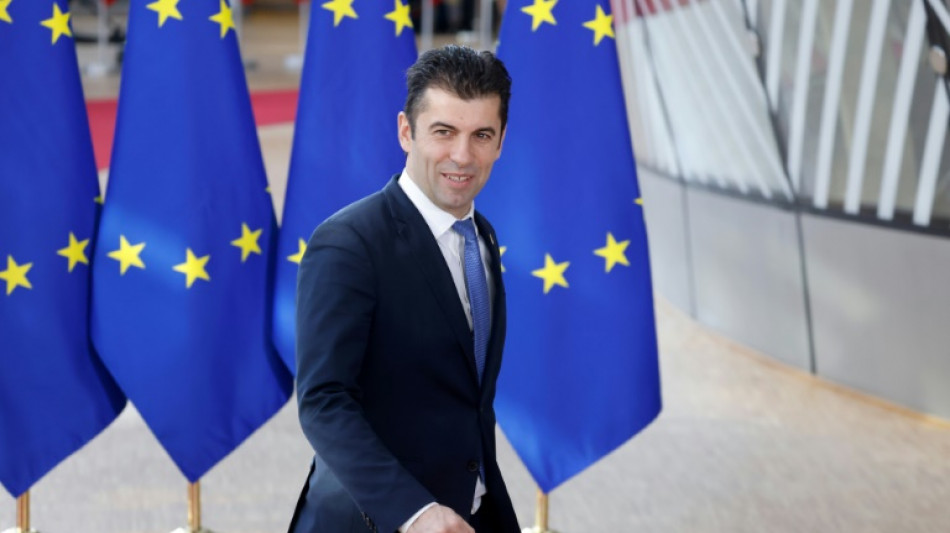
Confidence vote puts Bulgarian govt's fate in the balance / Photo: Ludovic MARIN - AFP

 'I call it a bribe': Pennsylvania residents spurn $10,000 data center checks
 In a former US steel city, ordinary people struggle to get by

 'Liar,' 'clown': Lula and Bolsonaro spar in Brazil poll debate
 Record El Nino? Depends who's counting
 On the front line of ocean conservation off Portugal's Madeira

 Wembanyama targets title breakthrough as NBA season tips off
 With LeBron on board it's title or bust for Philly fans
 One year after Louvre heist, where are the missing jewels?

 Knicks face tall task in NBA championship repeat bid

 Warriors' Curry 'fine' after limping out of practice - Kerr

 Zelensky speaks to US envoys as Trump lashes out
 'Surprise package' Lazio crush Juve to keep pace with Serie A leaders Inter

 China growth expected to miss official target in third quarter

 Lazio crush Juventus to move level with Serie A leaders Inter

 Leeds draw feels like 'fresh start' for Man Utd's Carrick
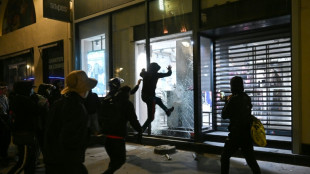
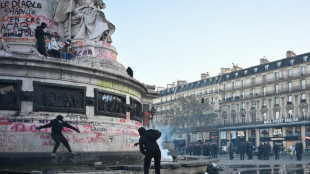 Macron denounces 'unbridled' violence as France hit by new clashes

 Hurzeler lauds 'hard worker' Gomez after Brighton goal from halfway line
 Toulouse hold off Exeter, Northampton save English Champions Cup blushes

 Arsenal snatch late win to keep pressure on Man City as Man Utd held
 Arsenal strike late to keep pressure on Man City as Man Utd held

 Four soldiers dead, dozens injured in fire at Canada military base
 Ton-up Agha helps Pakistan down Sri Lanka in tri-series opener

 Man Utd draw at Leeds keeps pressure on Carrick
 Barca defenders Garcia, Kounde injured before key games
 Lula, Bolsonaro to face off in first debate of bruising election
Bulgaria's coalition government faced collapse Wednesday just six months after taking office, as MPs prepared to vote on a no-confidence motion that if passed could mean fresh elections.
But analysts say there is no guarantee that another national vote in this country of 6.5 million people, which last year went through three such polls, would end the country's political instability.
In the most recent elections last November, the party of liberal Kiril Petkov came out ahead and went on to form an unwieldy coalition government with three other parties.
An energetic, pro-European prime minister, Petkov promised to end Bulgaria's endemic corruption after a decade of rule by the controversial conservative Boyko Borisov.
But cracks in the coalition began to appear soon after Russia's invasion of Ukraine, and earlier this month, the anti-establishment ITN party led by entertainer Slavi Trifonov withdrew its support.
Borisov's conservative GERB party swiftly filed a no-confidence motion citing "the failure of the government's economic and financial policy" as consumer inflation soared.
The vote is expected just after 7:00 pm local time (1600 GMT). The motion needs 121 votes in the 240-seat parliament to succeed.
The ruling coalition can rely on the support of just 109 of 240 lawmakers.
Six MPs from the ITN grouping are also expected to back the government, but its only hope of clinging to power hinges on more ITN lawmakers giving their last-minute backing.
In a defiant speech to his supporters outside parliament on the eve of the vote, Petkov vowed: "We will never betray the cause we began with.
"Sooner or later Bulgaria will be where it should be -- prosperous, European, with a working judiciary, with good education and healthcare," he said.
- Aggravated tensions -
In a country with strong historical ties with Moscow, the Ukraine conflict has "accentuated divisions and weakened the government", said Ruslan Stefanov of the Center for the Study of Democracy think-tank.
Despite the country's heavy dependence on Russian gas and oil, Petkov opposed Moscow's demand to open a ruble account to pay for Russian gas -- a response to European Union sanctions. As a result, the country faced a cut in supplies in response.
This meant "Bulgarian oligarchs who pocketed commissions" on energy deliveries found themselves deprived of income, said Ognyan Minchev, head of the Sofia-based Institute for Regional and International Studies.
And that, he said, "aggravated tensions within the coalition as well as between business circles and the government".
Another source of tension was Ukraine's appeal for arms to fight the Russian invasion.
While most of the parties in the government were ready to authorise such deliveries, the Socialists -- also part of the ruling coalition -- remained opposed.
The final straw however came from the EU's drive to settle longstanding historical and cultural disputes between Bulgaria and neighbouring North Macedonia.
It was Petkov's advocacy of rapprochement with Skopje that the ITN says prompted them to quit the coalition.
- Fragmented landscape -
Even if the government survives the no-confidence vote, it will still struggle to govern because of its lack of a clear majority, political analyst Dimitar Dimitrov told public broadcaster BNR on Wednesday.
If the no-confidence motion does pass, President Rumen Radev can make three attempts to see if any party can form a governing majority.
Failing that, parliament will be dissolved, and the politicians will go back to campaigning for elections that would have to be held within two months.
But even if there were fresh elections, they would be unlikely to provide a durable solution to a political landscape that remains highly fragmented, says Dimitar Ganev of the Trend polling institute.
Thousands of Bulgarians meanwhile are expected to take to the streets on Wednesday in a demonstration of support for Petkov's drive for reforms -- which now looks doomed.
A.O.Scott--AT