-
 Rubio seeks to strengthen US foothold in Central Asia
-
One year after Louvre heist, where are the missing jewels?

-
 LeBron joins 76ers to chase one more NBA title at age 41
-
Knicks face tall task in NBA championship repeat bid

-
 Rays one win from World Series return after downing Guardians
-
Warriors' Curry 'fine' after limping out of practice - Kerr

-
 Kings' Ben Simmons tears Achilles in training
-
Zelensky speaks to US envoys as Trump lashes out

-
 Lula, Bolsonaro set for first debate showdown in bitter election race
-
'Surprise package' Lazio crush Juve to keep pace with Serie A leaders Inter

-
 Mbappe hits two as Real Madrid rout Sevilla
-
China growth expected to miss official target in third quarter

-
 Browns edge Ravens for division lead, Texans beat Jags
-
Lazio crush Juventus to move level with Serie A leaders Inter

-
 Lyon go top of Ligue 1 as Monaco fall to first defeat of the season
-
Leeds draw feels like 'fresh start' for Man Utd's Carrick

-
 Venezuela opposition alliance reaffirms Nobel laureate Machado as leader
-
Macron denounces 'unbridled' violence as France hit by new clashes

-
 'Street Fighter' wins N. America box office, buzzy doc stuns in 2nd
-
Hurzeler lauds 'hard worker' Gomez after Brighton goal from halfway line

-
 NFL: Paris game to go ahead despite protests in France
-
Toulouse hold off Exeter, Northampton save English Champions Cup blushes

-
 Arteta hails Arsenal 'finishers' after Madueke fells Forest
-
Arsenal snatch late win to keep pressure on Man City as Man Utd held

-
 Trump backs ally Netanyahu ahead of Israel's tight election
-
Arsenal strike late to keep pressure on Man City as Man Utd held

-
 Madueke strikes late as below-par Arsenal sink Forest
-
Four soldiers dead, dozens injured in fire at Canada military base
-
 Second day of street clashes in Milan
-
Ton-up Agha helps Pakistan down Sri Lanka in tri-series opener

-
 Dupont's Toulouse hold off Exeter as English Champions Cup woes continue
-
Man Utd draw at Leeds keeps pressure on Carrick

-
 Zelensky speaks to US envoys amid Trump spat
-
Barca defenders Garcia, Kounde injured before key games

-
 Paris police in new battles with protesters and looters
-
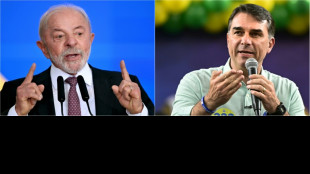
Lula, Bolsonaro to face off in first debate of bruising election
-
 Multiple deaths, injuries at western Canada military base: minister
-
Maza and Schick help Leverkusen clip Freiburg's wings

-
 Boland strikes twice for Australia in rain-hit South Africa Test
-
Leeds hit back to deny Man Utd morale-boosting win

-
 Marseille put Angers to the sword in Ligue 1
-
Zelensky tells NBC 'thankful' US has unblocked intelligence sharing

-
 Albanian PM refuses to quit as violent protests enter sixth day
-
Pau see off Leicester in Champions Cup

-
 Chwalinska fights back to win Wuhan Open in title breakthrough
-
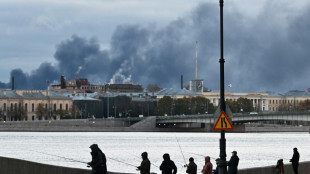
Kremlin says Ukrainian attacks won't change war aims as Kyiv hits Saint Petersburg
-
 Kulusevski on brink of return for Spurs after 17-month absence
-
Martinez starts for Man Utd after outburst

-
 Ukraine sets Saint Petersburg refinery ablaze in large-scale drone attack
-
Alberta separatists rally ahead of independence vote

US seeks to drastically cut nicotine content in cigarettes
President Joe Biden's administration on Tuesday announced it would develop a new policy requiring cigarette producers to reduce nicotine to non-addictive levels -- a move that would deal a powerful blow to the tobacco industry.
If successful in its aims, the new US standard could save millions of lives by the end of the century, and shape a future where cigarettes are no longer responsible for addiction and debilitating disease.
The initiative requires the Food and Drug Administration to develop and then publish a rule, which will likely be contested by industry.
"Nicotine is powerfully addictive," said FDA Commissioner Robert Califf in a statement. "Making cigarettes and other combusted tobacco products minimally addictive or non-addictive would help save lives."
The process is expected to take several years and could be delayed or derailed by litigation, or reversed by a future administration sympathetic to the tobacco lobby.
Nicotine is the "feel good" chemical that hooks people to cigarettes, chewing tobacco, vaping devices and other tobacco products.
"Addiction to nicotine in combusted products is the main driver of sustained use of these products," the FDA added in its statement.
Thousands of other chemicals contained in tobacco and its smoke are responsible for diseases such as cancer, heart disease, stroke, lung diseases, diabetes and more.
Though smoking is less prevalent in the United States than in Europe, and has been declining for years, it is still responsible for 480,000 deaths a year in the country, according to the Centers for Disease Control and Prevention.
Some 12.5 percent of all US adults are current cigarette smokers, according to the FDA.
- Backed by research -
The announcement was welcomed by tobacco control groups.
"The American Lung Association is pleased to hear that a proposal is coming to reduce the levels of addictive nicotine in cigarettes," said the group's CEO Harold Wimmer.
"Reducing nicotine to non-addictive levels in cigarettes is an important step forward for public health, and we urge FDA to extend this proposal to include all tobacco products, including e-cigarettes."
Reducing the nicotine content of cigarettes has been a topic under discussion for years among US authorities.
The FDA funded a randomized trial published in 2018 that found "reduced-nicotine cigarettes versus standard-nicotine cigarettes reduced nicotine exposure and dependence and the number of cigarettes smoked."
Another FDA-funded study found that if a nicotine reduction policy were enacted in 2020, it could result in more than 33 million people not becoming regular smokers, and prevent more than eight million deaths from tobacco-related illnesses by 2100.
The tobacco industry rejects these studies and says people would in fact smoke more.
Biden has made a "cancer moonshot" a centerpiece of his agenda and nicotine-reduction policy would fit within its goals, at minimal cost.
The total economic cost of smoking is more than $300 billion a year, according to US data, including more than than $225 billion in direct medical care for adults, and more than $156 billion in lost productivity due to premature death and exposure to secondhand smoke.
N.Mitchell--AT