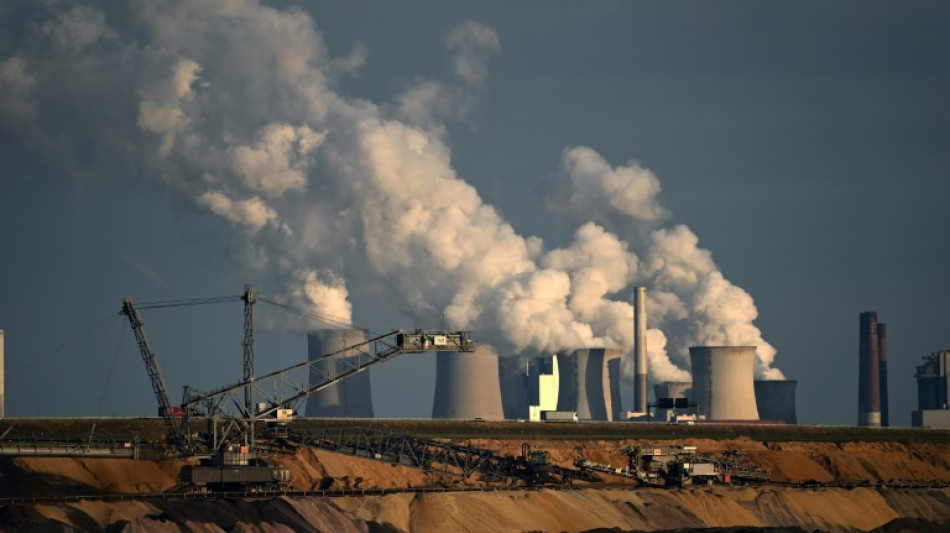
Dutch join Germany, Austria, in reverting to coal / Photo: Ina FASSBENDER - AFP/File

 Rubio seeks to strengthen US foothold in Central Asia
 LeBron joins 76ers to chase one more NBA title at age 41

 Rays one win from World Series return after downing Guardians

 Kings' Ben Simmons tears Achilles in training
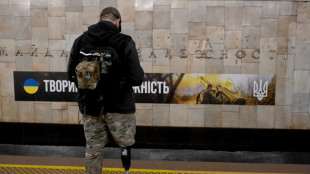
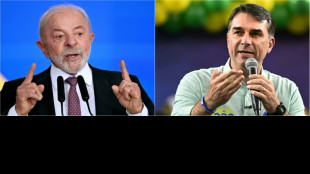 Lula, Bolsonaro set for first debate showdown in bitter election race

 Mbappe hits two as Real Madrid rout Sevilla
 Browns edge Ravens for division lead, Texans beat Jags

 Lyon go top of Ligue 1 as Monaco fall to first defeat of the season
 Venezuela opposition alliance reaffirms Nobel laureate Machado as leader
 'Street Fighter' wins N. America box office, buzzy doc stuns in 2nd

 NFL: Paris game to go ahead despite protests in France

 Arteta hails Arsenal 'finishers' after Madueke fells Forest

 Trump backs ally Netanyahu ahead of Israel's tight election

 Madueke strikes late as below-par Arsenal sink Forest
 Second day of street clashes in Milan

 Dupont's Toulouse hold off Exeter as English Champions Cup woes continue

 Zelensky speaks to US envoys amid Trump spat

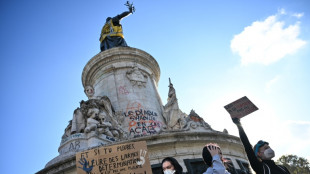 Paris police in new battles with protesters and looters
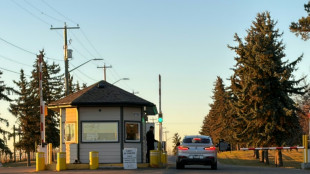 Multiple deaths, injuries at western Canada military base: minister

 Boland strikes twice for Australia in rain-hit South Africa Test

 Marseille put Angers to the sword in Ligue 1
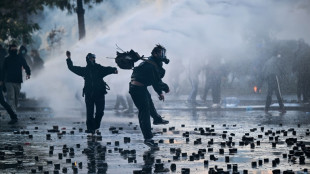 Albanian PM refuses to quit as violent protests enter sixth day

 Chwalinska fights back to win Wuhan Open in title breakthrough
 Kulusevski on brink of return for Spurs after 17-month absence

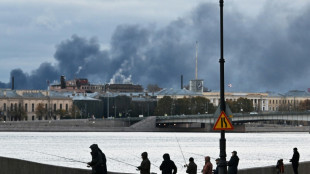 Ukraine sets Saint Petersburg refinery ablaze in large-scale drone attack

The Dutch joined Germany and Austria in reverting to coal power on Monday following an energy crisis provoked by Russia's invasion of Ukraine.
The Netherlands said it would lift all restrictions on power stations fired by the fossil fuel, which were previously limited to just over a third of output.
Berlin and Vienna made similar announcements on Sunday as Moscow, facing biting sanctions over Ukraine, cuts gas supplies to energy-starved Europe.
"The cabinet has decided to immediately withdraw the restriction on production for coal-fired power stations from 2002 to 2024," Dutch climate and energy minister Rob Jetten told journalists in The Hague.
The Dutch minister said his country had "prepared this decision with our European colleagues over the past few days".
Germany however said it still aimed to close its coal power plants by 2030, in light of the greater emissions of climate-changing CO2 from the fossil fuel.
"The 2030 coal exit date is not in doubt at all," economy ministry spokesman Stephan Gabriel Haufe said at a regular news conference.
The target was "more important than ever", he added.
- 'More countries being squeezed' -
Russia's invasion of its pro-Western neighbour has sent global prices for energy soaring and raised the prospect of shortages if supplies were to be cut off.
Russian energy giant Gazprom has already stopped deliveries to a number of European countries, including Poland, Bulgaria, Finland and the Netherlands.
Germany's reliance on Russian energy imports has made it particularly vulnerable as Moscow looks for leverage against the West.
The Dutch are less reliant, depending on Russia for around 15 percent of their gas supplies compared to the EU average of 40 percent. But they are still concerned.
"I want to emphasise that at the moment there's no acute gas shortage," Dutch minister Jetten said. "However, more countries are now being squeezed (by Russia). That worries us."
The Dutch government said it was also making an "urgent appeal" to companies and business to save as much energy as possible ahead of the winter.
Germany's decision to power up its coal power plants came after Gazprom cut deliveries to Germany via the Nord Stream gas pipeline last week.
The move, presented by Gazprom as a technical issue, has been criticised as "political" by Berlin.
German Economy Minister Robert Habeck, a Green party politician, described the decision to revert to coal as "bitter, but indispensable for reducing gas consumption".
- 'Unexpected situation' -
Austria's government meanwhile announced Sunday that it would reopen a mothballed coal power station because of power shortages arising from reduced deliveries of gas from Russia.
The authorities would work with the Verbund group, the country's main electricity supplier, to get the station in the southern city of Mellach back in action, said the Chancellery.
The European Commission noted Monday that "some of the existing coal capacities might be used longer than initially expected" because of the new energy landscape in Europe.
"We know that the energy mix and the plans of member states will adjust slightly because we are in an unexpected situation," Commission spokesman Tim McPhie said at a press briefing.
Germany, Europe's largest economy, has managed to reduce the share of its natural gas supplied by Russia from 55 percent before the invasion to 35 percent.
The government has also mandated the filling of gas reserves to 90 percent ahead of the European winter at the end of the year, to hedge against a further reduction in supply.
Germany's government, a coalition between the Social Democrats, Liberals and Greens, aims "ideally" to close all coal power plants by 2030.
Their agreement, reached at the end of last year, brought forward the previous government's aim to shut the plants by 2038.
burs-dk/jhe/jj
W.Nelson--AT