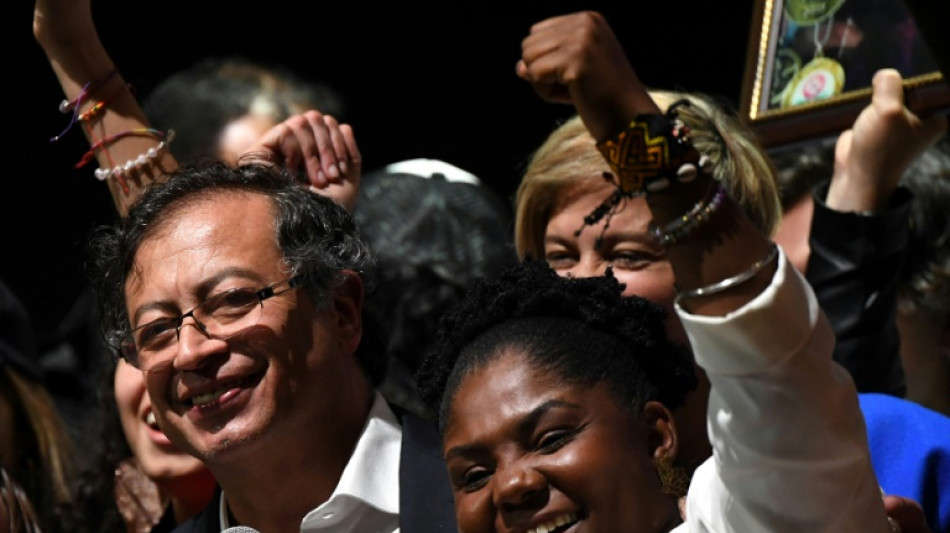
Colombian president's challenges: military, rebels, congress and markets / Photo: Daniel MUNOZ - AFP

 Rubio seeks to strengthen US foothold in Central Asia

 LeBron joins 76ers to chase one more NBA title at age 41

 Rays one win from World Series return after downing Guardians
 Kings' Ben Simmons tears Achilles in training
 Lula, Bolsonaro set for first debate showdown in bitter election race
 Mbappe hits two as Real Madrid rout Sevilla
 Browns edge Ravens for division lead, Texans beat Jags
 Lyon go top of Ligue 1 as Monaco fall to first defeat of the season
 Venezuela opposition alliance reaffirms Nobel laureate Machado as leader

 'Street Fighter' wins N. America box office, buzzy doc stuns in 2nd

 NFL: Paris game to go ahead despite protests in France
 Arteta hails Arsenal 'finishers' after Madueke fells Forest

 Trump backs ally Netanyahu ahead of Israel's tight election

 Madueke strikes late as below-par Arsenal sink Forest
 Second day of street clashes in Milan

 Dupont's Toulouse hold off Exeter as English Champions Cup woes continue

 Zelensky speaks to US envoys amid Trump spat

 Paris police in new battles with protesters and looters
 Multiple deaths, injuries at western Canada military base: minister

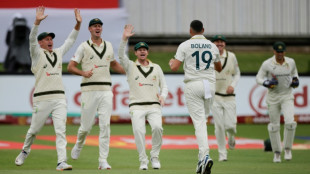 Boland strikes twice for Australia in rain-hit South Africa Test

 Marseille put Angers to the sword in Ligue 1
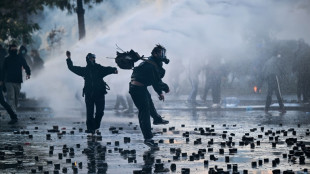 Albanian PM refuses to quit as violent protests enter sixth day

 Chwalinska fights back to win Wuhan Open in title breakthrough
 Kulusevski on brink of return for Spurs after 17-month absence

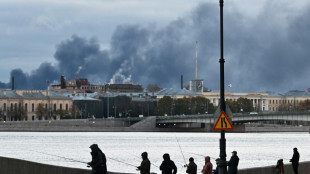
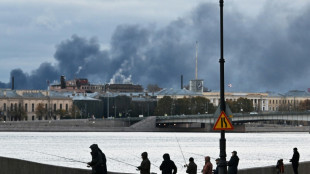 Ukraine sets Saint Petersburg refinery ablaze in large-scale drone attack
Gustavo Petro, Colombia's new president, faces a plethora of challenges ahead -- from appeasing deeply suspicious military and business sectors, to ending a decades-long conflict with armed groups and garnering enough support in congress to govern.
Here are four main issues the 62-year-old former guerrilla needs to address:
- Military mistrust
When Petro is sworn as president, the military high command will have to pledge loyalty to a former guerrilla in a country that has been fighting leftist rebels for six decades.
Added to that, in April Petro accused the military high command of being allies of the Gulf Clan, the largest drug cartel in Colombia.
Army general Eduardo Zapateiro responded by accusing Petro of "politicking", breaking the rules of a constitution that bars the security forces from taking part in political debate or voting.
"The issue of mistrust between the president and the military is significant," Sergio Guzman, president of the Colombia Risk Analysis consultancy, told AFP.
"Petro must appoint someone (as defense minister) who commands the respect and trust of military members, otherwise, the transition is likely to be a mess."
It is normal for a new president to "purge" the military high command when taking office, said Felipe Botero, a professor of political science at Los Andes University.
But "Petro will have to do so with silk gloves," he added.
The new president's choice for defense minister will be keenly scrutinized.
So far, all he has said is that he will appoint a woman specializing in human rights.
- Ending armed conflict
As an ex-guerrilla himself, Petro already faces a mountain of skepticism and even hatred.
During the campaign he faced many false accusations, including claims that he personally killed many people when he belonged to the M-19 rebel group -- he says he was just an organizer.
"It was a campaign of lies and fear mongering," Petro said.
Before the election he vowed to open peace negotiations with the National Liberation Army (ELN), Colombia's last active rebel group. But to do so would be to walk a tightrope.
"I think Petro will struggle a lot with the ELN. When he comes into office he will have a million political battles to fight," said Elizabeth Dickinson, Colombia analyst at the International Crisis Group in Bogota.
If he wants to convince his doubters that "he is not himself an extreme left wing politician," opening negotiations with the ELN should be put on the back burner, she said.
However, Dickinson added that "the only real exit route from the conflict" is to negotiate with armed groups that have stepped up violence this year.
- Forming majorities
Petro's allies took a significant number of seats in March's legislative elections, but not enough for a majority.
"This result does not give the new president a clear mandate to execute his policy without at least trying to address" opposition concerns, said Guzman.
In such a fragmented congress, Petro will have to "show a willingness to share cabinet positions with different parties."
He will also need to demonstrate he has learned from the mistakes he made as mayor of Bogota from 2012-15, when he repeatedly clashed with the city council, which buried many of his initiatives.
"Now that the problem is the governability of congress, Petro has to try to propose what he called a great national agreement," Alejo Vargas, a law professor in the National University, told AFP.
- Appeasing markets
On the campaign trial, Petro tried to assuage fears he would turn Colombia into a new Venezuela by promising not to expropriate private property or businesses.
In his first speech as president-elect, he struck a conciliatory tone.
"We are going to develop capitalism in Colombia, not because we love it but because we must first overcome pre-modernity," Petro told cheering supporters.
That was "a clear message to the right," said Botero.
Petro is saying "I'm left-wing, but that doesn't mean I will radically transform the economy."
But judging by his first speech, friction is around the corner.
"He said thigs that imply regulation, which is one of the main fears of the markets," said Botero.
Michael Shifter from the Inter-American Dialogue think tank says Petro "doesn't want to be a failed president and if any country is a failed country, it's Venezuela."
But economist Jorge Restrepo says Petro still needs to build confidence in the business sector.
The new president will need to treat businesses not "as rivals but as those that will manage the development and creation of employment."
T.Sanchez--AT