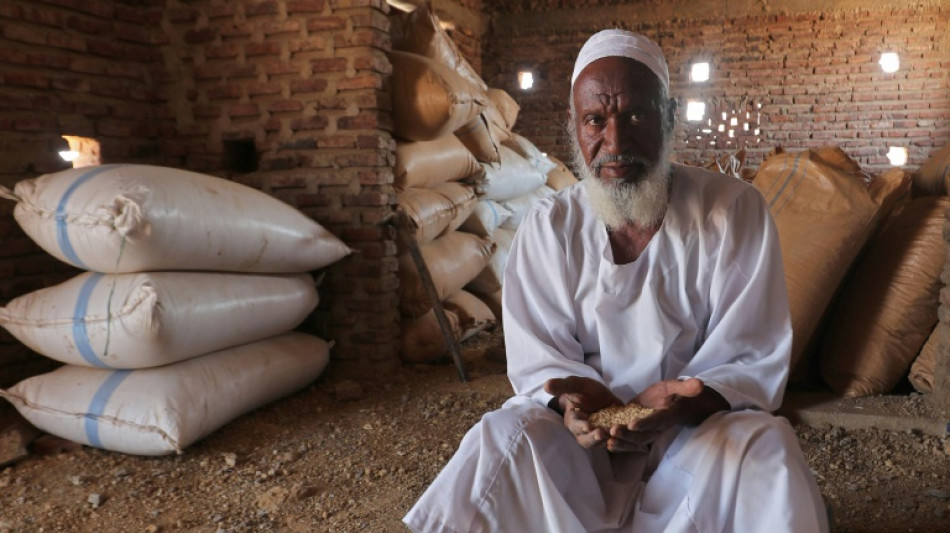
Sudan wheat harvest waits to rot as hunger crisis looms / Photo: ASHRAF SHAZLY - AFP

 Rubio seeks to strengthen US foothold in Central Asia

 LeBron joins 76ers to chase one more NBA title at age 41

 Rays one win from World Series return after downing Guardians

 Kings' Ben Simmons tears Achilles in training

 Lula, Bolsonaro set for first debate showdown in bitter election race

 Mbappe hits two as Real Madrid rout Sevilla
 Browns edge Ravens for division lead, Texans beat Jags

 Lyon go top of Ligue 1 as Monaco fall to first defeat of the season

 Venezuela opposition alliance reaffirms Nobel laureate Machado as leader

 'Street Fighter' wins N. America box office, buzzy doc stuns in 2nd

 NFL: Paris game to go ahead despite protests in France

 Arteta hails Arsenal 'finishers' after Madueke fells Forest

 Trump backs ally Netanyahu ahead of Israel's tight election

 Madueke strikes late as below-par Arsenal sink Forest
 Second day of street clashes in Milan

 Dupont's Toulouse hold off Exeter as English Champions Cup woes continue

 Zelensky speaks to US envoys amid Trump spat

 Paris police in new battles with protesters and looters

 Multiple deaths, injuries at western Canada military base: minister

 Boland strikes twice for Australia in rain-hit South Africa Test

 Marseille put Angers to the sword in Ligue 1

 Albanian PM refuses to quit as violent protests enter sixth day

 Chwalinska fights back to win Wuhan Open in title breakthrough
 Kulusevski on brink of return for Spurs after 17-month absence

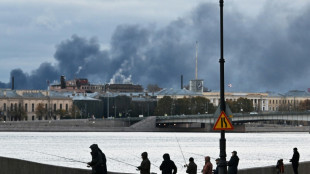 Ukraine sets Saint Petersburg refinery ablaze in large-scale drone attack

Looking at the sacks of wheat stacked in Imad Abdullah's small home, no one would guess that Sudan's food security is hanging by a thread after an October coup and Russia's invasion of Ukraine.
But the wheat farmer fears that the grain will soon rot, after his country's cash-strapped government backed out of promises to purchase it at incentivising prices.
"It has been two months since I harvested the wheat and I can't store it in the house anymore," said Abdullah, pointing to the large sacks filled with ripened wheat crammed into his small house in Al-Laota, in Gezira state, south of Sudan's capital.
He is one of thousands of farmers who have cultivated the grain as part of Sudan's largest agricultural scheme, named Al-Gezira.
When Abdullah harvested in March, he was promised 43,000 Sudanese pounds ($75) per sack –- a price set by the government to encourage farmers to cultivate the grain.
"We used to sell the government our entire harvest. We never had to bring it home. We don't even have adequate storage places."
Sudanese officials have however declared in recent weeks that they will not be able to buy this season's entire harvest due to lack of funds.
Impoverished Sudan has for years been grappling with a grinding economic crisis, which deepened after last year's military coup prompted Western governments to cut crucial aid.
The October coup derailed a fragile transition put in place following the 2019 ouster of president Omar al-Bashir.
Over 18 million people, nearly half the Sudanese population, are expected to be pushed into extreme hunger by September, according to United Nations estimates.
Russia's invasion of Ukraine, both key grain suppliers, threatens to compound Sudan's existing food security troubles.
Wheat imports from both nations make up between 70 and 80 percent of Sudan's local market needs, according to a 2021 UN report.
- Empty coffers -
Last month, dozens of wheat farmers from Sudan's Northern State staged a protest outside the agricultural bank after it refused to take their harvest.
"I grew 16 acres of wheat this season, filling some 120 sacks amounting to a total of 12 tonnes," farmer Modawi Ahmed told AFP.
He said the bank only agreed to buy less than half of his harvest, and he now fears the rest will spoil.
Farmers working the fields as part of the Al-Gezira scheme have over the years contributed only a small portion of Sudan's annual wheat needs of 2.2 million tonnes.
This year, local wheat production was forecast to cover only a quarter of the country's needs, according to the UN's Food and Agriculture Organisation (FAO).
The finance ministry earlier this month said it was committed to building a strategic wheat reserve of up to 300,000 tonnes.
But the government "does not have the money to buy the harvest", said an official with Sudan's agricultural bank, which procures the wheat from farmers.
"We have asked the finance ministry and the central bank for funds but we got no response," the official told AFP on condition of anonymity.
An official with Sudan's finance ministry, who also spoke on condition of anonymity, confirmed the lack of funds.
Properly stored wheat can last up to a year and a half in silos with controlled temperature and humidity levels, according to agricultural expert Abdulkarim Omar.
But it "could spoil within as little as three months" in inadequate storage, he said.
Traders have offered to buy the farmers' wheat, but at far lower prices that barely cover the cost of production, according to Omar Marzouk, the governor of the Al-Gezira scheme.
As a result, he predicted that "farmers will opt against cultivating the grain next season".
- Risk to food security -
Now, as the new growing season starts, many frustrated farmers are leaving their lands untilled and unprepared.
Kamal Sari, leader of the farmers' association, fears that reluctance to prepare for the new season could affect "food provision for the Sudanese people".
Last week, two children in Sudan's Darfur region died "due to hunger-related causes", UK-based aid group Save the Children said, warning it was "an ominous sign of what is to come".
Sudanese households have come under increasing pressure in recent months due to spiralling fuel and electricity prices.
Prices of staple food items have also skyrocketed, with inflation recently surpassing 200 percent.
Rising bread prices due to slashed wheat subsidies sparked the political turmoil and mass rallies that led to the ouster of Bashir in 2019.
Given the economic crisis and the ongoing war in Ukraine, economist Mohamed al-Nayer said "the government should buy the wheat from farmers at any price".
Otherwise, he warned, "it complicates the situation in Sudan far more than it already is."
A.Clark--AT