Indians buy 14 million ACs a year, and need many more / Photo: Sajjad HUSSAIN - AFP

 Syria reopens Jordan border crossing after mending ties

 Cyclone Arnab lashes India coast, no deaths reported

 Trump tamed after US midterms? Europe doubts it

 Tech stocks soar as SK hynix adds to rising AI confidence

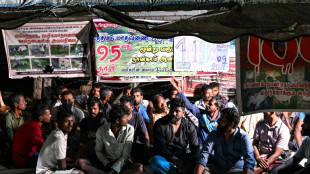 Sri Lanka's Tamil farmers fight to reclaim land after civil war

 Afghans compete for jobs, homes as millions return

 'They don't care about us': Trump food aid cuts leave Americans struggling and angry

 Meta, Snap head to trial in another case about social media's harms

 French Senate passes bill to make protesters pay for unrest damage

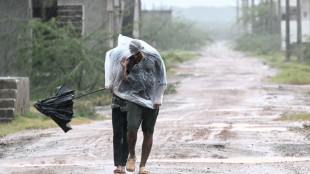 India evacuates tens of thousands as Cyclone Arnab makes landfall

 In tight Israel vote, both camps hold out cautious hope
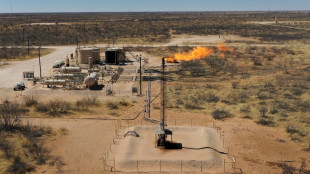
 AI chip giant SK hynix says quarterly operating profit soars 630%

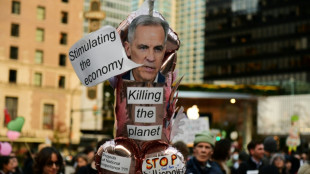 Youths testify about 'despair' in unprecedented Canadian climate trial

 'A very sad day': Arteta despair as Arsenal stunned by Fleetwood

 Charles tackles thorny legacy of slavery on Caribbean trip

 Former Grand Slam winner Wawrinka ends tennis career

 Brazil's Flavio Bolsonaro flees to US after election loss

 'Faerie' nights: 'ACOTAR' fans finally get their book

 American woman convicted of getting military training from Islamic State

 Israel opposition holds narrow edge over Netanyahu in first projections

 Floriani hits maiden goal as Lazio go top

 Trump set to drastically loosen oil and gas sector's methane rules

 Storied Paris department store seeks bankruptcy protection
 Xhaka, Embolo can return to Swiss squad after fake Covid docs affair

 Allegri suspended for two Serie A games after red card

Aarti Verma is about to join the growing ranks of Indians installing air conditioning, scraping together savings to secure relief from sometimes deadly temperatures that can reach nearly 50 Celsius.
A record 14 million AC units were sold in India last year, with a ninefold increase in residential ownership forecast by mid-century. That will give millions safer and more comfortable conditions at work and home.
But it will also drive demand for electricity that is generated mostly by burning climate-warming coal, and increase the hot AC exhaust air expelled into the country's stifling streets.
For Verma, the priority is securing some immediate relief.
Her sales and marketing work means she must visit multiple stores a day, battling blazing heat.
"Coming home after a long day I want some comfort," said the 25-year-old, who earns 30,000 rupees ($350) a month and will pay 50,000 rupees ($584) to install air conditioning in her spartan two-room home.
"Earlier I would sleep on the terrace, but these days it's so hot even in the night, AC has become a necessity," she told AFP in a poor neighbourhood of the capital Delhi.
India is the world's fastest-growing AC market, despite only about seven percent of households currently owning units.
The boom could mean the world's most populous country needs to triple electricity production to meet demand, experts say.
The nation of 1.4 billion people is already the world's third-biggest producer of climate-warming greenhouse gases, burning through one billion tonnes of coal in 2024-25, according to a government statement.
- Brutal summer -
"AC penetration across India is primarily driven by weather conditions, a growing middle class, favourable consumer financing options and widespread electrification," said K.J. Jawa,the India chief of Japanese AC manufacturer Daikin.
"Today, ACs are no longer regarded as a luxury indulgence, but a productivity and need investment –- as a good night sleep is imperative for our mental and physical wellness," he told AFP.
Verma had to pay 13,000 rupees ($150) as a down payment, with the rest divided over monthly instalments.
"I could have bought gold with that money which would have been a good investment but I gave priority to the AC," she said.
According to the meteorological department, 2024 was India's hottest year since thorough records began in 1901, with sizzling temperatures following a global pattern of extreme weather driven by climate change.
A heatwave in May 2024 in New Delhi saw temperatures match the capital's previous record high: 49.2 Celsius (120.5 Fahrenheit) clocked in 2022.
The brutal summer heat can melt tarmac on the roads and puts millions of people at risk, with nearly 11,000 people dying due to heat stroke in India between 2012 and 2021, according to government data.
Public health experts say the true number of heat-related deaths is likely in the thousands but because heat is often not listed as a reason on a death certificate, many casualties don't get counted in official figures.
Ironically, the refrigerants inside AC units and the coal-generated electricity that powers them only exacerbate global warming. Widespread AC use also raises outdoor temperatures by expelling indoor heat.
Studies -- including by the World Health Organization and UN-Habitat -- show that the heat-generating motors inside AC units can themselves push up temperatures in urban areas by a degree Celsius or more.
- Energy ratings -
Before buying an AC, Verma relied on a traditional air cooler -- a noisy fan-run device that blows cool air off water-soaked pads.
But filling the cooler with water and making sure it did not become a haven for disease-carrying mosquitoes required great effort.
Sales are brisk at Imperial Refrigeration in Delhi's old quarters, with a steady stream of customers braving the afternoon heat.
Japsahib Singh Ahuja, 22, whose family owns the 50-year-old business, said sales have more than tripled in the last five years, thanks to first-time consumers and AC "replacement cycles".
"ACs these days don't last long, because there are so many pollutants in Delhi air that lead to corrosion and gas leakage from the equipment," he explained.
Delhi and the surrounding metropolitan area, home to more than 30 million people, consistently top world rankings for air pollution.
Air conditioning will account for a quarter of India's emissions and nearly half nationwide peak electricity demand by 2050, according to the UN Environment Programme's Cool Coalition.
But India has so far declined to sign up to the coalition's Global Cooling Pledge to reduce the sector's climate impact.
Still, there are signs of hope, with Indians increasingly buying energy-efficient AC units, according to Ahuja.
Energy-saving inverter ACs now dominate the market, and companies set a default temperature of 24 degrees Celsius.
"Energy ratings are now mandatory," said Ahuja. "We will surely see long-term benefits."
R.Garcia--AT