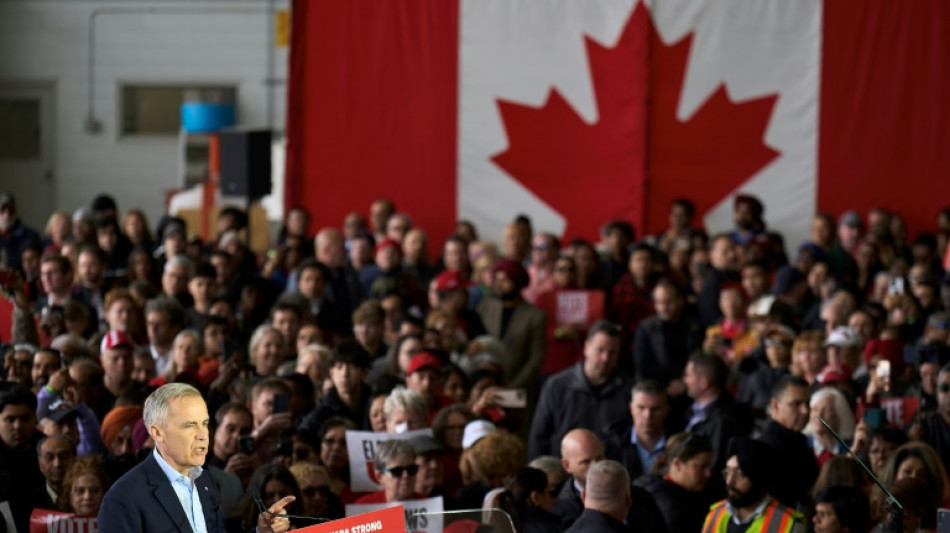
Canada votes for new government to take on Trump / Photo: Geoff Robins - AFP

 Stocks rise as US inflation cools, tech stocks bounce

 Pope replaces New York's Cardinal Dolan with pro-migrant bishop

 France exonerates women convicted over abortions before legalisation

 Historic Afghan cinema torn down for a mall

 Danish 'ghetto' residents upbeat after EU court ruling

 Pope replaces New York's Cardinal Timothy Dolan with little-known bishop
 Have Iran's authorities given up on the mandatory hijab?

 US strike on alleged drug boat in Pacific kills four

 Protests in Bangladesh as India cites security concerns
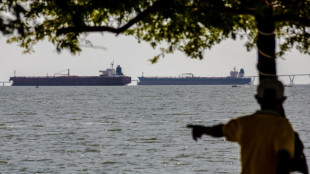
 Tractors clog Brussels in anger at EU-Mercosur trade deal
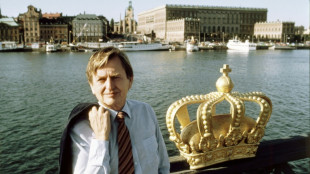
 Nepal's ousted PM Oli re-elected as party leader
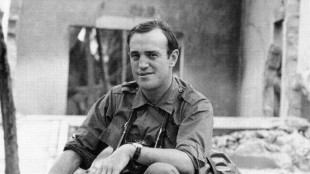 Pulitzer-winning combat reporter Peter Arnett dies at 91

 Lyon humbled to surpass childhood hero McGrath's wicket tally

 England vow to keep 'fighting and scrapping' as Ashes slip away

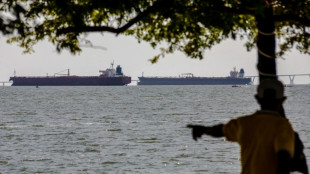 Most Asian markets track Wall St lower as AI fears mount

 Thai queen wins SEA Games gold in sailing
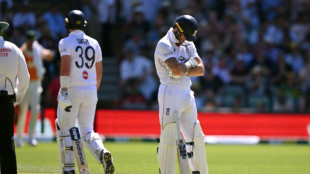
 Masterful Conway, Latham in 323 opening stand as West Indies wilt
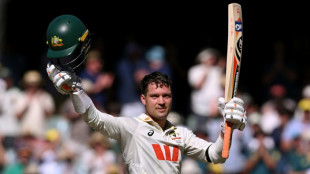 Cricket Australia boss slams technology as Snicko confusion continues

 Alleged Bondi shooters holed up in hotel for most of Philippines visit
 US approves $11 billion in arms sales to Taiwan: Taipei

 Guarded and formal: Pope Leo XIV sets different tone

 Trump vows economic boom, blames Biden in address to nation

 Taiwan eyes fresh diplomatic ties with Honduras

 Asian markets track Wall St lower as AI fears mount

 Australia PM vows to stamp out hatred as nation mourns youngest Bondi Beach victim

Canada elects a new government on Monday to confront annexation threats from the United States and deal directly with President Donald Trump, whose trade war has defined the campaign.
The Liberal Party, led by new Prime Minister Mark Carney, looked set to lose easily to the Conservatives' Pierre Poilievre until the US president's attacks on the country sparked a sudden reversal in poll forecasts.
Carney, 60, has never held elected office and only replaced Justin Trudeau as prime minister last month. He had a lucrative career as an investment banker before serving as the central bank governor in both Canada and Britain.
Carney has argued his global financial experience has prepared him to guide Canada's response to Trump's tariffs.
He has also promised to revitalize internal trade and expand Canada's economic opportunities abroad to cut reliance on the United States, a country Carney says "we can no longer trust."
The United States under Trump "wants to break us, so they can own us," he has warned repeatedly through the campaign.
"We don't need chaos, we need calm. We don't need anger, we need an adult," Carney said in the campaign's closing days.
Poilievre, a 45-year-old career politician, has tried to keep the focus on domestic concerns that made Trudeau deeply unpopular toward the end of his decade in power, especially soaring living costs.
The Tory leader has argued Carney would bring a continuation of what he calls "the lost Liberal decade," arguing that only a new Conservative government can take action against crime, housing shortages and other non-Trump issues Canadians rank as priorities.
"You cannot handle another four years of this," he said over the weekend.
Poilievre has critiqued Trump, but insisted ten years of poor Liberal governance had left Canada vulnerable to a newly hostile United States.
- 'A good pick' -
Final polls indicate a tight race but put Carney as the favorite.
Surveys have also consistently shown voters view the ex-central banker as the best candidate to deal with Trump.
Jeff Sims, who lives in Quebec near Canada's capital Ottawa, said he believes Carney has "the pedigree" to be prime minister.
"Two central banks under his belt, I think that's a good pick," the 46-year-old told AFP on Sunday.
At a weekend Conservative rally in the battleground city of Oakville, west of Toronto, Janice Wyner rejected the notion that Carney marked a departure from Trudeau.
Trudeau's "policies stunk and it's the same party," she told AFP.
"Canada is just in a mess. I'm 70 years old. It's not even a country that I recognize and I'm worried for my grandkids."
Like many voters, Nadine Sokol, a 41-year-old who also lives near Ottawa, listed "the threat coming from the US" as her "number one issue."
- Historic turnaround -
If the Liberals win, it would mark one of the most of dramatic turnarounds in Canadian political history.
On January 6, the day Trudeau announced he would resign, the Conservatives led the Liberals by more than 20 points in most polls, and Poilievre looked on track to be Canada's next prime minister.
But Carney replacing Trudeau combined with nationwide unease about Trump transformed the race.
Public broadcaster CBC's poll aggregator on Sunday put the Liberals' national support at 42.8 percent, with the Conservatives at 38.8 percent.
As with US elections, national polling numbers may not predict a result.
The performance of two smaller parties -- the left-wing New Democratic Party (NDP) and the separatist Bloc Quebecois -- will be closely watched.
In past elections, strong NDP performances in Ontario and British Columbia, and a good showing by the Bloc in Quebec, have curbed Liberal seat tallies, but polls suggest both smaller parties could be facing a setback.
Nearly 29 million of Canada's estimated 41 million people are eligible to vote. A record 7.3 million people cast advanced ballots.
In the massive G7 country which spans six times zones, polls open at 8:30 am local time in the Atlantic province of Newfoundland and Labrador.
Canadians will elect 343 members of parliament, meaning 172 seats are needed for a majority. The Liberals won a majority in 2015 but have governed with a minority since 2019.
F.Wilson--AT