Australia to stockpile critical minerals in strategic reserve / Photo: - - BHP BILLITON/AFP/File

 No penalty practice? No problem for Man City in shoot-out win

 Microsoft beats expectations fueled by Azure cloud business
 Chelsea win as Bayern draw with Madrid in Women's Champions League

 Kane watches as Bayern cruise into German Cup last 16

 Bayern boss Kompany out of hospital after meningeal irritation
 Shares in Google owner Alphabet sink on profit miss, ad slowdown
 Chelsea win as Bayern and Madrid draw in Women's Champions League
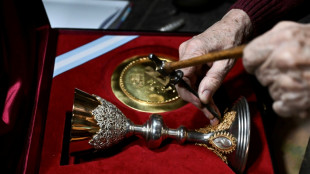 Made with munitions from the Falklands War, a 'Chalice of Peace' for the pope
 Pioneering US labor leader Dolores Huerta dies at 96

 Italian PM slams 'shameful' release of alleged protest organiser

 Hollywood producer Kennedy to head LA28 Olympic ceremony plans

 Djokovic wins Basel opener to boost ATP Finals bid

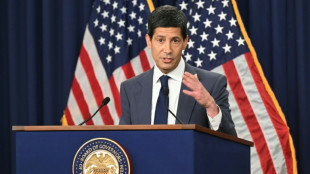
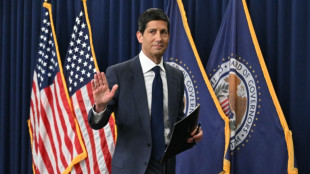
 US Fed holds interest rates steady despite surging inflation
 Chiefs sign ex-Ravens kicker suspended over sex allegations

 Inglis and Carey put Australia in command of South Africa decider

 92-year-old US judge handling Maduro case dies

 Perez extends Cadillac deal to 2029
 Arab Israelis proud of high election turnout, uncertain for future
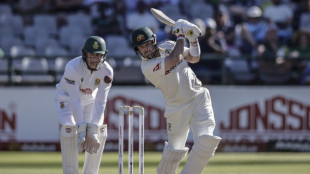 Inglis, Carey put Australia in command of South Africa decider
 French firm Safran helps build aircraft wings of the future in UK factory
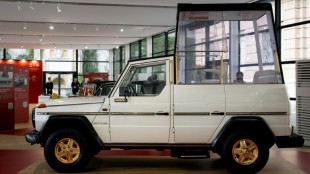
 Ceasefire in Russia-occupied Ukrainian city holds for second day

 Canada hikes rates to contain oil price surge caused by Iran war

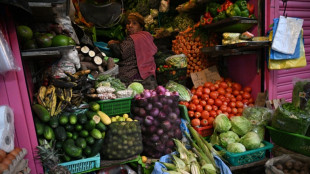 World Bank warns of worsening food insecurity as commodity prices soar

 Mona Lisa scrubbed from Syrian textbooks as critics slam conservative drift
 Bolsonaro flees Brazil for US after election defeat: AFP
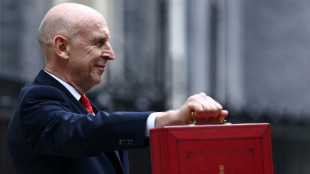
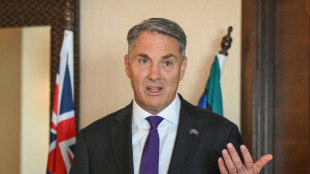
Australia will stockpile critical minerals in a new strategic reserve, Prime Minister Anthony Albanese said Thursday, as nations scramble to source rare earths and coveted metals outside China.
Mining superpower Australia sits on bulging deposits of lithium, nickel and cobalt -- metals used in everything from smartphones to electric vehicles.
But most of this boon is sold as raw ore to processing factories in China, which has a chokehold on the global supply of finished critical minerals.
Albanese said Australia would start stockpiling these commodities at home, striking deals to sell them to other "key partners".
"Increasingly uncertain times call for a new approach to make sure Australia maximises the strategic value of critical minerals," he said in a statement.
"We need to do more with the natural resources the world needs, and that Australia can provide."
Australia would initially set aside Aus$1.2 billion (US$760 million) to get the reserve up and running.
Albanese's government has previously suggested Australia could use its critical minerals as a bargaining chip in tariff talks with the United States.
Australia sits on some of the largest lithium deposits in the world, and is also a leading source of lesser-known rare earth metals such as neodymium.
Major manufacturing nations such as the United States, Germany and Japan are eager to obtain these critical minerals from sources other than China.
Japan has its own critical minerals stockpile, while the United States has been investing in metals refineries and other processing technology.
- Rare earth ransom -
"The ability for the government to stockpile is an important safeguard against market pressure, as well as interventions from other nations," Albanese said in a speech later on Thursday.
"It means Australia has the power to sell at the right time to the right partners for the right reasons."
Critical minerals loom as a likely new front in the unfolding trade war between Washington and Beijing.
US President Donald Trump last week ordered a probe that could result in new tariffs targeting China.
Trump's order stated that the United States was dependent on foreign sources of critical minerals, putting its military and energy infrastructure at risk.
China has shown a willingness to hold rare earths to ransom in the past.
At the height of a diplomatic dispute in 2010, China effectively banned the export of rare earths into Japan.
The move rattled Japan's car-making industry, which was heavily reliant on certain rare earth alloys to build magnets used in motors.
China controls some 90 percent of the world's supply of rare earths -- a subset of critical minerals -- and is fiercely protective of its position.
Beijing has banned the export of processing technology that could help rival nations, and has been accused of using state-imposed quotas to control supply.
T.Wright--AT