Patients with leprosy face lasting stigma in Ethiopia / Photo: Amanuel Sileshi - AFP

 11 injured in Colombia bombing days before presidential inauguration
 In Spain's Ceuta, exhausted migrants end short trip with little hope

 German FA calls for 'full investigation' into FIFA proposal
 Richarlison, Tonali fire 10-man Spurs to 2-1 Sydney win over Chelsea

 Deadly strikes rock Kyiv, as Ukraine sinks Russian cargo ship

 UEFA target Infantino after FIFA shelve World Cup private investment plan
 Infantino has lost UEFA's 'confidence' despite withdrawal of 'shabby deal'
 Spain's N. Africa enclave returns to normal as migrants depart
 Iranian pilgrims flood Iraq for first Arbaeen since war
 Migrants depart Spain's N. Africa enclave as EU tightens borders
 Timeline: How FIFA's World Cup private investment plan imploded
 Search resumes for missing climbers from Pakistan avalanche

 Warsaw and Kyiv exhume Volyn victims at centre of diplomatic quarrel

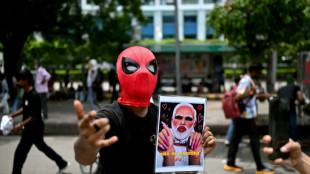 India PM Modi says he forgives protesters who abused him

 Veteran Wallabies playmaker Quade Cooper eyes World Cup comeback

 FIFA scraps private investment plan after backlash

 WoodWorks and SPEC Toolbox Partner to Make Mass Timber Design Easier for Structural Engineers

 South Africa's WAFCON hopes hang in the balance after dramatic draw

 Hunter Bell cruises to Commonwealth gold, Pathirage stuns javelin stars

 Amazon surges as US stocks shrug off bond yield worries

 Google rolls back new satellite image AI tool after backlash

 Ryu leads in bid for third straight major at women's British Open

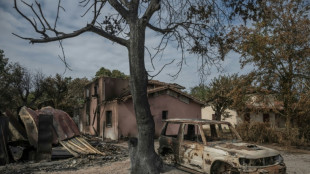 Fire-hit France region 'coming up for air' as main blaze calms

 Wembanyama to get signature shoe in Nike contract extension: reports
 Oil giants report blowout profits on war, warn high gas prices could persist
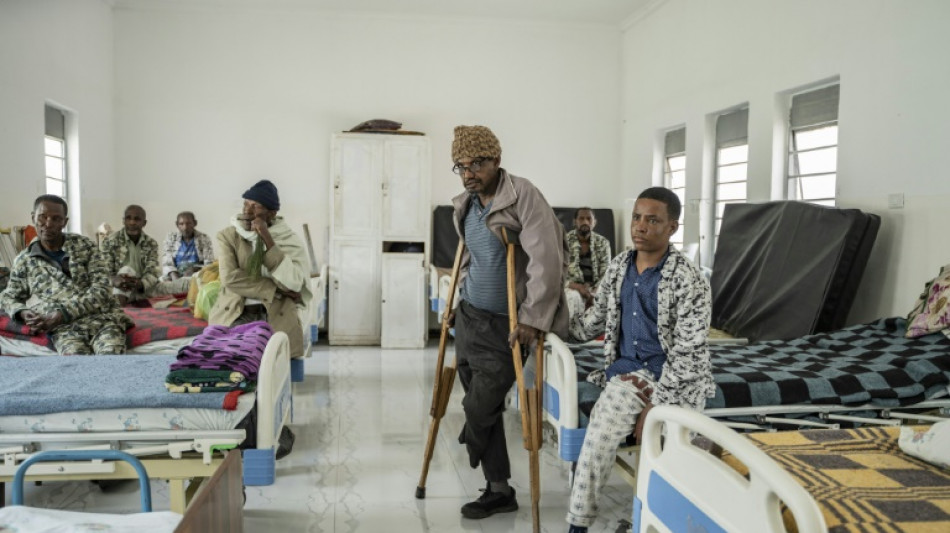
Tilahun Wale not only lost his right foot to leprosy -- a disease that still affects thousands in Ethiopia -- he also lost his family.
"My family abandoned me. They blocked my number and refused to speak to me," said Tilahun, 46, a farmer in Ethiopia's populous Oromia region, who contracted leprosy around 10 years ago.
Ethiopia, a country of some 130 million people in northeastern Africa, officially eliminated leprosy as a public health problem in 1999, after case numbers dropped below one in 10,000.
But some 2,500 infections are still recorded there each year, according to the United Nations World Health Organization (WHO), which lists leprosy as one of the 20 "neglected" tropical diseases.
In Ethiopia, a highly religious country, leprosy is often perceived as a divine punishment.
Caused by the bacteria Mycobacterium leprae, the contagious infection attacks the skin and peripheral nerves, with potentially serious after-effects, including physical deformities.
The disease was declared eliminated as a health problem globally in 2000, according to the WHO.
But leprosy is still present in more than 120 countries worldwide, with nearly 200,000 cases reported each year, despite being curable and with treatments that can prevent disability if applied early.
Haile Kairos developed the disease as a child.
"I noticed the appearance of lumps on certain parts of my body," said the 35-year-old, hiding the effects of leprosy on his legs with a blanket.
There is still a stigma, he said, recalling the disgust and avoidance he has faced.
Ethiopian society "doesn't have enough information about the disease", he said.
The Alert Hospital in the capital Addis Ababa specialises in leprosy and treats dozens of patients at a time.
It was originally founded as a leper colony in 1934 away from residential areas, but the city has expanded to surround it.
- 'Stigma has diminished' -
Perceptions of the disease are only slowly evolving, said Solomon Getahun, project manager at International Leprosy Mission, an NGO that provides medical assistance to patients and raises awareness.
It organises discussions in communities across Ethiopia, bringing together people with the disease to explain the challenges they face.
The NGO also offers microcredit to patients, most of whom struggle to find employment.
Atale Mekuriyaw, 70, works at a centre where a dozen people with the disease, mostly women, make rugs, traditional clothing and jewellery.
The modest salary "helps us provide for our families", she said.
For every kilo of raw cotton she weaves, she earns between 100 and 150 birr (around 75 cents to $1.15).
"Coming here and spending time like this is important to us. It's better than staying at home," added Atale, who has suffered from leprosy since childhood and says she feels less discriminated against today.
"In the past, people used to say: 'Don't go near her!' But today, thanks to access to medication, the stigma has diminished," she said.
The WHO has praised Ethiopia's progress in treatment and care.
But the recent drastic cuts in aid announced by the United States and other Western countries could undermine the efforts.
The WHO said last month it was cutting its budget by a fifth after the United States -- previously its biggest source of funds -- said it would no longer contribute.
That is a potential problem for Alert Hospital, where preventative medicines have been supplied by the WHO.
Shimelis Gezahegn, the hospital's director, said the Ethiopian authorities had promised "a backup plan".
He added that it was vital they step in to continue work on treatment and eventual eradication of the disease.
But "there could be some problems," he said.
R.Chavez--AT