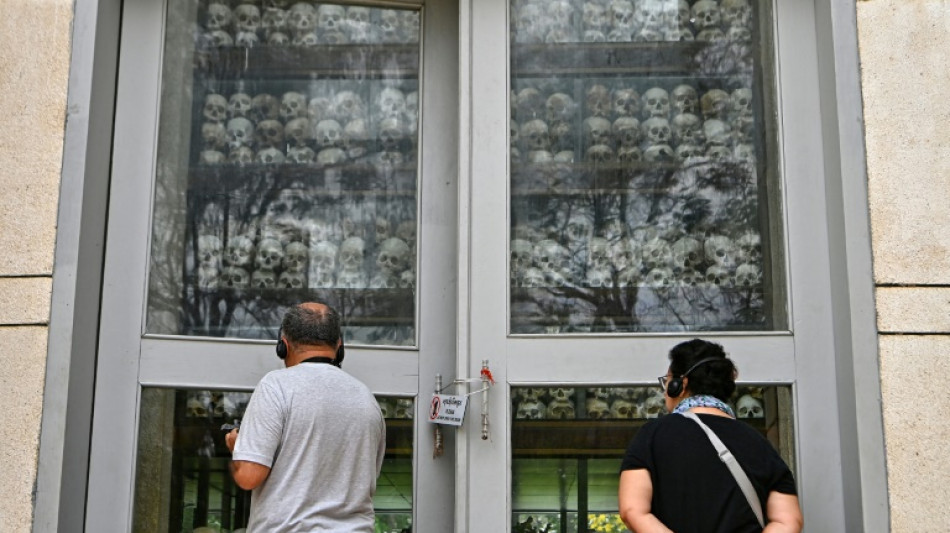
Silent killing fields 50 years on from Khmer Rouge atrocities / Photo: TANG CHHIN SOTHY - AFP

 Asian markets mixed as US jobs data fails to boost rate cut hopes
 Bondi shooting shocks, angers Australia Jewish community
 West Indies hope Christmas comes early in must-win New Zealand Test

 Khawaja revels in late lifeline as Australia 194-5 in 3rd Ashes Test
 Trump orders blockade of 'sanctioned' Venezuela oil tankers

 New Zealand ex-top cop avoids jail time for child abuse, bestiality offences

 'Extremely exciting': the ice cores that could help save glaciers
 What we know about Trump's $10 billion BBC lawsuit
 'Catastrophic mismatch': Safety fears as Jake Paul faces Anthony Joshua

 Khawaja grabs lifeline as Australia reach 94-2 in 3rd Ashes Test
 Trump says orders blockade of 'sanctioned' Venezuela oil tankers
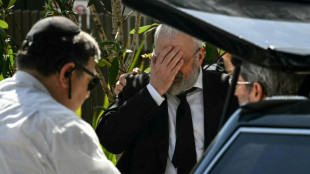 Australia holds first funeral for Bondi Beach attack victims

 Maresca relishes support of Chelsea fans after difficult week

 Nested Knowledge and Pharmacy Podcast Network Announce Strategic Collaboration to Advance Evidence-Based Podcasting in Healthcare
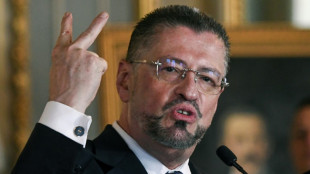 Costa Rican president survives second Congress immunity vote
 Australia holds first funerals for Bondi Beach attack victims
 Rob Reiner killing: son to be charged with double murder

 Netflix boss promises Warner Bros films would still be seen in cinemas
 Stocks mostly retreat on US jobs, oil drops on Ukraine hopes

 Trump imposes full travel bans on seven more countries, Palestinians

 Shiffrin extends slalom domination with Courchevel win
 Tepid 2026 outlook dents Pfizer shares

 FIFA announces $60 World Cup tickets for 'loyal fans'

 Shiffrin dominates first run in Courchevel slalom

 Arctic sees unprecedented heat as climate impacts cascade

Cambodia marked on Thursday the 50th anniversary of the Khmer Rouge's march into Phnom Penh, though survivors of its genocidal rule were forbidden from praying before victims' skulls.
On April 17, 1975, soldiers of the ultra-Maoist Khmer Rouge rolled into the capital astride tanks, toppling the US-backed republican army of Lon Nol and starting a four-year communist government.
To remember victims, a Cambodian opposition party asked for authorities' permission to hold a memorial at Choeung Ek -- the most notorious of the Khmer Rouge's "Killing Fields" -- in the capital Phnom Penh.
But the city refused to greenlight the event, citing issues of "public order" and safety, and warned that the group would be held legally responsible, according to a letter seen by AFP.
"Victims of the Khmer Rouge genocide should not be banned by any rule if they wish to memorialise this very difficult time in Cambodian history," said Youk Chhang, director of the Documentation Center of Cambodia (DC-Cam), which researches and records atrocities of that period.
City hall could not be immediately reached for comment.
Survivors were absent at the Choeung Ek wartime museum Thursday, though dozens of tourists visited the site and took pictures of the skulls displayed in glass cases.
Outside Choeung Ek, survivor Sum Rithy, 72, recalled the Khmer Rouge were initially given a cautious welcome by Phnom Penh's war-weary residents when they entered the city, their distinctive red-chequered scarves fluttering behind them.
But soon enough cadres began to evacuate the city of two million people at gunpoint, in one of the largest forced displacements in recent history.
"It was a day of nationwide bloodshed... the Khmer Rouge chased people away from homes everywhere," Sum Rithy said.
He said his father and three siblings were killed, while he was starved and jailed for two years on allegations that he was a member of the CIA.
There was "no happiness, no smiling, but there was only sadness and suffering", he told AFP. "I will never forget this."
- Tribunal -
The Khmer Rouge drove Cambodia -- once known as the "Pearl of Asia" for its music, culture and French colonial architecture -- back to "Year Zero" through an agrarian peasant revolution.
By the time the tyrannical rule of Pol Pot was ousted four years later, an estimated two million Cambodians had been killed by execution, starvation or overwork.
Only after the Khmer Rouge was forced out by Vietnamese soldiers in 1979 did the scale of its atrocities emerge, with the bones of thousands of victims -- including children -- uncovered at mass graves across the country.
Pol Pot died in 1998 without facing justice.
A special tribunal sponsored by the United Nations convicted three key Khmer Rouge figures before ceasing operations in 2022, but other former cadres continue to live freely.
Former prime minister Hun Sen -- an ex-cadre who ruled Cambodia for nearly four decades -- was against pursuing further cases at the tribunal, claiming it would plunge the country into instability.
Last month Cambodia enacted a law -- at the request of Hun Sen -- that forbids denying the Khmer Rouge's atrocities, but which rights advocates and academics warn could also be used to stifle legitimate dissent.
D.Johnson--AT