Iraqi markets a haven for pedlars escaping Iran's economic woes / Photo: Hussein FALEH - AFP

 Injured Australian swim star O'Callaghan pulls out of PanPacs
 California lifeguards wiped out from extreme weather

 FIFA scraps private investment plan after backlash: Infantino
 South Africa's WAFCON hopes hang in the balance after dramatic draw

 Hunter Bell cruises to Commonwealth gold, Pathirage stuns javelin stars

 Amazon surges as US stocks shrug off bond yield worries

 Google rolls back new satellite image AI tool after backlash

 Ryu leads in bid for third straight major at women's British Open

 Fire-hit France region 'coming up for air' as main blaze calms
 Wembanyama to get signature shoe in Nike contract extension: reports
 Oil giants report blowout profits on war, warn high gas prices could persist
 Google launches new satellite image AI tool, alarming researchers
 Eddie Howe resigns as Newcastle boss to 'recharge'
 High winds hamper firefighting efforts in western Turkey

 Howe resigns as Newcastle boss
 Full-scale tour will benefit All Blacks, says coach Rennie

 US Fed dissenters call for rate hikes over sustained inflation
 Trump and far-right seize on Spanish migration crisis

 Hamas agrees to disarm under Trump plan
 French, Italian winegrowers face earliest ever harvest

 Alarm over climate-linked low level of German waterways
 UK court rejects challenge against new Chinese embassy in London

 New York sues online prediction markets giant Kalshi

 Commerzbank agrees to talks with UniCredit after two-year standoff
 A rumour, a rush: chaos at Morocco border with Spain's Ceuta
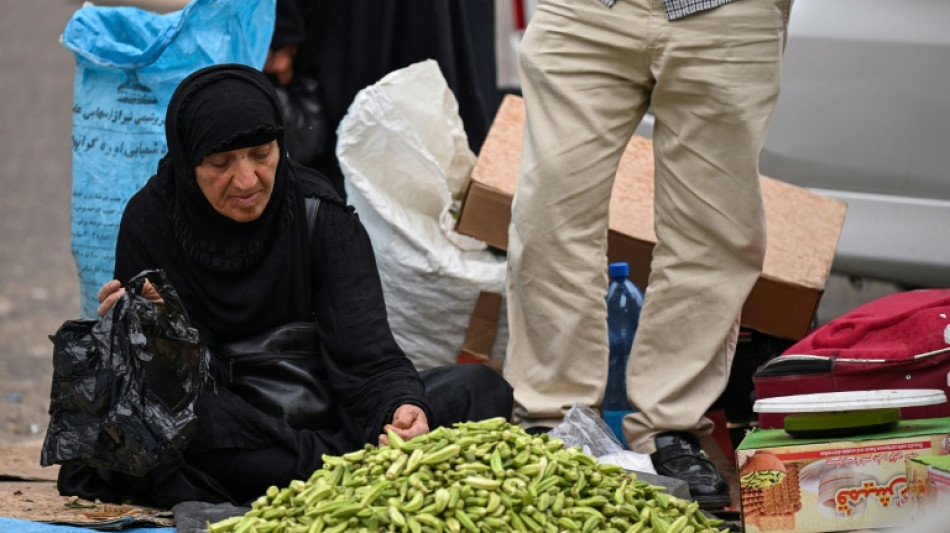
Every Friday, Alawi crosses the border from Iran into Iraq to sell his produce in the markets of Basra, which serve as a haven for Iranians grappling with economic sanctions.
He is just one of many Iranian pedlars who endure the arduous journey into southern Iraq through the Chalamja border crossing.
They bring essential goods such as chicken, eggs, cooking oil and household items to sell at low prices, hoping for a profit that would be unimaginable back home due to sharp currency depreciation and soaring inflation.
"The situation is difficult due to the embargo," Alawi said, referring to Western sanctions against Iran.
Asking to withhold his surname for fear of repercussions back home, the 36-year-old said he had not given up easily on his country, and had tried to sell his produce in a market there.
"There were no customers, and the products would spoil, so we had to throw them away and end up losing" money, he told AFP.
Instead, for the past seven years, he has been travelling to Iraq where he sells okra in summer and dates in winter, earning between $30 and $50 a day –- much more than he could make at home.
"When we exchange Iraqi money" for Iranian rials, "it's a lot," the father of two said.
"We can spend it in five days or even a week," he added.
- 'A lifeline' -
After a brief period of relief from sanctions in exchange for curbs on Iran's nuclear programme, US President Donald Trump reimposed the biting measures during his first term in 2018.
Ever since, the value of the Iranian rial has plunged, fuelling high inflation and unemployment.
Prices soared last month by more than 32 percent compared to March the previous year, according to official figures.
Trump announced this week that his administration would restart negotiations with Iran over its nuclear programme, with talks to take place in Oman on Saturday.
Iranian Foreign Minister Abbas Araghchi has said his country's chief aim is for US sanctions to be lifted.
In the meantime, Basra's markets continue to bustle with Iranian vendors.
At the Friday market, bags of rice were stacked on plastic crates next to bottles of detergent.
While some vendors chatted with customers, others dozed off beside their shopping bags, rubbing off the weariness of a long journey.
Hayder al-Shakeri of the London-based Chatham House think-tank's Middle East and North Africa programme said informal cross-border trade "has expanded significantly over the past decade as sanctions on Iran have increasingly impacted everyday life."
Basra's proximity to Iran's Khuzestan province, where many residents speak Arabic and share cultural values with Iraq, makes it a primary target for mostly working-class Iranian vendors, Shakeri said.
Among them are women and elderly men whose livelihoods have been severely impacted by inflation, he said, calling the cross-border trade "a vital lifeline".
"Earning in more stable currencies like the Iraqi dinar or even US dollars provides a financial buffer" against the devaluated rial, he added.
- Better and cheaper -
Iran wields considerable political influence in Iraq and is a major trade partner for the country, the second-largest importer of non-oil Iranian goods.
Trade between the two countries amounts to tens of billions of dollars.
Milad, 17, and his mother have been selling household essentials in Basra for the past two years. Fearing a worsening situation back home, they recently rented a small shop.
In Iran, "finding work is hard, and the currency is weak," said curly-haired Milad, who declined to give his last name, adding that his cousin has been looking for a job since he graduated.
Iraqi maths professor Abu Ahmad, 55, strolls to the market every Friday, looking for fresh Iranian goods.
"Their geymar is better than ours," he said, referring to the cream Iraqis have with honey for breakfast.
It is also cheaper.
"They sell it for 12,000 dinars ($8)" compared to an Iraqi price of 16,000, he added.
Shakeri from Chatham House warned that local vendors "resent the competition", and Iraqi security forces sometimes remove Iranians, though they know they will eventually return.
Umm Mansur, a 47-year-old Iranian mother of five, has had a bitter experience since she joined other pedlars six months ago.
At the border, "they insult and mistreat us," she said.
Other pedlars have described similar experiences, saying they were held up for hours at the crossing.
Umm Mansur said she is willing to overlook the mistreatment to earn four times what she would at home.
"In Iran, there is no way to make a living," she said.
W.Nelson--AT