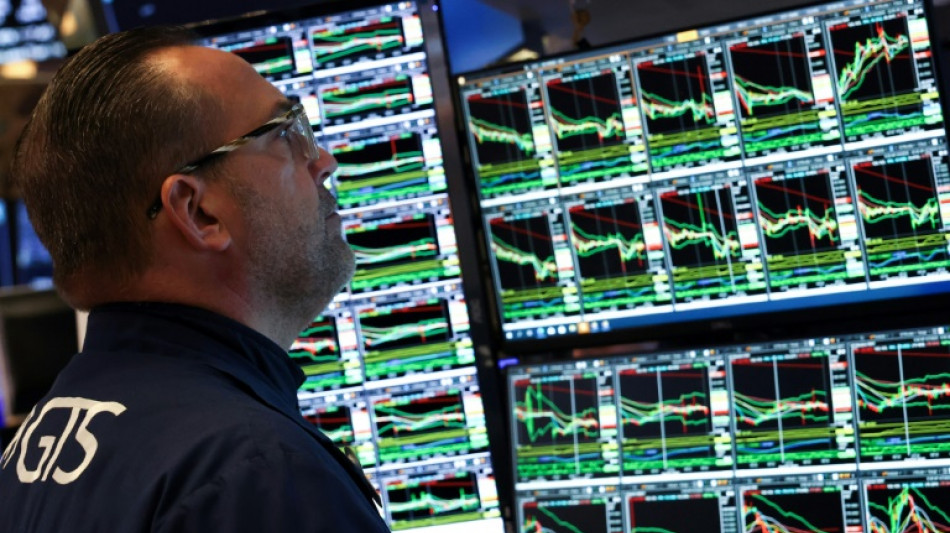
'Spectacle', 'seismic shock': Economists on Trump's tariffs / Photo: TIMOTHY A. CLARY - AFP

 FIFA scraps private investment plan after backlash: Infantino
 South Africa's WAFCON hopes hang in the balance after dramatic draw
 Hunter Bell cruises to Commonwealth gold, Pathirage stuns javelin stars
 Amazon surges as US stocks shrug off bond yield worries
 Google rolls back new satellite image AI tool after backlash
 Ryu leads in bid for third straight major at women's British Open
 Fire-hit France region 'coming up for air' as main blaze calms
 Wembanyama to get signature shoe in Nike contract extension: reports
 Oil giants report blowout profits on war, warn high gas prices could persist
 Google launches new satellite image AI tool, alarming researchers
 Eddie Howe resigns as Newcastle boss to 'recharge'
 High winds hamper firefighting efforts in western Turkey

 Howe resigns as Newcastle boss

 Full-scale tour will benefit All Blacks, says coach Rennie

 US Fed dissenters call for rate hikes over sustained inflation
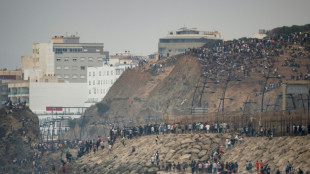 Trump and far-right seize on Spanish migration crisis
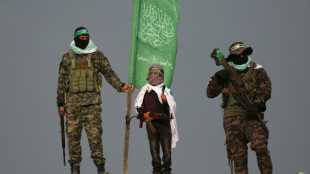 Hamas agrees to disarm under Trump plan
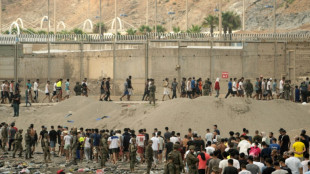
 French, Italian winegrowers face earliest ever harvest

 Alarm over climate-linked low level of German waterways

 UK court rejects challenge against new Chinese embassy in London
 New York sues online prediction markets giant Kalshi

 Commerzbank agrees to talks with UniCredit after two-year standoff
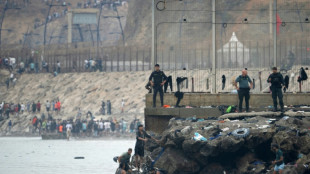
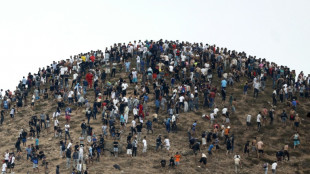 A rumour, a rush: chaos at Morocco border with Spain's Ceuta
 Fornaro Legal Releases Guidance to Help Businesses Maintain Clear Ownership Records During Growth

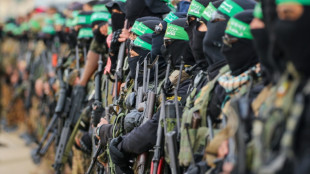 Hamas agrees to disarm: what are the challenges ahead?
A wide range of economists are voicing alarm over US President Donald Trump's tariffs blitz, which has sparked a trade war that experts say could lead to a global recession.
Here are comments from some leading economists:
- 'Spectacle of failed policies' -
Li Daokui, one of China's most influential economists, told AFP that Trump's tariffs mainly aimed to "squeeze other countries" for concessions.
"It is hard to imagine that there is any other economic policy that can make people around the world, including people in the United States itself, suffer losses at the same time.
"This is simply a 'spectacle' of failed economic policies," Li said.
"Both the US government and the US economy will suffer huge losses," said Li, an economics professor at Tsinghua University and former member of China's main political advisory body.
He said the Chinese government had fully prepared for tariffs, including countermeasures and stepped-up efforts to stimulate domestic consumption.
While Trump's trade policy signifies the end of US leadership in globalisation, it gives Beijing opportunities to negotiate free-trade agreements with other countries and play a key role in any effort to establish a new system that would replace the World Trade Organization, Li said.
"China has the economic foundation to lead globalisation."
- 'Very wrong' -
Brent Neiman, a US Treasury official under previous president Joe Biden, was cited by the US Trade Representative last week in a statement explaining the calculations behind the tariffs.
But Neiman said Monday that Trump administration officials misinterpreted his academic research, co-authored with three other economists.
"It got it wrong. Very wrong. I disagree fundamentally with the government's trade policy and approach," Neiman said in a New York Times opinion piece.
"But even taking it at face value, our findings suggest the calculated tariffs should be dramatically smaller -- perhaps one-fourth as large," Neiman wrote.
Other economists had criticised the Trump administration's methodology to calculate the tariffs when they were announced last week.
"I would strongly prefer that the policy and methodology be scrapped entirely. But barring that, the administration should divide its results by four," Neiman said.
- 'Failure of Reaganism' -
For Thomas Piketty, French author of the best-selling "Capital in the Twenty-First Century", "Trumpism is first of all a reaction to the failure of Reaganism" -- the liberalisation of President Ronald Reagan in the 1980s.
"Republicans realise that economic liberalism and globalisation have not benefitted the middle class as they said they would," the left-leaning economist told AFP.
"So now they're using the rest of the world as a scapegoat," he said.
"But it's not going to work. The Trump cocktail is simply going to generate more inflation and more inequalities."
In response, "Europe needs to define its own priorities and prepare for the global recession that's coming" with a massive investment plan in "energy and transport infrastructure, education, research and health".
- 'Major problem' for the poor -
For Nasser Saidi, a former economy minister of Lebanon, "a major problem is the impact on the least-developed and emerging countries" from Trump's "seismic shock to the global trade landscape".
"Countries like Egypt, Lebanon or Jordan are going to face disruptions in terms of their trade relations" as well as the prospect of cuts to foreign investments.
"When you have tariffs of this type being set up -- high levels of tariffs with no economic basis -- what you're going to do is severely disrupt supply chains," he added.
"I think we're finished with the era of globalisation and liberalisation", which will lead countries in the Middle East, for example, to reinforce ties with Asian partners.
- 'Big boys will suffer' -
Kako Nubukpo, an economist and former government minister in Togo, warned that Trump's tariffs would hit African nations already suffering from political difficulties.
"Those left behind by globalisation appear more and more numerous. And so we've seen an increase in illiberal regimes, whether that's in Europe, Africa or America," he said.
"(But) protectionism is a weapon of the weak and I think Trump has realised that in the competition with China, the United States is now the weaker one."
In response, "African countries should promote their own national and regional value chains" as buffers against Trump's tariffs.
Bismarck Rewane, CEO of Financial Derivatives Co. in Nigeria, said "big powers" would suffer most from a global recession.
"The small powers, we don't have that much to suffer because we were already bleeding before, so we just stay where we are," he said.
"Africa will suffer but not as much as the big boys."
M.White--AT