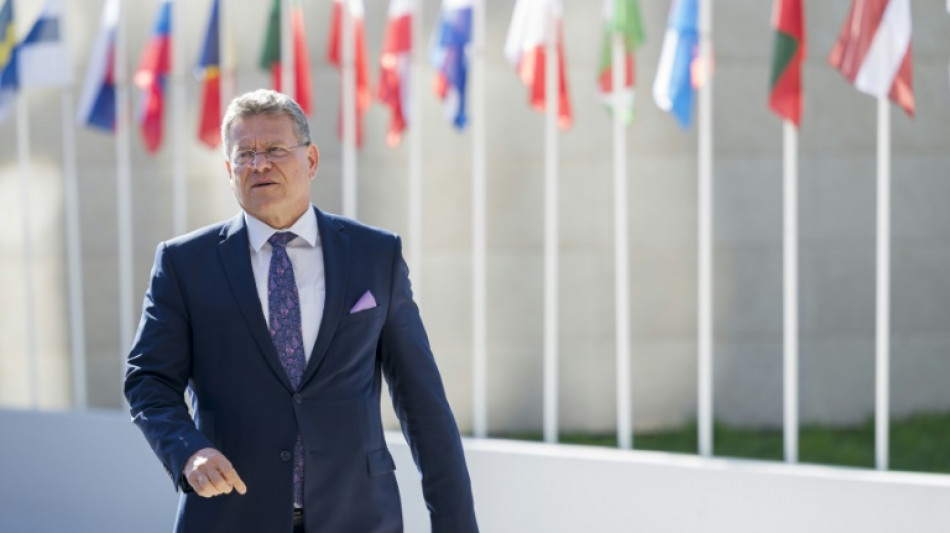
EU split on targeting US tech over Trump tariffs / Photo: Jean-Christophe VERHAEGEN - AFP/File

 FIFA scraps private investment plan after backlash: Infantino

 South Africa's WAFCON hopes hang in the balance after dramatic draw
 Hunter Bell cruises to Commonwealth gold, Pathirage stuns javelin stars
 Amazon surges as US stocks shrug off bond yield worries
 Google rolls back new satellite image AI tool after backlash
 Ryu leads in bid for third straight major at women's British Open
 Fire-hit France region 'coming up for air' as main blaze calms

 Wembanyama to get signature shoe in Nike contract extension: reports
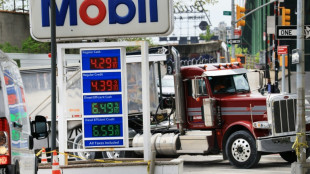 Oil giants report blowout profits on war, warn high gas prices could persist

 Google launches new satellite image AI tool, alarming researchers

 Eddie Howe resigns as Newcastle boss to 'recharge'

 High winds hamper firefighting efforts in western Turkey

 Howe resigns as Newcastle boss

 Full-scale tour will benefit All Blacks, says coach Rennie

 US Fed dissenters call for rate hikes over sustained inflation

 Trump and far-right seize on Spanish migration crisis
 Hamas agrees to disarm under Trump plan
 French, Italian winegrowers face earliest ever harvest

 Alarm over climate-linked low level of German waterways

 UK court rejects challenge against new Chinese embassy in London
 New York sues online prediction markets giant Kalshi

 Commerzbank agrees to talks with UniCredit after two-year standoff
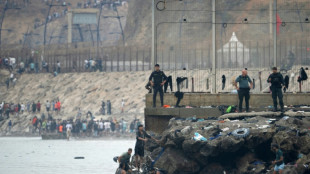
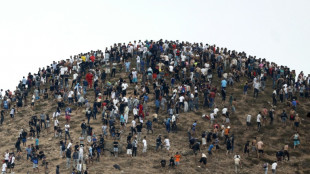 A rumour, a rush: chaos at Morocco border with Spain's Ceuta
 Fornaro Legal Releases Guidance to Help Businesses Maintain Clear Ownership Records During Growth

 Hamas agrees to disarm: what are the challenges ahead?
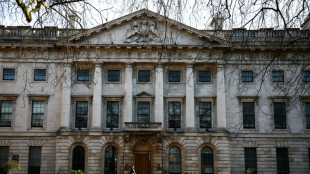
Should the European Union target US Big Tech and services in response to President Donald Trump's tariff onslaught? Differences on the key issue were on display on Monday as the EU sought a show of unity on the pushback.
The EU's trade commissioner, Maros Sefcovic, said the 27-country bloc was weighing its response to a "paradigm shift of the global trading system" as Trump's sweeping tariffs sent world markets crashing.
Heading into their first talks since Trump ordered 20 percent tariffs on the bloc's imports, EU trade ministers all agreed: Brussels must negotiate with Washington to avoid a damaging trade war.
But the bloc has already vowed strong countermeasures should negotiations with Trump's team fall short -- and ministers hoped on Monday to narrow their differences over what that response could entail.
France came out swinging before the talks in Luxembourg, urging the EU not to rule out an "extremely aggressive" trade response to Trump.
EU chief Ursula von der Leyen signalled last week that Brussels had different options to respond to the United States, noting the bloc "holds a lot of cards".
Backed by Germany and Austria, Paris has been pushing for the EU to consider targeting US services, including digital -- drawing fire from Ireland which relies heavily on US investment, particularly in the pharmaceutical and tech sectors.
Targeting services "would be an extraordinary escalation at a time when we must be working for de-escalation", Irish Trade Minister Simon Harris told reporters.
But if Trump took the bloc's surplus in goods with the United States -- meaning it exports more than it imports -- as his reasoning for hurting the EU, officials have indicated Brussels could target the US services surplus in response.
The 27-country bloc had a goods trade surplus of 157 billion euros ($171 billion) with the United States in 2023.
But in services, where American firms are dominant, the EU had a trade deficit of 109 billion euros with the United States.
- Trade 'bazooka' -
France and Germany have specifically raised the possibility of deploying a new tool called the anti-coercion instrument (ACI), a trade weapon that has never been used and has been dubbed a "bazooka".
First adopted in 2023, it gives the EU greater powers to respond to trade coercion, with options available including restricting US companies from public tenders, limiting trade on services as well as intellectual property rights protection.
"We must not exclude any option on goods, on services... and open the European toolbox, which is very comprehensive and can also be extremely aggressive," French Trade Minister Laurent Saint-Martin said, explicitly referencing the ACI tool.
German Economy Minister Robert Habeck likewise said Europe must be prepared to use it.
Harris made it clear Ireland was opposed. "It is in many ways the nuclear option if you start talking about the use of the anti-coercion instruments and the likes."
"What's important here is that Europe reacts in a calm and measured way," Harris said, a position backed by Italy and Spain, which made no reference to hitting services.
Spanish Trade Minister Carlos Cuerpo said the EU should "convey a message that we do not want to escalate any conflict", while Italy's Antonio Tajani said Europe had to "avoid uncontrolled reactions that would cause damage" to both sides.
- 'Wait and see' -
In calibrating its response, a European diplomat said the EU was watching to see how the United States responds to Beijing's retaliatory higher duties that kick in later this week.
"Our first strategy is that China will impose tariffs on the United States, so we will probably wait and see what the United States will do, what this will cause," the diplomat said.
The ministers will also discuss EU-China trade relations, which will require careful handling as Brussels fears US tariffs will cause Chinese goods to flood into the bloc, but also wants to avoid further tensions with Beijing.
Trump's universal tariffs came weeks after he slapped higher levies on steel and aluminium import as well as cars and auto parts that have hit the EU hard.
The commission, which leads on trade policy, has prepared a list of US goods to target in response to the metals tariffs, which it will present to EU states later on Monday with a vote expected on Wednesday.
Von der Leyen held talks with the steel sector on Monday and will on Tuesday speak to the pharmaceutical sector, which fears being targeted by Trump's tariffs soon.
W.Moreno--AT