Market panic mounts as world scrambles to temper Trump tariffs / Photo: Mandel NGAN - AFP

 Two dead in rock spire collapse at Turkey's touristic Cappadocia
 No surprise to Carrick he's still Man Utd manager
 Two dead in rock spire collapse at tourist site in Turkey's Cappadocia

 ECB holds rates steady after Lagarde says to quit early
 US economy posts strong growth, inflation stubbornly high in challenge to Trump

 What we know about Spain's deadly train crash

 ECB chief Lagarde to step down early, triggering succession race
 'Horrific' Russian drone strike kills 14 at Ukraine train station: Kyiv

 VW says 'no time to lose' to slash costs after 5.8 billion euro loss

 Australia lead by 100 after Inglis century

 Martin to ride with broken wrist in Malaysian MotoGP practice
 England forward Toney to stand trial for alleged assault in June 2028

 Warrican's five-wicket haul leads West Indies fightback in Bangladesh Test

 Oil majors reap bumper profits as Mideast war drives prices

 Christine Lagarde: unifying ECB chief in turbulent times
 Rybakina secures year-end top rank with Tokyo win

 Rains bring relief to Indonesian city weary of fire haze

 Osaka vows to return stronger after Tokyo exit

 Hello Kitty firm apologises, scraps Japan TV tie-up after China anger

 Taiwan says Pakistan briefly closed airspace to Taiwanese flights

 'My blood was spilled here': a year on, Tanzania unable to mourn election violence

 Afghanistan opium poppy cultivation surges despite Taliban govt ban: UN

 No World Series miracle for weary Rays
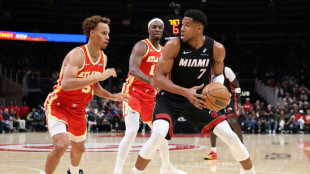 Miami Heat earn first win of NBA season with Antetokounmpo

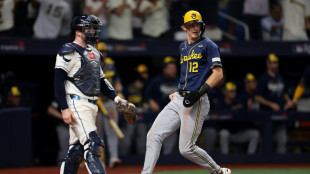 Brewers beat Rays 4-1 to capture first World Series title
Wall Street was braced Sunday for significant losses at the start of the week over Donald Trump's punishing tariffs on exports to the United States, as oil prices plummeted even with countries seeking compromise.
The Republican has remained defiant since unleashing the blitz of tariffs on stunned nations around the world Wednesday, insisting that his policies "will never change" even as markets went into a tailspin.
Futures contracts for the New York Stock Exchange's main boards were sharply down Sunday, suggesting more pain for battered Wall Street stocks when markets open Monday, while US oil dropped below $60 a barrel for the first time since April 2021.
A little over half an hour after the contracts resumed trading at 2200 GMT, the Dow Jones Industrial Average was down 3.56 percent, while the broader S&P 500 index was down 3.85 percent.
Benjamin Netanyahu, the prime minister of Israel -- which has been hit with 17 percent tariffs, despite being one of Washington's closest allies -- will fly in for crunch talks with Trump Monday on the levies.
Britain's Prime Minister Keir Starmer warned in a newspaper op-ed that "the world as we knew it has gone," saying the status quo would increasingly hinge on "deals and alliances."
Trump's staggered deadlines have left space for some countries to negotiate, even as he insisted he would stand firm and his administration warned against any retaliation.
"More than 50 countries have reached out to the president to begin a negotiation," Kevin Hassett, head of the White House National Economic Council, told ABC's This Week on Sunday, citing the US Trade Representative.
Vietnam, a manufacturing powerhouse that counted the US as its biggest export market in the first quarter, has already reached out and requested a delay of at least 45 days to thumping 46 percent tariffs imposed by Trump.
Hassett said countries seeking compromise were doing so "because they understand that they bear a lot of the tariffs," as the administration continues to insist that the duties would not lead to major price rises in the United States.
"I don't think that you're going to see a big effect on the consumer in the US," he said.
- 'Markets bloodbath' -
Treasury Secretary Scott Bessent also told NBC's Meet the Press that 50 countries had reached out.
But as for whether Trump will negotiate with them, "I think that's a decision for President Trump," Bessent said.
"At this moment he's created maximum leverage for himself... I think we're going to have to see what the countries offer, and whether it's believable," Bessent said.
Other countries have been "bad actors for a long time, and it's not the kind of thing you can negotiate away in days or weeks," he claimed.
Despite hopes for negotiations to avert the worst economic carnage, there was widespread fear that the markets bloodbath could continue into the new trading week.
In Saudi Arabia, where the markets were open Sunday, the bourse was down 6.78 percent -- the worst daily loss since the Covid-19 pandemic, according to state media.
Larry Summers, formerly Director of the National Economic Council under president Barack Obama, said "there is a very good chance there's going to be more turbulence in markets the way we saw on Thursday and Friday."
Peter Navarro, Trump's tariff guru, has pushed back against the mounting nervousness and insisted to investors that "you can't lose money unless you sell," promising "the biggest boom in the stock market we've ever seen."
Russia has not been targeted by the latest raft of tariffs, and Hassett cited talks with Moscow over its invasion of Ukraine as the reason for their omission from the hit list.
"There's obviously an ongoing negotiation with Russia and Ukraine, and I think the President made the decision not to conflate the two issues. It doesn't mean that Russia, in the fullest of time, is going to be treated wildly different than every other country," Hassett said.
On Wednesday a White House official suggested the reason for Russia's omission was because trade was negligible thanks to sanctions.
Trump has long insisted that countries around the world that sell products to the United States are in fact ripping Americans off, and he sees tariffs as a means to right that wrong.
But many economists have warned that tariffs are passed on to consumers and that they could see price rises at home.
H.Thompson--AT