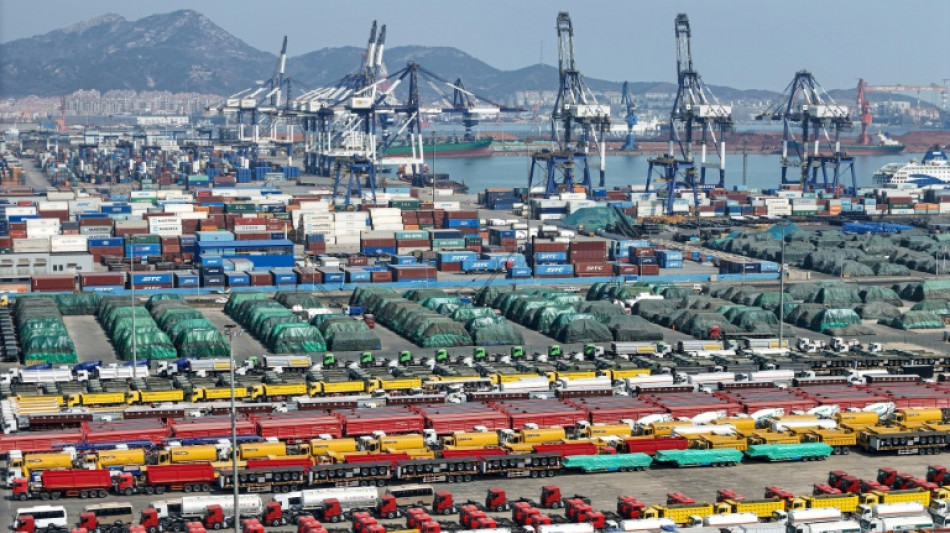
Trump's tariffs sting Asian giants, including US allies / Photo: STR - AFP

 Hunter Bell cruises to Commonwealth gold, Pathirage stuns javelin stars
 Amazon surges as US stocks shrug off bond yield worries
 Google rolls back new satellite image AI tool after backlash

 Ryu leads in bid for third straight major at women's British Open
 Fire-hit France region 'coming up for air' as main blaze calms
 Wembanyama to get signature shoe in Nike contract extension: reports
 Oil giants report blowout profits on war, warn high gas prices could persist
 Google launches new satellite image AI tool, alarming researchers

 Eddie Howe resigns as Newcastle boss to 'recharge'
 High winds hamper firefighting efforts in western Turkey

 Howe resigns as Newcastle boss

 Full-scale tour will benefit All Blacks, says coach Rennie

 US Fed dissenters call for rate hikes over sustained inflation
 Trump and far-right seize on Spanish migration crisis

 Hamas agrees to disarm under Trump plan
 French, Italian winegrowers face earliest ever harvest

 Alarm over climate-linked low level of German waterways
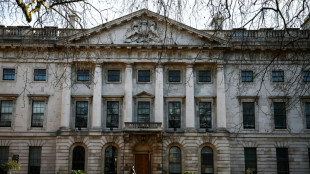 UK court rejects challenge against new Chinese embassy in London
 New York sues online prediction markets giant Kalshi

 Commerzbank agrees to talks with UniCredit after two-year standoff
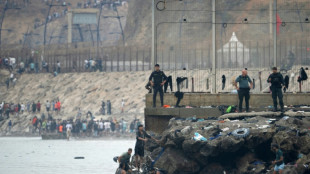
 A rumour, a rush: chaos at Morocco border with Spain's Ceuta
 Fornaro Legal Releases Guidance to Help Businesses Maintain Clear Ownership Records During Growth
 Hamas agrees to disarm: what are the challenges ahead?
 Turkey fights to last major blaze inland from Bodrum
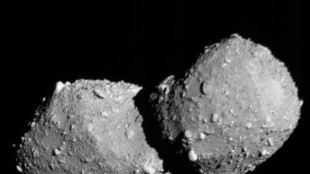 Japan probe made closest-ever asteroid flyby: space agency

Asia's manufacturing powerhouses were desperately seeking talks with Washington on Thursday after Donald Trump announced 10 percent "reciprocal" tariffs, and even more for some longtime US allies.
These include Japan, whose firms are the biggest investors into the United States but which was saddled with a 24 percent levy on its imports into the world's biggest economy.
Prime Minister Shigeru Ishiba promised Trump in February a trillion dollars in investments, while the US president said Japan would partner in a "gigantic natural gas pipeline in Alaska".
Ishiba called the tariffs announcement "extremely regrettable" and the government was tight-lipped about any retaliatory measures.
Japan has also failed to win exclusion from 25 percent tariffs on car imports into the United States that bit on Thursday.
Those also hit South Korea, another close US ally which was saddled with new tariffs of 26 percent on Thursday.
Acting President Han Duck-soo said "the global tariff war has become a reality", instructing his trade minister to "actively engage in negotiations with the US to minimise damage".
- Taiwan chips -
Trump also saddled Taiwan with a 32 percent tax, although all-important semiconductor chips were excluded.
Taiwan had also pledged increased investment in the United States, more purchases of US energy and greater defence spending.
The government found the tariffs "highly unreasonable and deeply regretted it, and will initiate serious negotiations with the United States", cabinet spokeswoman Michelle Lee said.
The United States has been Australia's strongest military ally since World War II but its exports there will also be subject to a 10 percent tax.
Prime Minister Anthony Albanese said Australia would not retaliate but called Trump's move "unwarranted".
"This is not the act of a friend," Albanese said.
However, ANZ Bank agribusiness analyst Michael Whitehead said Australia had, in some ways, gotten off lightly.
"Ten percent on Australian beef at the moment, it's better than a lot of people were expecting -- or less worse, let's call it," he told AFP.
Trump unveiled tariffs of 34 percent on China, one of its largest trading partners, on top of a 20 percent rate imposed last month.
China had responded to those with levies of up to 15 percent on a range of US agricultural goods.
"There is no winner in a trade war," Beijing said on Thursday.
The commerce ministry said it will "resolutely take countermeasures to safeguard its own rights and interests" and that the levies "do not comply with international trade rules".
The commerce ministry also said at a weekly briefing on Thursday that the two sides were "maintaining communication".
- 'Massive blow' -
In South Asia, Indian exporters expressed some relief that the flat 26 percent on exports imposed on the fifth-largest economy could have been far worse.
"Many countries which we compete with globally, including China, Indonesia and Vietnam etc, have been hit harder than us," Ajay Sahai from the Federation of Indian Export Organisations told AFP.
India's government was yet to comment.
Bangladeshi textile industry leaders called the US tariffs a "massive blow" to the world's second-largest garment manufacturer.
Trump slapped new tariffs of 37 percent on Bangladesh, hiking duty from the previous 16 percent on cotton and 32 percent on polyester products.
Southeast Asian countries came in for harsh treatment, with Vietnam hit with a 46 percent levy and Cambodia 49 percent.
Vietnam, a manufacturing powerhouse heavily reliant on exports, said this week it had cut import duties on a range of goods in an apparent attempt to head off new tariffs.
Washington's trade deficit with Vietnam -- a major beneficiary of the trade war between Beijing and Washington during Trump's first term -- is its third highest.
Deputy Finance Minister Julapun Amornvivat said Thailand would "negotiate with understanding, not aggressive talk. But we have to talk which products they feel are unfair and we have to see whether we can adjust".
Australia also expressed puzzlement about a 29 percent tariff on its tiny Pacific territory of Norfolk Island, home to a little over 2,000 people.
"I'm not quite sure that Norfolk Island, with respect to it, is a trade competitor with the giant economy of the United States," Albanese said.
Trump also slapped 10 percent on Australia's Heard and McDonald Islands territory in the sub-Antarctic, inhabited by penguins but not people.
burs-stu/pbt
E.Flores--AT