Vladimir Putin's Ukraine obsesssion

 Fiji appoint ex-Springboks boss White as coach ahead of World Cup
 Hungary to reverse Orban-era anti-LGBTQ legislation
 Allen rushes Bills to thrilling 37-34 win over Rams
 India youth shift tactics as police clamp down on election protest
 Malaysia's Firefly extends flight cancellations due to haze

 IMF upgrades 2026 growth forecast but warns of 'split' outlook
 Infantino could pull off 'Houdini' act as critics struggle for candidate
 France braces for fresh nationwide student demonstrations
 Ahead of Israel vote, desert town becomes frontline against ultra-Orthodox expansion
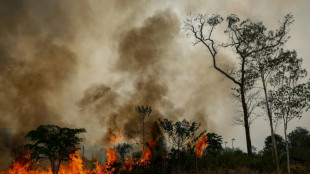 El Nino Watch: the impacts around the world this week
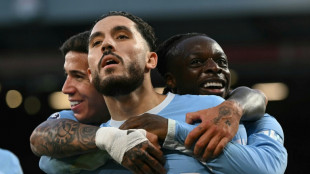 Man City, PSG clash at contrasting time for state-backed projects
 Caledonia Files NI 43-101 Technical Reports on SEDAR+ Supporting August 28, 2026 Mineral Resource Announcements

 InterContinental Hotels Group PLC Announces Transaction in Own Shares - October 13
 'Breaking Bad' actor RJ Mitte dead: representatives
 Former DR Congo president Kabila forms new force with M23 armed group
 Tom Cruise's 'Digger' tanks, leaving studio with $250 mn hole
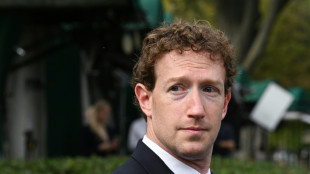
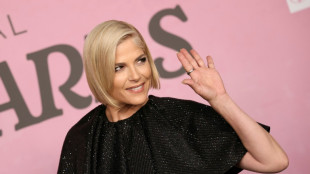 US actress Selma Blair arrested after flight altercation
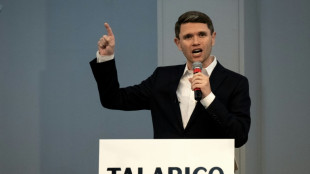
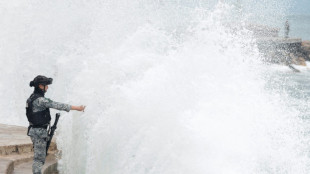 One dead as Hurricane Simon creeps along Mexico's Pacific coast
 Carrick's Man United 'hungry and eager' to fix worst start in decades
 Fury as US federal agents search anti-Trump lawmaker's home
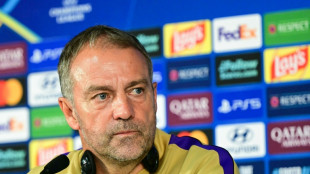 One goal enough for Flick as Barca enter Galatasaray cauldron
 A7 to unveil a service that will re-invent the international payments market
 'Status quo' with EU 'not good enough', UK PM says as summit date set
 Stolen Renoir paintings found behind wall in France
 French supermarkets suffer refrigerator shutdown after 'unprecedented' cyberattack
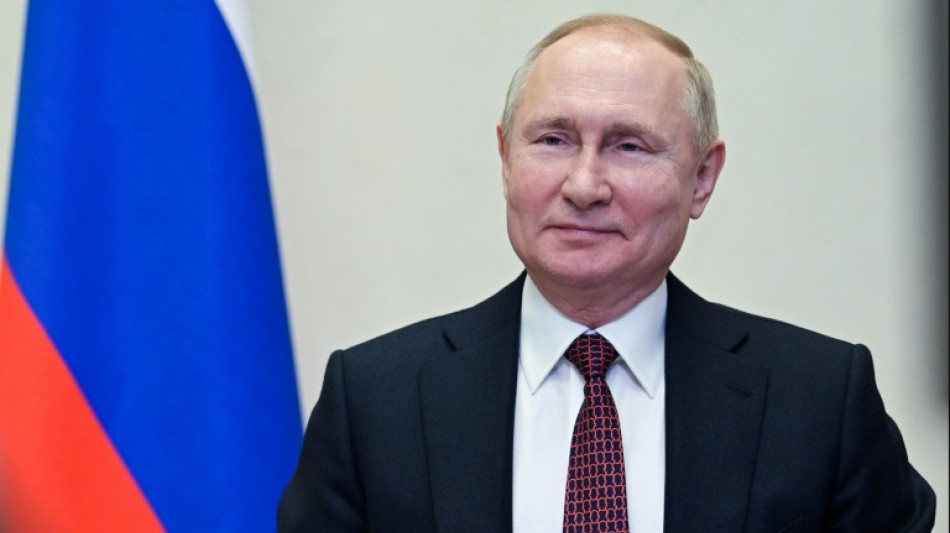
Russian President Vladimir Putin has an obsession that is so close and yet so far: to return Ukraine to Moscow's fold, in the name of Russia's greatness.
For many Russians of his generation, who were raised on Soviet propaganda, the USSR disintegrating and its spheres of influences vanishing in just three years remains an open wound.
For Putin, a KGB officer based in East Germany at the time the Soviet Union was gradually collapsing between 1989 and 1991, this was a personal defeat.
The Russian leader has said many times that he suffered the same misery as his compatriots when the Soviet empire crumbled, most recently claiming he was forced to drive a taxi to make ends meet when he returned to his homeland.
For many Russians, the years after the Soviet collapse were marked by humiliation and poverty -- a stark contrast to the West's triumphalism and prosperity at the time.
Putin has claimed that the end of the Soviet Union was the "greatest geopolitical catastrophe of the 20th century" -- despite Russia living through two world wars.
Observers say his sense for revenge deepened when NATO and the EU expanded into countries once dominated by Moscow.
Putin has since made it his historical mission to stop this advance in what he believes should be Russia's region of influence.
For the longtime Russian leader, any moves towards bringing Ukraine into Western alliances is a red line.
- Vision of 'NATO rockets in Moscow' -
In his vision, "if the authorities do not solve this security problem now, then Ukraine will be in NATO in 10-15 years" according to analyst Alexei Makarkin.
When a pro-Western revolution took place in Kyiv in 2014, Moscow land-grabbed Ukraine's Crimean peninsula and pro-Russian separatists took up arms in the east of the country.
Recent rhetoric from Putin has criticised Ukraine for presenting itself as a victim of Tsarist and Soviet imperialism.
And, he says, two Ukrainian revolutions -- in 2005 and 2014 -- that drove out pro-Russia elites were the result of a Western plot.
For the Kremlin chief, Russia must respond by being strong, menacing even. Giving in is not in the nature of the former KGB agent and judoka.
Born into a working class Saint Petersburg family, Putin said in 2015 that "if a fight is inevitable, you must strike first."
One of his school teachers, Vera Gurevich, has said that when a 14-year-old Putin broke one of his classmate's leg, he said that some "only understand force."
After Ukraine's Orange Revolution that broke out in the winter of 2004, Putin waged natural gas wars against the country, destabilising it economically.
Then he made a military move in 2014, by taking Crimea, and supporting pro-Moscow rebels in eastern Ukraine.
He has repeatedly called into question the idea of distinct Ukrainian identity and statehood.
As far back as 2008, according to Russian and US media, Putin told his then US counterpart George W. Bush that "Ukraine is not even a country."
During his end-of-year press conference in December, Putin again raised eyebrows by saying Ukraine was "created" by Vladimir Lenin, the founder of the Soviet Union.
- Desire to 'stop time' -
Months earlier, in a long article called "On the historical unity of Russians and Ukrainians," he said that Kyiv's decisions are driven by a Western "anti-Russia" plot.
The West is "setting up a political system in Ukraine in such a way that presidents, deputies and ministers change, but the line towards division with Russia, towards enmity with it, is unchanged," Putin wrote.
Tatiana Stanovaya, who runs the R.Politik analytical centre, said that, according to this logic, the 100,000 Russian troops massed on Ukraine's border are not a threat.
The Russian leader, she said, has always believed that the Ukrainian people are themselves pro-Russians that have been "the subject of manipulation."
"In their (the Kremlin) understanding, war would not be an attack on Ukraine, but a liberation of the Ukrainian people from a foreign occupier," she said.
His spokesman Dmitry Peskov made this position clear back in December: "It is not possible to lose a brotherly nation, it will remain brotherly."
In essence, Russian authorities see it as their mission to bring Ukraine back onto its natural course.
The Kremlin has for years repeated its line that the West has taken advantage of Russia's post-Soviet weakness to camp close by, betraying vague promises made in the twilight of the USSR.
With his army at Ukraine's doorstep, Putin is demanding that NATO move back to its 1997 borders and roll back the European security framework born out of the end of the Cold War.
What drives Putin, said Makarkin, "is the desire to stop time."
M.White--AT