Lithuania quits treaty banning cluster bombs despite outrage / Photo: YASUYOSHI CHIBA - AFP

 Ferrand-Prevot bids to defend Tour de France Femmes title

 China factory activity slides as leaders seek spending boost

 Far right and far left battle for power in polarised Berlin

 Hamas agrees to deal for disarmament, Israel's withdrawal from Gaza

 Cables and cooling bring AI windfall to Indian suppliers

 Oil industry sees war windfall but girds for political blowback

 Spain safari park animals grazed calmly amid 'terror' of fire

 Casemiro keen to team with Messi at Miami

 Trump announces areement for disarmament of Hamas

 Apple tops estimates in CEO Cook's final quarter, but shares fall

 Turkey battles wind-fuelled wildfires on tourist coasts

 Venezuela begins demolishing buildings in quake zone

 Grynspan ahead in process to pick next UN chief: diplomats

 Thitikul leads from history-chasing Ryu at women's British Open

 Hundreds of migrants flood into Spain's Ceuta exclave from Morocco
 French minister defends expulsion order against Russian commentator

 Milei demands expulsion of foreigners expressing 'hate' against Argentina

 UK's highest court to hear Palestine Action's appeal against ban
 Hundreds of migrants swim to Spain's Ceuta territory from Morocco

 'Beginning of the end': Relief but no party as French wildfire winds down

 UEFA says will boycott World Cup over FIFA proposals
 Rashford says final goodbye to Barcelona ahead of Man Utd return

 History-chasing Ryu sets pace at women's British Open
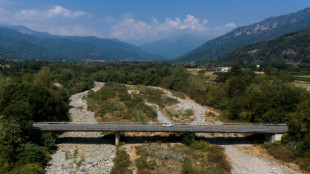 Italy's Po River valley on drought alert
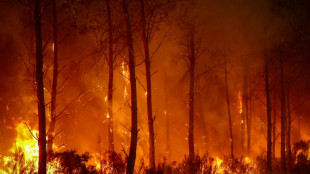
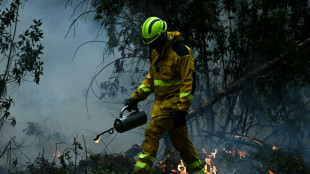 France, Spain eye wildfire reprieve as other blazes start up in Europe

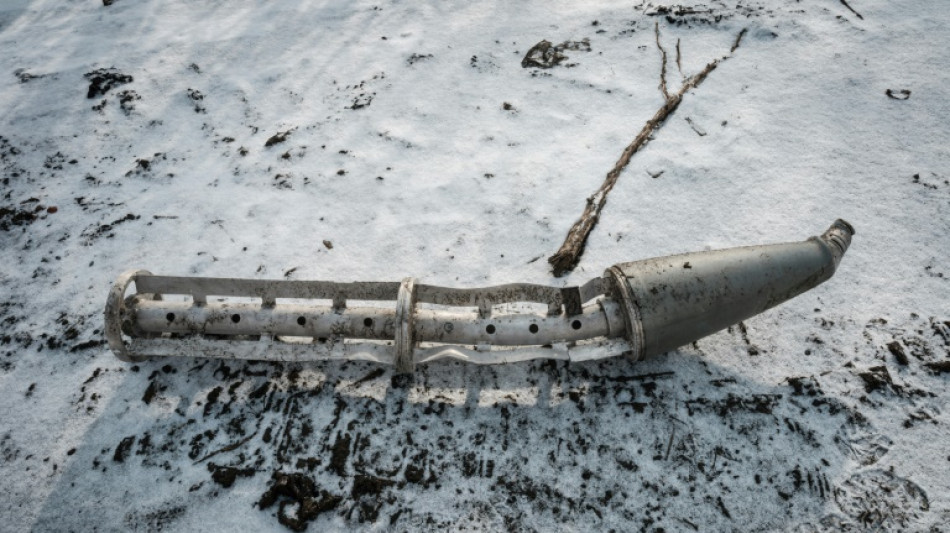
Lithuania on Thursday quit an international convention banning cluster bombs citing security concerns over neighbouring Russia, in a move that has drawn criticism from human rights groups.
Lithuania, a Baltic state of 2.8 million people which was previously under Soviet rule, has said it wants to strengthen its defences following Russia's invasion of Ukraine, fearing it could be next in line if Moscow succeeds.
Lithuania's Defence Minister Dovile Sakaliene told Ziniu radio the decision was a "strategic message that we are prepared to use absolutely everything" to defend the country.
But human rights organisations condemned the withdrawal, saying it could put civilian lives at risk.
Amnesty International called the move "disastrous", while Human Rights Watch said it was "alarming", and the International Committee of the Red Cross (ICRC) warned it "weakens vital protections for civilians".
"Lithuania's withdrawal is unprecedented, as no state has ever denounced a global humanitarian treaty," the ICRC said in a statement.
The Lithuanian parliament voted to leave the cluster munitions convention last July, but the country had to wait six months after submitting exit documents to the UN for the decision to take full effect.
Lithuania -- a member of both the EU and NATO -- is the first country to leave the convention, which was adopted in 2008, and the first European Union country to leave a multilateral arms regulation agreement.
Russia and Ukraine are not members of the convention and have both used cluster bombs in their three-year-long war.
"Russia uses all the instruments available in a conventional war, and this shows that we need to take action to ensure effective deterrence and defence," Lithuania's Deputy Defence Minister Karolis Aleksa told AFP this week.
"Withdrawing from the convention gives us the opportunity to increase the effectiveness of our defence against large-area targets," he said.
The convention has 112 state parties and 12 other signatories, and prohibits the use, transfer, production and stockpiling of cluster bombs.
Cluster munitions can be dropped from aircraft or fired from artillery, exploding mid-air and scattering bomblets over a wide area.
"The most effective deterrence and defence is when you have them in your possession and know how to use them," Aleksa said.
- 'Dangerous trend' -
Many countries have banned cluster bombs as many fail to detonate on impact, effectively acting as land mines that can explode years later and create a lasting threat.
HI, a non-governmental group and founding member of the coalition against cluster munitions, asked Lithuania to reverse its move.
"Lithuania's decision paves the way to a dangerous trend as it may encourage other states to reconsider their commitments to humanitarian disarmament treaties, particularly in times of heightened security concerns," HI's disarmament and protection of civilians advocacy manager Alma Taslidzan said in a statement.
"The Oslo Convention has proven to be effective in protecting civilians from this indiscriminate weapon," she said.
But Deputy Defence Minister Aleksa said Lithuania would take "all necessary measures" to minimise the negative effects of cluster munitions, including planning to collect unexploded ordnance as quickly as possible after any potential military operation.
"Cluster munitions have immense destructive power, and additional attention will be paid to internal rules on their use," he said.
Lithuania is also considering leaving another convention that bans anti-personnel landmines.
The military and the defence ministry have supported the move, but government leaders have paused the decision, asking whether regional allies would take similar steps.
The president's national security advisor, Marius Cesnulevicius, said in February that a final decision could take several months.
Finland's armed forces have been evaluating since last summer whether anti-personnel landmines should be reintroduced, but no decision has been made so far.
The 1997 Anti-Personnel Landmines Convention, which was borne out of a push to ban the landmines due to their devastating impact on civilians, currently has 164 state signatories.
F.Ramirez--AT