
Trump tariffs pose challenge for Europe's carmakers / Photo: Ronny HARTMANN - AFP/File

 Amazon beats expectations with cloud and AI growth

 De Minaur beats teen Hewitt in all-Aussie Washington clash

 Davies completes Commonwealth double in 5,000m, LaFond leaps to historic Dominica gold

 Blowout Microsoft results lift US stocks as oil retreats

 De Minaur beats teen Hewitt in Washington all-Aussie clash

 England's Stones joins Inter Milan on free transfer

 Renewed Iran war raises US missile supply concerns

 Nobel Peace Prize winner Murad says justice for Yazidis far too slow

 Mexico escalates war against smelly seaweed on Caribbean beaches

 Selection process for next UN chief under way

 UEFA says will boycott World Cup if FIFA pushes private investor proposal

 Volunteers rush to feed scared animals in fire-stricken France

 Russian missile strike destroys family home, 10 feared dead

 Djokovic to make return at Cincinnati Masters

 Selection process for next UN chief begins

 Southern Europe 'becoming more flammable' in hotter climate, experts say

 Prada profits pinched as growth hard to chase

 Turkey confronts growing wildfires on tourist coasts

 Stocks climb on earnings and rates, oil retreats

 Russia blamed for missile that blasted crater in Polish field
 US economic growth slows in second quarter, missing expectations

 Russia adds Telegram founder Durov to 'terrorist' blacklist

 MEXC Ventures Supports Alpha Arena's APAC Debut at Coinfest Bali

 Grealish hits back over Man City tour snub claims

 Firefighters battle to contain deadly Crete blaze in Greece

US tariffs on imported cars will create a major headache for European manufacturers such as Volvo, Volkswagen and Mercedes.
Donald Trump announced on Wednesday that European products would be subject to 25 percent customs duties "soon".
The American president repeated his grievances against the European Union, claiming falsely that Europe does not buy American cars or agricultural products.
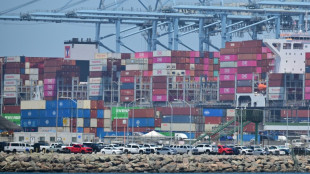
Half of the vehicles sold by European manufacturers in the United States are imported, according to Moody's, amounting to 785,000 cars worth $44 billion dollars in 2024.
If the tariffs take effect, the carmakers could absorb part of the cost in their margins or prices, Moody's said.
But another US analyst said in early February that tariffs of 25 percent would wipe out any profits.
- Relocate production -
German car manufacturers would be particularly affected since they export most of their high-end models to the United States. The announced 25-percent rate is a "provocation" and will make "products more expensive" for American customers, said the German Automobile Manufacturers' Federation (VDA).
Volkswagen makes all its Audi and Porsche models outside the United States. But Audi, which has a plant in Mexico, has long considered opening a factory in the United States.
BMW and Mercedes export sedans from Europe, but they also have US-based factories where they make SUVs -- Americans' favourite type of car -- such as the BMW X5 and the Mercedes GLE.
They would escape customs duties for their sales in the United States, but exports of these SUVs to other countries would be hit if they decided to retaliate by increasing their tariff.
The additional customs duties could cost Mercedes "one point of margin", or around one billion euros, the group's financial director indicated on February 20.
Chinese-Swedish maker Volvo makes nearly a fifth of its turnover in the United States, where it opened a factory in 2015.
"It's going to be turbulent, that's going to be part of the challenge for 2025," Volvo CEO Jim Rowan said at the start of February.
"We need to wait to see how it plays out, of course, but we're preparing ourselves to see whether we need to start looking at production relocation or even supplier relocation to different parts of the world," he said.
For its part, British brand Aston Martin explained to AFP that it was relatively protected from customs duties, since it operates in the luxury segment where buyers are more willing to absorb the higher prices.
- Stellantis' case -
Stellantis is in a different situation. The result of the merger in 2021 of the Italian-American group Fiat-Chrysler and France's PSA, Stellantis mainly sells American models in the United States.
It only imports a few Fiat 500s, Maseratis or Alfa Romeos from Europe, and sends a few pickups in the opposite direction.
But the group would be more affected by the unravelling of the Canada-United States-Mexico free trade agreement (CUSMA), which would complicate the movement of its parts and vehicles between its factories in these three countries.
While defending CUSMA, Stellantis Chairman John Elkann also expressed some support for the American president on Wednesday, a few weeks after announcing massive investments in the United States.
"We think that the real opportunity for the administration in order to really boost jobs in America is by closing the loophole that currently allows approximately four million vehicles into the country without any US content," he said, referring to mostly Asian imports.
Japan and Korea are the second and third largest exporters of vehicles to the United States, just behind Mexico, with well-established brands such as Toyota and Hyundai.
K.Hill--AT