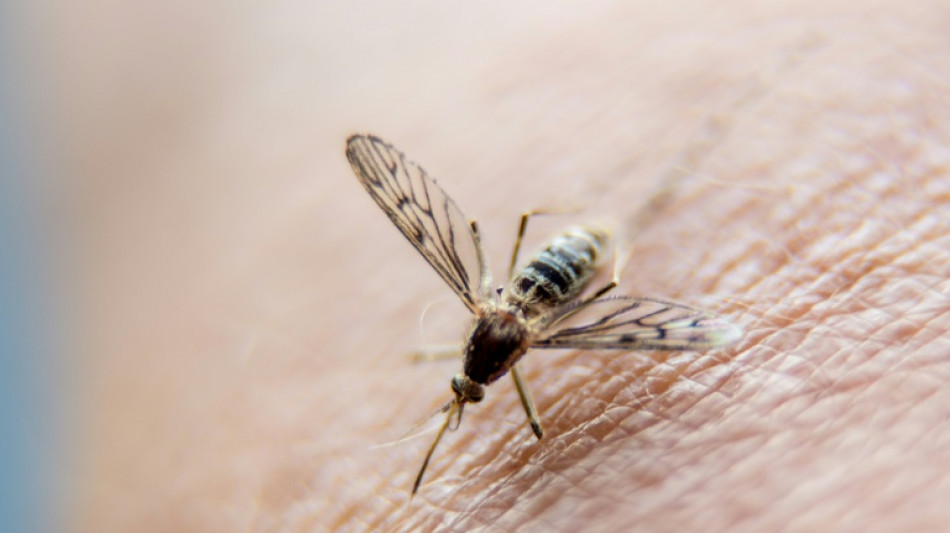
US aid cuts come at deadly moment for malaria control / Photo: PHILIPPE HUGUEN - AFP/File

 Stocks diverge on earnings, as oil steadies

 AI data centre supplier Zhongji InnoLight slips on Hong Kong debut
 Eurozone economy grows despite Middle East war
 Singapore group will develop 'most promising' Ebola vaccine
 BMW profit down a third as carmaker plans job cuts

 Newcastle boss Eddie Howe leaves club: reports
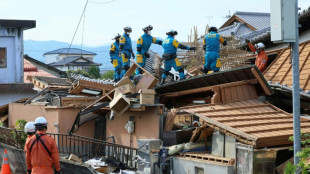
 Japan quake toll hits 34 as survivors struggle in heat
 Seoul extends losses as most Asian markets drop, oil rises again
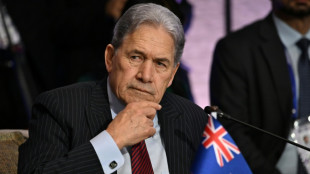 New Zealand top diplomat draws Chinese embassy complaint in racism row

 Eggs back in India school meals after outcry

 Gambling.com Group Is Now Grandstand

 South Korea coach Hong grilled by MPs over World Cup flop
 Nolan's 'Odyssey' boosts sales of mythology tales in UK
 'It's exhausting': southwest Japan deals with second big quake in 10 years
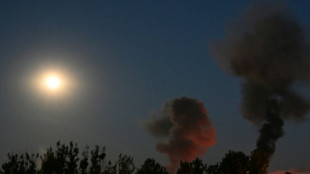 Russian strikes kill at least 8, wound more across Ukraine

 Samsung quarterly operating profit up 1,800% on AI boom
 Son at the double as MLS All-Stars beat Liga MX 4-3
 Meet the astronomer digging into the Milky Way's 'fossils'
 French teen fined in Singapore 'straw licking' case

 AI data centre supplier Zhongji InnoLight falls on Hong Kong debut

 South Korea's women web sleuths fight AI deepfake porn
 Rushdie assailant convicted of terrorism charges

 Australian regulator says Telegram breached online safety law

 New Zealand foreign minister in racism row with Chinese ambassador

 JASCO and Bioz Celebrate a Longstanding Partnership Advancing Scientific Product Discovery
The sudden freezing of US aid to malaria projects comes as deadly new variants are spreading in Africa and could have a devastating impact, the head of a major NGO told AFP.
The US government has provided some 40 percent of the annual funding globally for control and research into a disease that causes more than 600,000 deaths from 250 million cases each year -- mostly in Africa.
That funding, of up to $1 billion a year, is now frozen as part of President Donald Trump's plan to axe foreign aid.
"We did try to anticipate in advance of this, but I think even our worst case scenarios have been surpassed," said James Tibenderana, chief executive of the London-based Malaria Consortium that runs projects around the world.
The Malaria Consortium has already been forced to fire staff working on a programme in Mozambique and halt a programme in Asia training people to monitor and control mosquitoes.
Only five percent of its funding comes from the US government, but Tibenderana said US cuts would hit the entire sector.
"It's just so disruptive, so sudden," he said.
He highlighted that it came at a moment when the first signs of drug- and insecticide-resistance had started to emerge.
"The clock is ticking for drug resistance in Africa," he said.
"The early signs of resistance to the artemisinin-based combination therapy medicine, which is the mainstay of treatment for malaria, are emerging."
He pointed to reports from Eritrea, Ethiopia, South Sudan, Sudan and Uganda.
US-funded organisations have been the major player in monitoring this emergence through genome-mapping and drug-effectiveness studies.
Without them, it will be "hard to detect at the scale that was possible with US government funding", said Tibenderana.
- 'Through the woodchipper' -
It also comes as an invasive mosquito species from Asia -- Anopheles stephensi -- has started spreading in East Africa.
It thrives in urban areas and is immune to insecticide, potentially putting an additional 126 million people in Africa's cities at risk of malaria, according to one 2020 study.
"The invasion and spread of Anopheles stephensi has the potential to change the malaria landscape in Africa and reverse decades of progress we've made towards malaria control," Meera Venkatesan, who was then malaria division chief for USAID, told AFP in November.
Her division has now been shuttered along with the rest of USAID by Trump, with his billionaire ally Elon Musk boasting this week that he had put the vast humanitarian agency "through the woodchipper".
Funding cuts will hit supply chains, rural hospitals and programmes to buy the latest mosquito nets.
They will force poor families into debt when they need to send their children to hospital, said Tibenderana.
Children under five account for around 80 percent of malaria deaths in Africa, according to the World Health Organization.
Tibenderana hoped other governments and institutions such as the World Bank will step in, though he knows resources are scarce.
He compared the US funding freezing to the recent pandemic.
"We have to respond as we did with the Covid-19 pandemic, where there was a threat and people stepped up," he said.
"But the suddenness of this is huge."
Ch.Campbell--AT