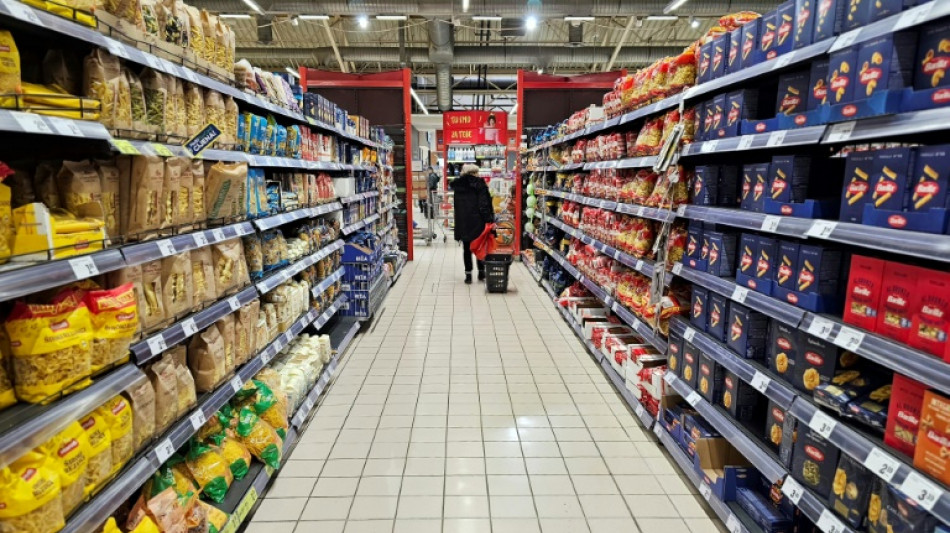
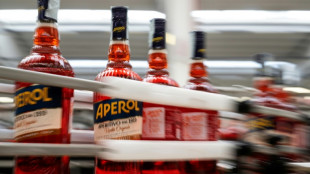
Fury over prices in Croatia sparks growing retailer boycotts / Photo: Damir SENCAR - AFP

 Japanese survivors deal with second quake disaster in 10 years

 Stranded boats, out-of-work fishermen as Danube hits record lows
 South Korea Hong coach grilled by MPs over World Cup flop

 Japan quake toll hits 30 as survivors struggle in heat
 Japan quake toll hits 28 as survivors struggle in heat

 AI data centre supplier Zhongji InnoLight tumbles on Hong Kong debut

 Drones and blackouts inflict a tense summer on Russia-annexed Crimea

 Australia ask for more information on FIFA sell-off plan

 South Korean stocks bounce after rout, oil holds gains on Mideast woes

 Stokes should return for 'one more Ashes': Australia coach McDonald

 Ngumoha scores as Liverpool beat Wrexham 1-0 in New York friendly

 Up to 23 feared dead in Japan quake

 Samsung operating profit up 1,800% in second quarter on AI boom

 De Zerbi wants Bergvall at Spurs, but can't promise starting role
 De Minaur tops Tsitsipas to set up Hewitt clash in Washington

 Cooperstown Dreams Park: Making History

 Japanese population below 120 million for first time in decades

 Meta misses profit expectations, sticks to massive AI spending

 Inequality best predicts how nations handle pandemics: study

 Brazil's Jair Bolsonaro denies authorizing deepfake for election message

 Boaduwaa strikes as Ghana beat WAFCON debutants Cape Verde

 US actor Jared Leto denies latest accusations of sexual assault
 Danube drops to 'historic lows' as fresh heatwave hits
 US Federal Reserve holds rates steady as inflation hawks call for hike

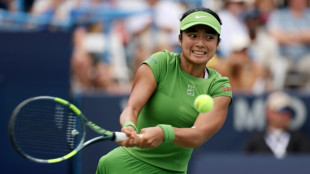 Eala beats defending champ Fernandez in Washington

Fed up with paying ever increasing prices at grocery stores and shopping outlets, Croatians have begun channeling their anger into a nascent boycott movement targeting retailers that shows signs of spreading across the Balkans.
What began with a call online by consumer advocacy groups to boycott stores for a single day resulted in a more than 50 percent plunge in sales across Croatia last Friday.
"Croatia has called for a halt", leading consumer advocate Josip Kelemen, who helped organise the boycott, told reporters as he issued a call for a new boycott.
"This time the voice of consumers will be even louder."
His advocacy organisation is now calling for a more ambitious protest by targeting three large retail chains -- Eurospin, Lidl and DM -- for a one-week boycott starting on Thursday, over alleged price discrepancies with other EU countries.
The boycott will also target Coca-Cola and other carbonated drinks along with bottled water and detergents.
Croatians were also urged to avoid deliveries, banks, restaurants and cafes this Friday along with shopping online, paying bills or buying fuel for a day-long protest.
- Biting inflation -
The protests come after average food prices soared by more than 30 percent in the past three years, according to official figures, while prices for basic items like eggs or bread have jumped by nearly 60 and 50 percent respectively.
Economists, however, say retailers do not shoulder most of the blame for rise in prices.
Decades of declining agricultural production, an influx of imports and the economy's overreliance on tourism along with a bloated public sector, chronic labour shortages and a high value-added tax of 25 percent has fuelled much of the inflation.
Food commodity "deficits are huge, several billion euros of food is imported. This is not the case with other tourist countries, like Spain. They are able to feed tourists," said economist Damir Novotny.
Despite the economic complexities, public perception has increasingly homed in on retailers, with social media posts showing Croatians the prices for the same products abroad -- with vast differences.
Consumer groups have highlighted the price of a German brand of shampoo that costs 3.35 euros ($3.50) in Croatia -- which they say is 130 percent more than its price in Germany.
In Bulgaria, the price of the bottle of shampoo at the same retail chain is around 20 percent lower than in Croatia.
Consumers also point to the cost of domestic products that are cheaper abroad, where average wages are higher.
One kilogramme of a popular Croatia-made seasoning costs 7.69 euros locally compared to 6.35 euros at a Swedish discount grocery chain, according to data published by portal Index.hr.
- Spillover -
But anger is not only being directed at retailers, with the public's ire also turning on the government.
"I boycotted last Friday and will do it again," Marko Knezevic, a repairman in the capital Zagreb, told AFP.
"It's also a message to the authorities since their policies over the years led to all this –- we destroyed production, but public administration is flourishing."
Others have begun crossing the border to nearby Slovenia and Italy in the search of cheaper goods.
Dubravka, a 45-year-old caregiver, said she planned to start travelling to Slovenia once a month to help make ends meet.
"The worst is to pay and remain silent," she said.
"Even if I don't pay less for some items I will leave the tax money (in Slovenia) so in a way I will be boycotting the government."
Following the success of last week's boycott, similar calls are growing across the Balkans, with social media posts in Bosnia, Montenegro, North Macedonia and Serbia imploring shoppers to stay home this Friday.
"After the success of the same campaign in Croatia... we see no reason why we shouldn't try the same," said one message posted online in Serbia, where advocacy groups have targeted five of the largest grocery chains in Friday's boycott.
The call comes just a week after a general strike in Serbia, where the government is under increasing pressure from an unrelenting anti-corruption protest movement sparked by the fatal collapse of a train station roof in November.
ljv-dd-oz-mp/ds/js
F.Ramirez--AT