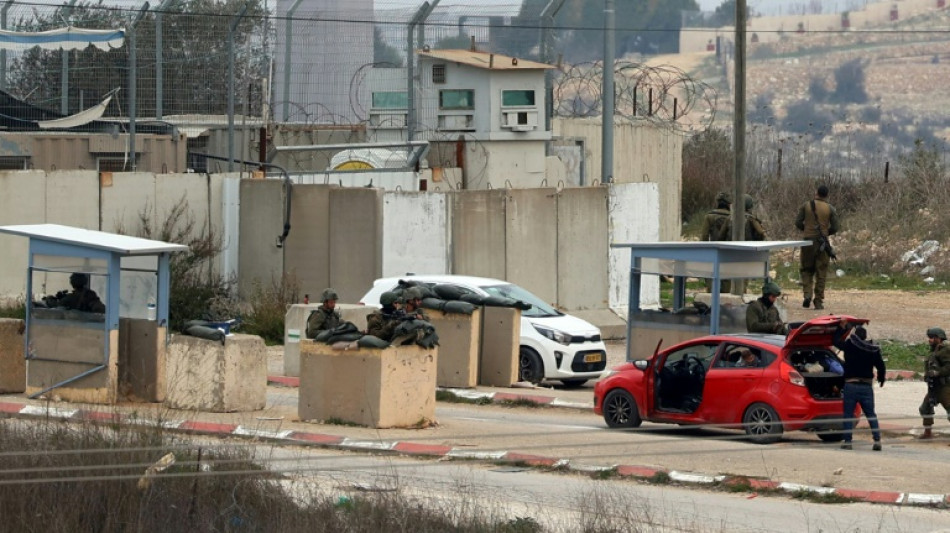
'Living in a cage': West Bank checkpoints proliferate after Gaza truce / Photo: Zain JAAFAR - AFP

 New Zealand foreign minister in racism row with Chinese ambassador

 Messi returns to Miami training after World Cup break
 Idi Amin's grandson disqualified from Commonwealth boxing bout

 O'Connor wins Commonwealth heptathlon as Australia set new record for swimming golds
 De Minaur beats Tsitsipas to set up Hewitt clash in Washington

 Nigeria dismantles meth lab, but fears of Mexican cartel links linger

 FIFA proposal 'an opportunity but not an obligation', says Infantino

 Campari - king of the spritz - hopes to conquer American heartland
 Mancini wants Italy back to trophy-winning ways
 Torrey Pines added to new PGA Tour top-level series from 2028

 Air France-KLM and Lufthansa bid for Portugal's TAP airline

 Korda seeks 'control' as she chases history at women's British Open

 Profits soar at Airbus as it delivers more planes
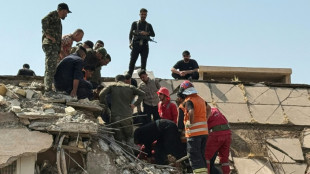 US-Saudi strikes in Iraq kill 20, including Iranians

 Brazil court scrutinizes Jair Bolsonaro deepfake endorsing son

 OpenAI says rogue AI agent attack hit other companies
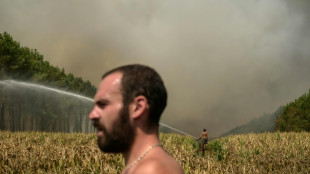
 Irish singer, musician Glen Hansard killed in motorbike crash at 56
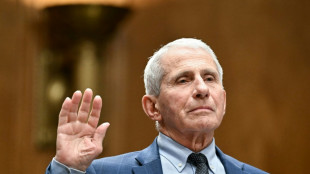
 Ukraine appeals against Russian return to Olympics

 Rheinmetall shares surge after armsmaker reports record profit

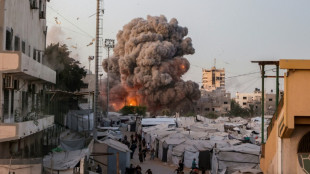 Israel army hit Gaza mosque, says used for Hamas 'weapons storage'
 Trump says US to hit Iran hard
 UBS second-quarter net profit up 17% to $2.8 billion
 FIFA hit by furious backlash over plans to sell stake in competitions
 TRX Spot and Perpetuals Listing Launches on Backpack, Expanding Access to the TRON Ecosystem

 Tel on target as Tottenham held to 1-1 draw by Sydney FC

Father Bashar Basiel moved freely in and out of his parish in the occupied West Bank until Israeli troops installed gates at the entrance of his village Taybeh overnight, just hours after a ceasefire began in Gaza.
"We woke up and we were surprised to see that we have the iron gates in our entrance of Taybeh, on the roads that are going to Jericho, to Jerusalem, to Nablus," said Basiel, a Catholic priest in the Christian village north of Ramallah.
All over the West Bank, commuters have been finding that their journey to work takes much longer since the Gaza ceasefire started.
"We have not lived such a difficult situation (in terms of movement) since the Second Intifada," Basiel told AFP in reference to a Palestinian uprising in the early 2000s.
He said he was used to the checkpoints, which are dotted along the separation barrier that cuts through much of the West Bank and at the entrances to Palestinian towns and cities.
But while waiting times got longer in the aftermath of the October 2023 Hamas attack that sparked the Gaza war, now it has become almost impossible to move between cities and villages in the West Bank.
- Concrete blocks, metal gates -
Left-leaning Israeli newspaper Haaretz reported that Israeli authorities ordered the military to operate dozens of checkpoints around the West Bank during the first 42 days of the ceasefire.
According to the Palestinian Wall Resistance Commission, 146 iron gates were erected around the West Bank after the Gaza war began, 17 of them in January alone, bringing the total number of roadblocks in the Palestinian territory to 898.
"Checkpoints are still checkpoints, but the difference now is that they've enclosed us with gates. That's the big change," said Anas Ahmad, who found himself stuck in traffic for hours on his way home after a usually open road near the university town of Birzeit was closed.
Hundreds of drivers were left idling on the road out of the city as they waited for the Israeli soldiers to allow them through.
The orange metal gates Ahmad was referring to are a lighter version of full checkpoints, which usually feature a gate and concrete shelters for soldiers checking drivers' IDs or searching their vehicles.
"The moment the truce was signed, everything changed 180 degrees. The Israeli government is making the Palestinian people pay the price," said Ahmad, a policeman who works in Ramallah.
Israeli military spokesman Nadav Shoshani did not comment on whether there had been an increase in the number of checkpoints but said the military used them to arrest wanted Palestinian militants.
"We make sure that the terrorists do not get away but the civilians have a chance to get out or go wherever they want and have their freedom of movement," he said in a media briefing on Wednesday.
- 'Like rabbits in a cage' -
Basiel said that now, when the gates are closed, "I have to wait, or I have to take another way" into Taybeh, a quiet village known for its brewery.
He said that on Monday people waited in their cars from 4:00 pm to 2:00 am while each vehicle entering the village was meticulously checked.
Another Ramallah area resident, who preferred not to be named for security reasons, compared his new environment to that of a caged animal.
"It's like rabbits living in a cage. In the morning they can go out, do things, then in the evening they have to go home to the cage," he said.
Shadi Zahod, a government employee who commutes daily between Salfit and Ramallah, felt similarly constrained.
"It's as if they're sending us a message: stay trapped in your town, don't go anywhere", he told AFP.
"Since the truce, we've been paying the price in every Palestinian city," he said, as his wait at a checkpoint in Birzeit dragged into a third hour.
- Impossible to make plans -
Before approving the Gaza ceasefire, Israel's security cabinet reportedly added to its war goals the "strengthening of security" in the West Bank.
Israeli human rights group B'Tselem said in a statement on Tuesday that Israel "is merely shifting its focus from Gaza to other areas it controls in the West Bank".
A 2019 academic paper by Jerusalem's Applied Research Institute estimated that at the time Palestinians lost 60 million work hours per year to restrictions.
But for Basiel, the worst impact is an inability to plan even a day ahead.
"The worst thing that we are facing now, is that we don't have any vision for the near future, even tomorrow."
W.Stewart--AT