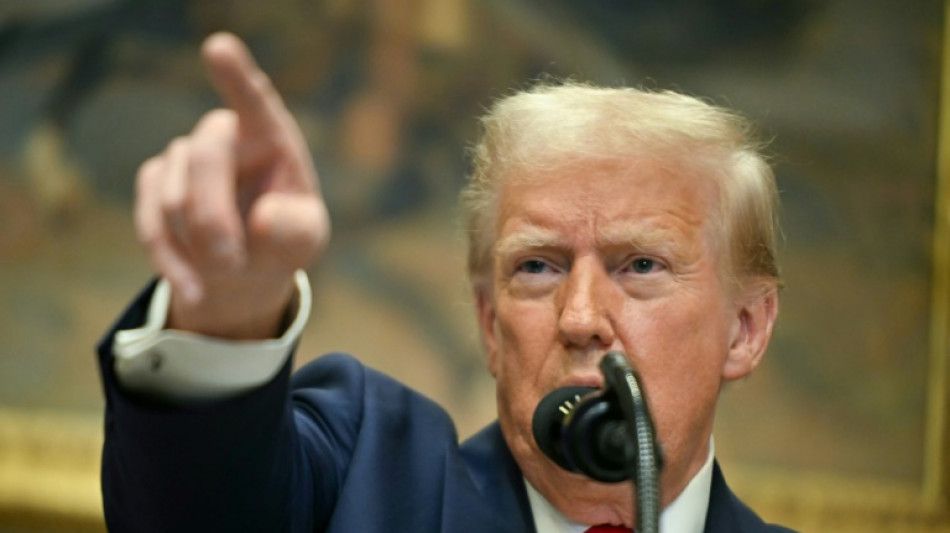
Trump's return darkens mood as Germany heads to elections / Photo: Jim WATSON - AFP/File

 New Zealand foreign minister in racism row with Chinese ambassador
 Messi returns to Miami training after World Cup break
 Idi Amin's grandson disqualified from Commonwealth boxing bout
 O'Connor wins Commonwealth heptathlon as Australia set new record for swimming golds
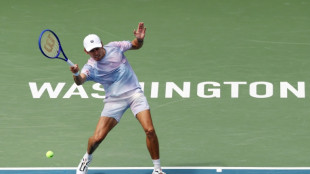 De Minaur beats Tsitsipas to set up Hewitt clash in Washington

 Nigeria dismantles meth lab, but fears of Mexican cartel links linger

 FIFA proposal 'an opportunity but not an obligation', says Infantino
 Campari - king of the spritz - hopes to conquer American heartland
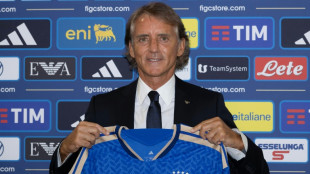 Mancini wants Italy back to trophy-winning ways
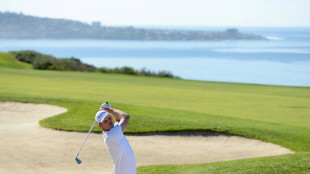 Torrey Pines added to new PGA Tour top-level series from 2028
 Air France-KLM and Lufthansa bid for Portugal's TAP airline

 Korda seeks 'control' as she chases history at women's British Open

 Profits soar at Airbus as it delivers more planes

 US-Saudi strikes in Iraq kill 20, including Iranians

 Brazil court scrutinizes Jair Bolsonaro deepfake endorsing son
 OpenAI says rogue AI agent attack hit other companies

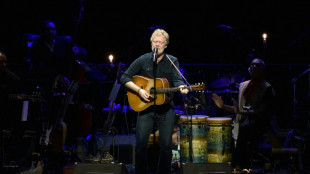 Irish singer, musician Glen Hansard killed in motorbike crash at 56
 Ukraine appeals against Russian return to Olympics
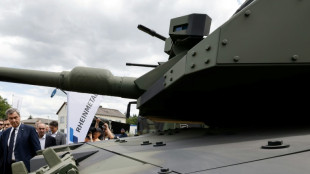 Rheinmetall shares surge after armsmaker reports record profit
 Israel army hit Gaza mosque, says used for Hamas 'weapons storage'
 Trump says US to hit Iran hard

 UBS second-quarter net profit up 17% to $2.8 billion
 FIFA hit by furious backlash over plans to sell stake in competitions

 TRX Spot and Perpetuals Listing Launches on Backpack, Expanding Access to the TRON Ecosystem

 Tel on target as Tottenham held to 1-1 draw by Sydney FC
Donald Trump's return to the White House has darkened the mood in Germany a month before elections, as multiple crises shake the foundations on which Europe's biggest economy built its post-war prosperity.
Russia's war in Ukraine drove up energy prices, hammering the German economy just as Chinese demand for its exports has waned, while Trump's comeback throws doubt on the future of the NATO security umbrella.
Chancellor Olaf Scholz's three-party coalition buckled under the cascading challenges and broke apart on November 6, the day Trump won re-election, hurtling Germany into turmoil and towards early elections on February 23.
"The word 'crisis' doesn't begin to capture the magnitude of the challenges Germany faces," said analyst Michael Broening. "The country is being forced to redefine its economic, energy and security foundations."
The strong election frontrunner so far is conservative Friedrich Merz, the leader of Angela Merkel's CDU, who brings business world experience but, at age 69, is as yet untested in any government leadership post.
His CDU-CSU alliance is polling at around 30 percent, strongly ahead by about 15 percent of Scholz's Social Democrats (SPD), which would spell the labour party's worst showing since World War II.
Embattled Scholz hopes for a late-campaign surge against Merz -- whose personal popularity ratings are low -- like the comeback that propelled the SPD leader to victory in 2021 when he took over from Merkel.
Merz has pledged to revive Germany's battered political and economic standing after "three lost years" under Scholz and his allies the Greens and, until last year's bust-up, the liberal Free Democrats.
- Far-right rising -
A long-term rival to centrist Merkel, Merz has vowed to return the CDU to its conservative roots, with tight border controls, a tough law and order drive, and steps to get ailing Germany Inc back on its feet.
He has voiced confidence that he can manage relations with the mercurial US president, but faces a tough charm offensive ahead after Team Trump has openly courted Germany's far right.
Tech billionaire Elon Musk has trolled Scholz on his X platform and implored Germans to vote for the anti-immigration Alternative for Germany (AfD) party, which is polling around 20 percent.
If the rise of a right-wing extremist party breaks a political taboo in Germany, which has been at pains to atone for Word War II and the Holocaust, support for the AfD from Washington has stunned Berlin.
More potential havoc lies ahead for Germany and its economy if Trump makes good on his threat to levy high tariffs on imports.
Economists have warned that such protectionist measures could spell a blow hard enough to wipe one percent off Germany's gross domestic product and kill 300,000 jobs.
Trump has also demanded NATO allies step up defence spending to as high as five percent of GDP -- equating to 100 billion euros a year for Germany, which it can ill afford.
- 'On the wrong foot' -
Merz's Bavarian ally, CSU leader Markus Soeder, said the second Trump administration "will be a difficult test because one can feel the growing distance to Europe, and especially to Germany".
Given Germany's dire economic troubles, he told Welt TV, this is hitting the country "absolutely on the wrong foot".
Germany, as a strong military backer of Ukraine, also faces a hostile Russia which it accuses of waging a "hybrid war" ranging from spy drones and severed Baltic Sea cables to online election interference.
Other unknown risks lie ahead, including a feared scenario where Trump would strike a Ukraine peace deal with Russian President Vladimir Putin over the heads of Kyiv and its EU allies.
As both Putin and Trump seek to "make their countries great again," wrote the Frankfurter Allgemeine Zeitung, "we are experiencing a paradigm shift in territorial policy that fundamentally questions the current world order".
Jacob Ross of the German Council on Foreign Relations said he was certain that "Trump will continue to single out Germany as the favourite victim in this blame game against Europe".
Meanwhile, the fragmentation of Germany's political landscape threatens to complicate the post-election coalition building process, which could drag on for weeks or even months.
Whoever leads Germany next will have to convince voters they have the answers to the myriad challenges.
"If any of the top candidates possess a convincing blueprint to lead the country out of this quagmire, they have so far failed to convince the public," said Broening of the Friedrich Ebert Foundation.
"With no single candidate enjoying anything close to widespread popularity, German voters seem less focused on hoping for the best and more intent on avoiding the worst."
A.Moore--AT