Colombia moves to arrest guerrilla leaders behind wave of violence / Photo: Schneyder Mendoza - AFP

 New Zealand foreign minister in racism row with Chinese ambassador

 Messi returns to Miami training after World Cup break
 Idi Amin's grandson disqualified from Commonwealth boxing bout

 O'Connor wins Commonwealth heptathlon as Australia set new record for swimming golds

 De Minaur beats Tsitsipas to set up Hewitt clash in Washington

 Nigeria dismantles meth lab, but fears of Mexican cartel links linger

 FIFA proposal 'an opportunity but not an obligation', says Infantino

 Campari - king of the spritz - hopes to conquer American heartland
 Mancini wants Italy back to trophy-winning ways
 Torrey Pines added to new PGA Tour top-level series from 2028
 Air France-KLM and Lufthansa bid for Portugal's TAP airline

 Korda seeks 'control' as she chases history at women's British Open

 Profits soar at Airbus as it delivers more planes
 US-Saudi strikes in Iraq kill 20, including Iranians
 Brazil court scrutinizes Jair Bolsonaro deepfake endorsing son

 OpenAI says rogue AI agent attack hit other companies
 Irish singer, musician Glen Hansard killed in motorbike crash at 56
 Ukraine appeals against Russian return to Olympics
 Rheinmetall shares surge after armsmaker reports record profit

 Israel army hit Gaza mosque, says used for Hamas 'weapons storage'
 Trump says US to hit Iran hard

 UBS second-quarter net profit up 17% to $2.8 billion
 FIFA hit by furious backlash over plans to sell stake in competitions

 TRX Spot and Perpetuals Listing Launches on Backpack, Expanding Access to the TRON Ecosystem

 Tel on target as Tottenham held to 1-1 draw by Sydney FC

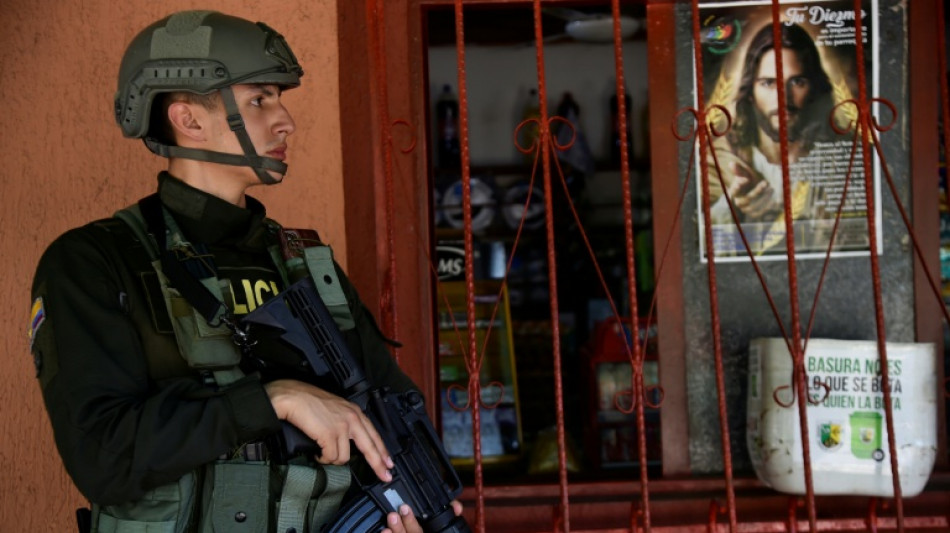
Colombia on Wednesday reinstated arrest warrants for dozens of guerrilla commanders blamed for armed attacks that displaced 32,000 people and sparked the country's most serious security crisis in years.
President Gustavo Petro's government unfroze warrants for 31 leaders of the National Liberation Army -- or ELN -- a 5,800-strong leftist militia that is deeply involved in drug trafficking.
The ELN is accused of carrying out a series of attacks against rival militants in the country's mountainous and lawless border region with Venezuela.
At least 80 people have died, dozens have been kidnapped and tens of thousands have been displaced, according to government and United Nations estimates.
In response, Petro declared a state of emergency, suspended peace talks and deployed some 5,000 soldiers to the area.
Forty-eight-year-old Zilenia Pana fled the fighting with her eight and 13-year-old children, finding the relative safety of Ocana, a small town on the western edge of the cordillera.
Seeing "the dead bodies was sad, painful. That breaks your soul, your heart" she told AFP.
She prays only that the fighters stop so she can return home with her children, saying "that's all we want, that's all we ask from those people".
Despite Petro's vow to bring "war" to the ELN, the Colombian military has so far only edged into rebel-controlled territory, establishing observation posts and carrying out patrols in urban areas.
In the frontier town of Tibu on Wednesday, AFP reporters heard at least five loud explosions, which the military said were artillery tests.
Still, there is little sign of a full-scale offensive targeting the guerrillas in their rural strongholds.
But the decision by Petro to reinstate arrest warrants is a further sign of escalating tensions.
- Total peace? -
For many Colombians, the recent bloodshed carries fearful echoes of a nearly six-decade civil war that killed some 450,000 people and made the country a byword for armed violence.
But polls also regularly show that more than half of Colombians are opposed to peace talks with the much-hated ELN and believe the government's security strategy is flawed.
Despite its ideological foundations, the group is one of the world's largest players in the cocaine trade and engages in extortion, hostage-taking and trafficking in various goods.
"They were trying to take control of the Colombian-Venezuelan border" said Colombian interior minister Juan Fernando Cristo, with a strategic aim of gaining "criminal incomes".
Petro, himself a former leftist guerrilla, has tried for years to bring the ELN and other groups to the negotiating table.
After a short-lived ceasefire and on-again-off-again talks, the latest ELN offensive has shattered hopes that the group is ready to disarm.
Petro's signature strategy of "Total Peace" -- a dramatic scaling back of military operations in the hope of securing peace -- seems now to be dead.
The president on Tuesday admitted the surge in violence represented a "failure" and he questioned how the ELN could have become so "strong today, when just months ago it was very weak, military speaking."
Critics say it is the government's light-handed approach to security that has allowed groups like the ELN to grow.
"'Total peace', coupled with the lack of effective security and justice policies, have allowed armed groups to expand their presence and brutal control over remote communities across Colombia" said Juanita Goebertus, a Colombian former lawmaker who is now Americas director at Human Rights Watch.
"The government should urgently overhaul its peace and security strategies to stop similar conflicts from growing throughout the country."
E.Rodriguez--AT