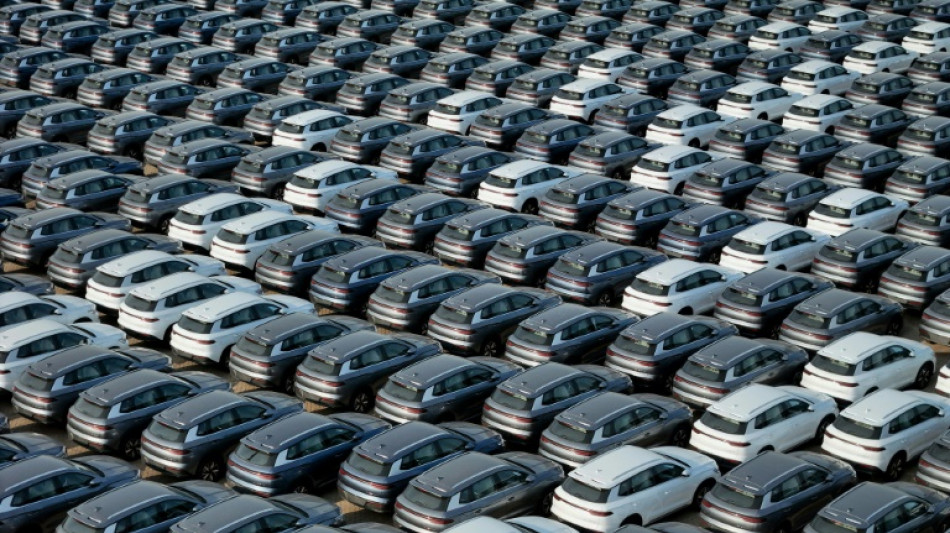
Beijing says EU imposed unfair trade barriers on Chinese firms / Photo: - - AFP/File

 Korda seeks 'control' as she chases history at women's British Open
 Profits soar at Airbus as it delivers more planes
 US-Saudi strikes in Iraq kill 20, including Iranians

 Brazil court scrutinizes Jair Bolsonaro deepfake endorsing son

 OpenAI says rogue AI agent attack hit other companies

 Irish singer, musician Glen Hansard killed in motorbike crash at 56
 Ukraine appeals against Russian return to Olympics
 Rheinmetall shares surge after armsmaker reports record profit
 Israel army hit Gaza mosque, says used for Hamas 'weapons storage'

 Trump says US to hit Iran hard

 UBS second-quarter net profit up 17% to $2.8 billion

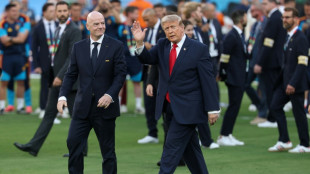 FIFA hit by furious backlash over plans to sell stake in competitions

 TRX Spot and Perpetuals Listing Launches on Backpack, Expanding Access to the TRON Ecosystem
 Tel on target as Tottenham held to 1-1 draw by Sydney FC
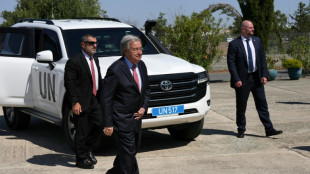 UN chief to convene new talks on divided Cyprus

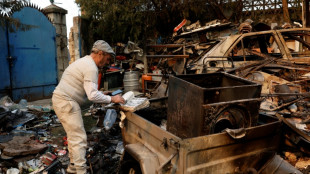 'No home': Spanish pensioner returns to charred ruins after wildfire
 Nepal's tiger numbers climb 20 percent to estimated 429: survey

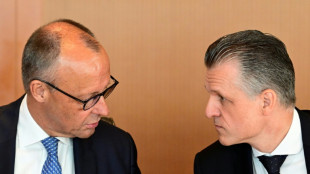 Germany's Merz under fire over chaotic reshuffle
 US, Saudi strike Iraq alliance in expanding war

 FIFA's plans to sell $4.2bn stake in its tournaments widely criticised
 Russia seeks arrest of Telegram chief Durov

 South Korean stocks plunge as tech rout deepens, oil rises

 On London streets, homeless wary at PM's vow to end rough sleeping
 Bangladesh ex-premier Hasina vows to return despite fearing for life
 Senate confirms Clayton as Trump intelligence chief
China said Thursday that an investigation had found the European Union imposed unfair "trade and investment barriers" on Beijing, marking the latest salvo in long-running commercial tensions between the two economic powers.
Officials announced the probe in July after Brussels began looking into whether Chinese government subsidies were undermining European competition.
Beijing has consistently denied its industrial policies are unfair and has threatened to take action against the EU to protect Chinese companies' legal rights and interests.
The commerce ministry said Thursday that the implementation of the EU's Foreign Subsidies Regulation (FSR) discriminated against Chinese firms and "constitutes trade and investment barriers".
However, it did not mention whether Beijing planned to take action in response.
The two are major trade partners but are locked in a wide-ranging standoff, notably over Beijing's support for its renewables and electric-vehicle sectors.
EU actions against Chinese firms have come as the 27-nation bloc seeks to expand renewable energy use to meet its target of net-zero greenhouse gas emissions by 2050.
But Brussels also wants to pivot away from what it views as an overreliance on Chinese technology at a time when many Western governments increasingly consider Beijing a potential national security threat.
When announcing the probe, the ministry said its national chamber of commerce for importing and exporting machinery and electronics had filed a complaint over the FSR measures.
The 20-page document detailing the ministry's conclusions said their "selective enforcement" resulted in "Chinese products being treated more unfavourably during the process of export to the EU than products from third countries".
It added that the FSR had "vague" criteria for investigating foreign subsidies, placed a "severe burden" on the targeted companies and had opaque procedures that created "huge uncertainty".
EU measures such as surprise inspections "clearly exceeded the necessary limits", while investigators were "subjective and arbitrary" on issues like market distortion, according to the ministry.
Companies deemed not to have complied with probes also faced "severe penalties", which placed "huge pressure" on Chinese firms, it said.
The European Commission on Thursday defended the FSR, saying it was "fully compliant with all applicable EU and World Trade Organization rules".
"All companies, regardless of their seat or nationality, are subject to the rules," a commission spokesperson said in a statement.
"This is also the case when applying State aid or antitrust rules."
- Projects curtailed -
The Chinese commerce ministry said FSR investigations had forced Chinese companies to abandon or curtail projects, causing losses of more than 15 billion yuan ($2.05 billion).
The measures had "damaged the competitiveness of Chinese enterprises and products in the EU market", it said, adding that they also hindered the development of European national economies and undermined trade cooperation between Beijing and Brussels.
The EU's first probe under the FSR in February targeted a subsidiary of Chinese rail giant CRRC, but closed after the company withdrew from a tender in Bulgaria to supply electric trains.
A second probe targets Chinese-owned solar panel manufacturers seeking to build and operate a photovoltaic park in Romania, partly financed by European funds.
In October, Brussels imposed extra tariffs on Chinese-made electric cars after an anti-subsidy investigation under a different set of rules concluded Beijing's state support was unfairly undercutting European automakers.
Beijing in response announced provisional tariffs on brandy imported from the EU, and later imposed "temporary anti-dumping measures" on the liquor.
Last month, China said it would extend the brandy investigation, citing the case's "complexity".
Separately, a report by the European Union Chamber of Commerce in China warned that firms were being forced to drastically localise their operations to suit China's regulations, driving up costs and reducing efficiency.
Heightened trade tensions and Beijing's "self-reliance policies" were causing many multinationals "to separate certain China-based functions, or even entire operations, from those in the rest of the world", it said.
It added that governance rules increasingly dominated by national security concerns had heightened uncertainties for local entities in engaging with European clients.
Some customers are therefore choosing to "err on the side of caution and not take a risk by buying from a foreign service provider", Chamber head Jens Eskelund said at a media event on Thursday.
H.Gonzales--AT