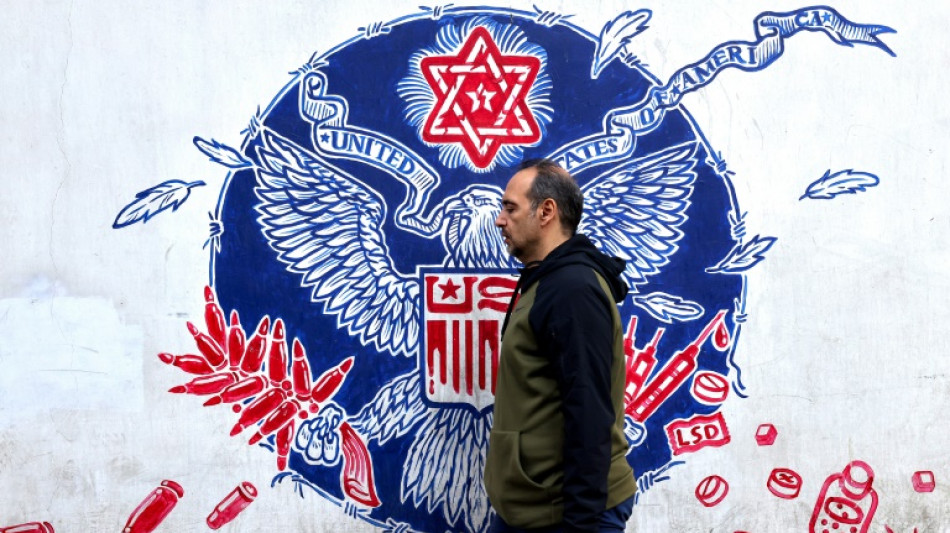
In Iran, late Jimmy Carter remembered as 'architect of sanctions' / Photo: ATTA KENARE - AFP

 How an AFP beach snap became emblem of Europe's wildfire summer
 More than half of England 'officially in drought': UK govt

 MEXC Integrates World-Check to Fortify Institutional Grade Compliance Architecture
 Tech stocks plunge further but London market hits record high
 Spain's three worst wildfires since 1961 happened in last two years
 FIFA proposal 'an outright attack on football', says DFB vice-president
 Principal reaction to FIFA's private investor plan
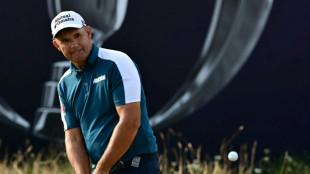 Ireland's Harrington named as vice-captain for 2027 Ryder Cup
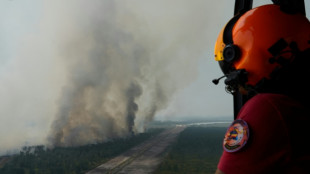 Spain returns wildfire evacuees as France braces for worsening weather
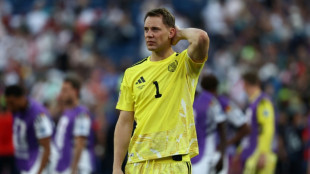 Neuer 'very likely' to retire at end of season

 BMW aims to cut 8,000 jobs by end 2027: company source

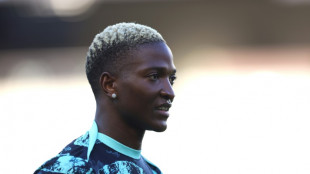 Chawinga sisters sparkle as Malawi stun WAFCON holders Nigeria

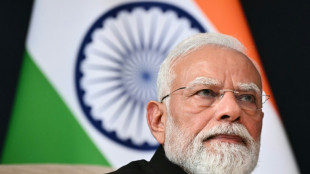 India's youth protests puncture Modi's aura of invincibility
 UBS says second-quarter net profit up 17% to $2.8 billion
 Hong Kong independent bookstores to close after police raid

 US, Saudi forces strike Iran-backed groups in Iraq
 Crude jumps on fresh Mideast flare-up, tech rout deepens
 Japan coral protectors race to save reefs from heat 'bomb'

 US Fed expected to hold rates steady as inflation hawks circle
 SK hynix posts 1,200% net profit boost on AI chip boom
 'Very hungry' Joao Pedro impresses new Chelsea manager Alonso
 BlackBerry to Participate in Canaccord Genuity's 46th Annual Growth Conference

 Lac Jeannine Mine Tailings Reclamation and Restoration Project Produces High-Purity 67% FeT Iron Concentrate

 Saudi Arabia, Ireland and Malaysia Lead Black Book's Next-Wave Global EHR Opportunity Ranking

 Tocvan Announces Strategic Management Restructuring to Align Leadership with Growth and Production Objectives

Iran played a central role in Jimmy Carter's presidency, but in Tehran, where state television branded him the "architect of economic sanctions", many have far from fond memories of the late US president.
The former US president and Nobel Peace Prize laureate, who passed away on Monday at the age of 100, left behind a legacy of punitive measures whose impact on Iran has endured since the 1979 Islamic Revolution.
"Carter had a bad character," said Hassan Taherifar who works at a Tehran bazaar outside the former US embassy in Tehran, known locally as the "Den of Spies".
"Instead of supporting our nascent revolution, he opened a spy centre in our country," Taherifar added.
Others expressed stronger emotions. "He will rot in hell," one man in his 50s who did not give his name said outside the building.
Iran's state TV announced Carter's death by describing him as the "architect of economic sanctions" on the Islamic republic.
"Carter's failure... to properly deal with Iran, made his presidency short, only one term," said the reporter.
Under Iran's last shah, Mohammad Reza Pahlavi, Iran and the United States enjoyed close relations. During a 1977 visit by Carter to Iran, he called it "an island of stability in one of the more troubled areas of the world."
However, relations dramatically soured after the 1979 Islamic Revolution led by Ayatollah Ruhollah Khomeini.
On November 4, 1979, students loyal to Khomeini stormed the US embassy in Tehran, taking 52 staff hostage, an event that has shaped Iran-US relations for decades.
They demanded Washington hand over the recently toppled shah, who was being treated in the United States for cancer.
The hostages were held for 444 days, a period including the 1980 US presidential elections that Carter went on to lose.
The hostage-taking placed immense pressure on Carter, who authorised in April 1980 a top-secret military rescue mission that ended in disaster with the killing of eight US servicemen.
Washington officially broke off relations with Tehran in 1980, midway through the crisis, and they have never been restored.
The hostages were finally freed on January 20, 1981, on the day Carter's successor, Ronald Reagan, was sworn in as president.
Today, the former US embassy building serves as a museum, with a portrait of Carter still hanging on the wall of what was once the ambassador's office.
"Carter wasn't good to us," said 60-year-old Alireza, who runs an insurance company.
"This incident (the hostage crisis) had a great impact on relations between Iran and America and Carter's role was negative," he added.
While US sanctions on Tehran outlasted Carter, the late president backed a landmark nuclear deal with Iran in 2015 which provided sanctions relief in exchange for limits on Iran's nuclear programme.
The deal fell apart after then-president Donald Trump unilaterally withdrew the United States in 2018 and reimposed heavy sanctions on Iran.
In a 2014 interview with CNBC, Carter said he could have been re-elected to a second term if he had taken military action against Iran during the hostage crisis.
"It would have shown that I was strong and resolute and manly," the former president said.
"I could have wiped Iran off the map with the weapons that we had."
"But in the process, a lot of innocent people would have been killed, probably including the hostages."
P.A.Mendoza--AT