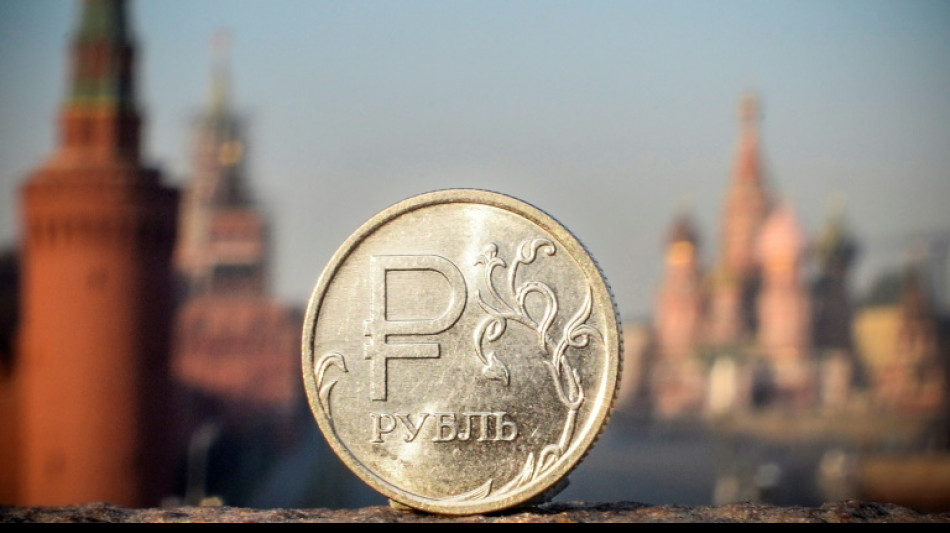
Russian central bank slashes rate to rein in ruble / Photo: Alexander NEMENOV - AFP

 Nepali rescuers buoyed by miracle finds but tough conditions persist

 At last: Straight sets win over Tabilo puts Zverev in US Open last 16

 Jovic 'loses sanity five times over' to oust friend Eala in US Open epic

 China's memories of Mao fade to nostalgia 50 years after his death

 US envoys discuss with Putin 'substantive' plans for steps to end Ukraine war

 Zheng stuns Keys as US Open upsets dim American hopes
 Jovic 'loses sanity five times over' to oust Eala and book Gauff clash

 'Like a jewel': Japan's luxury ice revered by bars worldwide

 'The flood is coming': How a Nepal principal saved 900 students

 Kiss's winning run ends as Argentina hold Australia to draw

 Alcaraz excited to face 'dangerous' Paul for US Open quarter-final berth

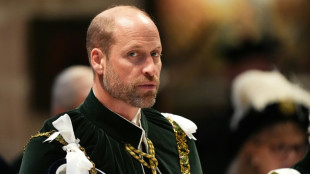 Prince William to represent King Charles III at Norway late King Harald's funeral
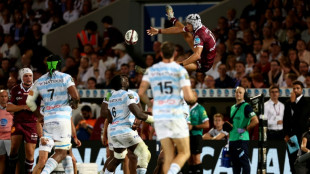
 Inter and Roma roar back to win thrillers and share top spot

 Don't stop them now: fans party for Freddie Mercury's 80th birthday

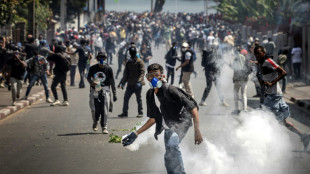 AFP photographer wins top prize for Madagascar protest coverage

 Keys: 'I felt like I couldn't play tennis'

 Simmonds stars as Pau upset Montpellier

 Inter roar back in five-goal thriller with Napoli

 Haaland keeps Man City perfect in Premier League, blunt Spurs held

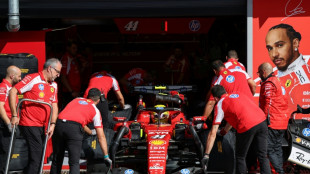 Hamilton worried by Ferrari pace while Antonelli prepares for a fight

 Vuelta stage 15 shortened due to extreme heat, Mas consolidates lead

 Putin meets US envoys for Ukraine war talks
 Modric available for Croatia in Nations League
 Potapova upsets 2025 US Open runner-up Anisimova

 Gasly a 'class act' says Alpine boss after Monza pole

Russia's central bank cut its key interest rate Thursday following an emergency meeting, as authorities seek to rein in the ruble which has surged in value despite the conflict in Ukraine.
The Bank of Russia slashed the rate to 11 percent from 14 percent, saying external conditions for the economy remained "challenging, considerably constraining economic activity."
The policy-setting meeting was originally set to take place on June 10 but the central bank surprised the market by announcing Wednesday that an extraordinary meeting would take place the next day.
"Financial stability risks decreased somewhat, enabling a relaxation of some capital control measures," it said in a statement on Thursday.
The Bank of Russia said it "holds open the prospect of key rate reduction at its upcoming meetings."
Central Bank head Elvira Nabiullina said that Russia managed to stabilise the economy but it was too early to "exhale calmly".
"As the economy adapts, it will be difficult for both companies and citizens," she said after the meeting.
"The first months were a time of tactical decisions: the first shock of the sanctions had to be counteracted," she added.
"As a result, we managed to protect financial stability and prevent an inflationary spiral. But this, of course, does not mean that we can exhale calmly."
The next rate-setting meeting is set to take place on June 10.
After the West slapped Russia with debilitating sanctions over the start of Moscow's military campaign in Ukraine in February, financial authorities introduced strict capital controls to boost the economy.
Since then, the ruble has staged a spectacular rebound and strengthened by around 30 percent against the dollar.
After the decision on Thursday, the ruble weakened
by 7 percent against the dollar.
A strong ruble is not desirable for the Russian government, which fears it can hit budget revenues and exports.
Generally, lower interest rates are unattractive for foreign investment and decrease the value of a country's currency.
- 'Dollar is shrinking' -
The Kremlin said on Wednesday the government was paying "special attention" to the strong ruble but President Vladimir Putin sought to cast the rallying currency as a positive development.
"As we know, the dollar is shrinking, the ruble is strengthening," he said on Wednesday.
But analysts say the strong ruble is a sign of Russia's weakening economy.
"The ruble strength reflects high oil/energy prices, but mostly a collapse in import demand with sanctions. That suggests that growth is going to be massively challenged -- likely deep recession this year," wrote Timothy Ash, an emerging markets strategist at BlueBay Asset Management.
"A strong currency will not help that and will also stall the ruble value of oil export earnings to the budget, boosting the budget deficit," he added.
The government had earlier taken steps to loosen capital controls but the ruble continued to appreciate.
On Monday, Russia's finance ministry announced domestic companies would have to sell 50 percent of their foreign currency export earnings, a reduction from 80 percent earlier.
"High oil and gas revenues are providing policymakers with a lifeline, allowing them to row back emergency economic measures," said William Jackson, chief emerging markets economist at Capital Economics.
G.P.Martin--AT