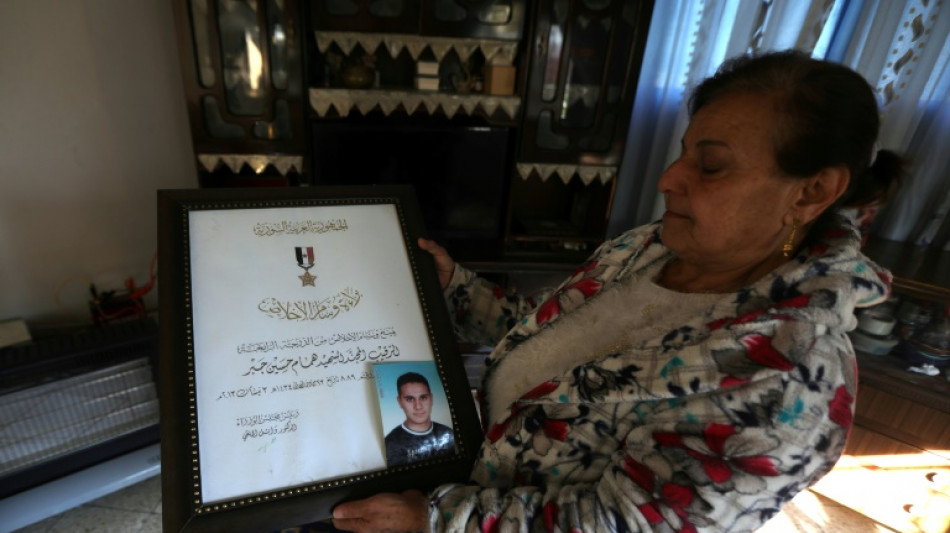
Defeat of Syria's Assad stirs a mother's bitterness / Photo: Bakr ALKASEM - AFP

 Russia seeks arrest of Telegram chief Durov

 South Korean stocks plunge as tech rout deepens, oil rises

 On London streets, homeless wary at PM's vow to end rough sleeping
 Bangladesh ex-premier Hasina vows to return despite fearing for life

 Senate confirms Clayton as Trump intelligence chief

 South Korean stocks collapse amid Asian tech rout

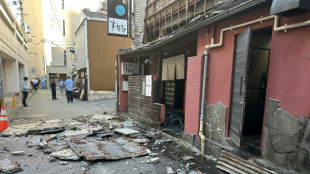
 Search for survivors after powerful Japan quake kills 13

 Shelton fends off Damm at Washington as veteran Venus ousted

 Indian hockey back on 'road to gold' after years in the wilderness

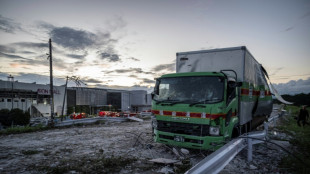 Rescuers search for survivors after powerful Japan quake kills 13

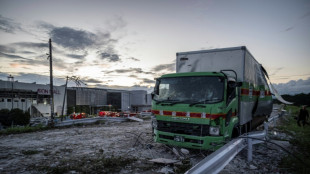 Five dead after powerful Japan quake, others missing

 Senate advances sweeping Russia sanctions bill

 Tocvan Announces Strategic Management Restructuring to Align Leadership with Growth and Production Objectives

 Annealsys Streamlines Scientific Product Evaluation with Customized Bioz Badges

 US government bans humanoid robots manufactured abroad

 Eseme, Hobbs shine in Glasgow rain to win 100m Commonwealth gold

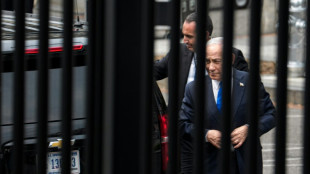 Netanyahu holds first White House talks with Trump since Iran war began

 Warriors re-sign Green after LeBron James shun

 Cameroon's Eseme storms to 100m Commonwealth gold

 AIDS activists slam 'pharma greed' over breakthrough drug

 France needs more Canadair water bombers but building them is painfully slow

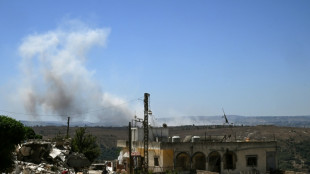 In devastated south Lebanon village, residents count on army deployment

 Keiko Fujimori sworn in as president of Peru
 GSJJ Launches ESG-Certified Custom Challenge Coins and Pin Badges
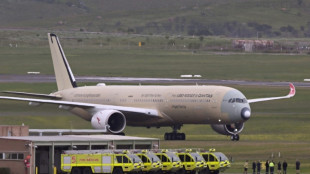 Airbus completes record 24-hour flight with plane to be used by Qantas

In the villages above the Syrian port city of Tartus they once hailed the sons who died fighting in Bashar al-Assad's service as martyrs.
But mothers are now nervous to display their sons' pictures, and no longer hide their bitterness towards the ousted leader for whom they sacrificed so much.
"It's true my son is dead," said Jamila Jabr, the 60-year-old mother of Humam, an army conscript who was killed in combat in 2012.
"But the important thing is that Bashar al-Assad is gone. He destroyed us and destroyed our children's futures and starved us."
A small but vigorous woman with tired eyes, Jabr lives in the hilltop village of Bait al-Marj, a poor but comfortable Alawite community nestled amid fruit and olive groves.
Assad, who fled Syria for Russian exile less than two weeks ago in fear of a lighting offensive on Damascus by Sunni Islamist fighters, himself hailed from the Alawite minority.
But, in the land once seen as the heartland of his support, the Alawites whose sons died fighting to protect his wealthy ruling clan hold no fond memories.
They are nervous that Syria's new rulers might try to impose Sunni Islamic law on their quiet villages, but do not miss the deposed dictator.
- Heartbreaking portrait -
Jabr is still proud of her son, who died aged 22 when his military service was prolonged and he was pressed into combat against the now victorious rebels.
But she does not display a photo of him in his uniform nor mourn him as a martyr, remembering instead the happy teenager who planned to start his own business.
"I would go into the living room and chat with his picture but my heart would break," Jabr told AFP, her voice breaking.
Inside her modest home, under a tree heavy with near-ripe oranges, a smiling portrait in a civilian jumper of a youthful Humam looks down.
There are bare white patches on the concrete wall where other images once hung.
Bait al-Marj has barely seen any of the violence that ravaged much of the country in 13 years of war.
This week, after Assad's fall, Israeli jets bombed a nearby Syrian bunker, rattling the windows of Alawite, Christian and Ismaili minority homes.
But otherwise, the houses remain intact. The human toll was much harsher: most households know someone lost in the fighting, many lost their sons.
And even those Alawite conscripts who survived the fighting are bitter now.
Down the hill in Tartus, a large port city on the Mediterranean that still holds a Russian naval garrison that once backed Assad, the tables have turned.
Former rebel fighters with long chin beards and no moustaches sit behind a row of tables in a governorate building handing out temporary ID cards.
Before them, the former soldiers, police and Baath party cadres who once controlled Syria, queue by the hundreds for their bureaucratic assistance.
- 'We were worth nothing' -
Demobilised soldiers from the defeated government army, now in civilian clothes, need the ID to move around or seek employment in the new Syria.
Some hope that they will find new work with the interim government, now led by the same Hayat Tahrir al-Sham (HTS) group they were fighting last week.
Others wonder if military pensions will be honoured. In the meantime, they need ID cards, and the HTS officials taking their pictures are polite and businesslike.
Senior HTS cadre Khaled Musa, 44, told AFP that things were proceeding well and that the new IDs would last three months while Syria agrees a new government.
But Musa and his HTS troops are mainly Sunni Muslims from the northern city of Idlib, and the Alawites of Tartus, while not resisting, are nervous.
A woman soldier, 41-year-old Aida Ali, was disappointed to have lost her logistics job, since she had "served a country, not a man".
HTS does not employ women in military roles.
"Young people's lives were wasted for the sake of a person who did not deserve to rule this country," declared 30-year-old Mohammed Bader.
Sitting outside the demobilisation centre in a warm civilian coat, the young Alawite said he had only learned of Assad's flight from the news.
With comrades he hitched rides back from their Damascus barracks to Tartus only to find that the Assad clan's rule had collapsed across the country.
"Since the beginning of the crisis we have seen how soldiers were killed unnecessarily. But we could not talk about it. Walls have ears," he told AFP.
"Ultimately, we realised that we were worth nothing. Our blood was shed in vain and it is as if we have offered nothing."
Ch.Campbell--AT