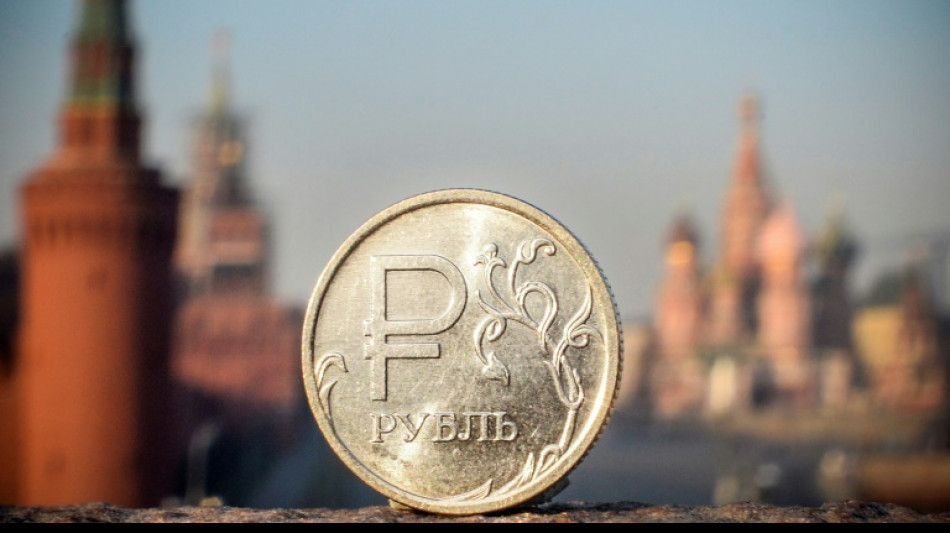
Economic woes mount for Russia's war machine / Photo: Alexander NEMENOV - AFP/File

 Russia seeks arrest of Telegram chief Durov

 South Korean stocks plunge as tech rout deepens, oil rises

 On London streets, homeless wary at PM's vow to end rough sleeping
 Bangladesh ex-premier Hasina vows to return despite fearing for life
 Senate confirms Clayton as Trump intelligence chief

 South Korean stocks collapse amid Asian tech rout
 Search for survivors after powerful Japan quake kills 13

 Shelton fends off Damm at Washington as veteran Venus ousted

 Indian hockey back on 'road to gold' after years in the wilderness
 Rescuers search for survivors after powerful Japan quake kills 13

 Five dead after powerful Japan quake, others missing

 Senate advances sweeping Russia sanctions bill
 Tocvan Announces Strategic Management Restructuring to Align Leadership with Growth and Production Objectives

 Annealsys Streamlines Scientific Product Evaluation with Customized Bioz Badges
 US government bans humanoid robots manufactured abroad
 Eseme, Hobbs shine in Glasgow rain to win 100m Commonwealth gold
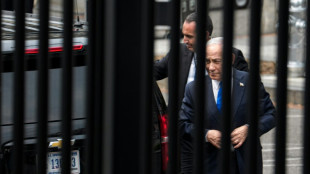 Netanyahu holds first White House talks with Trump since Iran war began

 Warriors re-sign Green after LeBron James shun

 Cameroon's Eseme storms to 100m Commonwealth gold
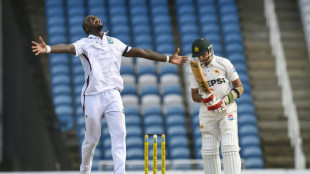
 AIDS activists slam 'pharma greed' over breakthrough drug
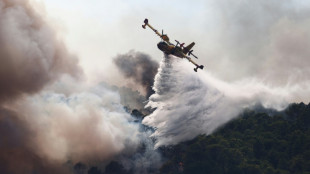 France needs more Canadair water bombers but building them is painfully slow
 In devastated south Lebanon village, residents count on army deployment

 Keiko Fujimori sworn in as president of Peru

 GSJJ Launches ESG-Certified Custom Challenge Coins and Pin Badges
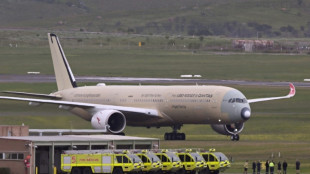 Airbus completes record 24-hour flight with plane to be used by Qantas

Stubborn inflation, exorbitant borrowing costs, bankruptcy risks and a growth slowdown: the Russian economy is facing a slew of negative headlines, as the costs of the Ukraine war and Western sanctions mount.
Since ordering an invasion in February 2022, Russian President Vladimir Putin has repeatedly touted the "failure" of sanctions and hailed strong growth in the face of unprecedented uncertainty.
But going into 2025, that three-year run of mostly good economic news looks in serious doubt.
The latest setback for the Kremlin came last week, when inflation accelerated to 8.9 percent in November, according to official statistics.
Prices have been rising despite the central bank having hiked interest rates to a two-decade high of 21 percent.
Russian media, usually reluctant to report on any sign of social discontent, are turning increasing attention to hard-pressed families.
The price of butter, up a third since the start of the year, has become emblematic, with a slew of reports on rising thefts from supermarkets.
- 'Root cause' -
Most independent analysts say the invasion is to blame.
"The root cause of the economy's problems is labour starvation and sanctions ... the symptom is an inflationary surge," said Anton Tabakh, chief economist at the Russian ratings agency Expert RA.
Both those factors are directly related to the war.
Labour shortages, already pressing due to Russia's demographic problems, have been exacerbated by hundreds of thousands of men joining the army, being employed by arms manufacturers or fleeing the country, as well as a tightening of migration rules.
"This is holding back GDP growth," said economist Yevgeny Nadorshin, a former advisor to the economic development ministry.
He estimates Russia lacks around one million workers.
That has contributed to rising wages, pushing up prices set by businesses.
So too has the Kremlin's massive increase in military spending.
State expenditure is set to be 67.5 percent higher in 2025 compared to 2021, before Russia's military offensive.
Up against those huge sums, interest rate rises have so far had only a limited effect.
Central Bank Governor Elvira Nabiullina -- who has stressed the need to stop the "disease" of inflation "becoming chronic" -- has signalled she will hike rates again on Friday.
High rates have triggered outcry from bosses, including at state-run companies, with market borrowing costs running at 25-30 percent.
"The economy can't survive like this for long," German Gref, CEO of Russia's largest lender, state-run Sberbank, said this month.
Russian Railways said it will cut investment by 40 percent next year.
Even Putin's closest allies have complained.
Sergei Chemezov, head of the Rostec military-industrial conglomerate and a close friend of the president, described interest rates of more than 20 percent as "madness".
Analysts expect many firms, unable to refinance, will go under.
"The number of bankruptcies is about to rise sharply, especially among small and medium businesses. But there will be some among large businesses as well," said Nadorshin.
- Growth slowdown -
Faced with such an onslaught, the central bank predicts a sharp slowdown in growth next year -- to below 1.5 percent, from over 3.5 percent this year.
It has ruled out the prospect of stagflation -- low growth and high inflation -- yet the word is being used more and more frequently in Moscow.
Adding to those worries has been fresh volatility for the Russian currency, which slid to its weakest against the dollar since March 2022.
The ruble tumbled after the United States introduced sanctions on key financial institution Gazprombank, which had been handling all payments for Russian gas exports.
For the Kremlin, however, there are still some bright spots.
Chinese companies have filled many of the gaps left by Western firms that fled the market and Moscow has obtained sanctioned goods using friendly intermediaries.
The budget deficit is low by international standards and tax revenues from sources other than energy exports are rising.
"There are certainly no reasons to panic," Putin said last month amid the currency crisis.
M.King--AT