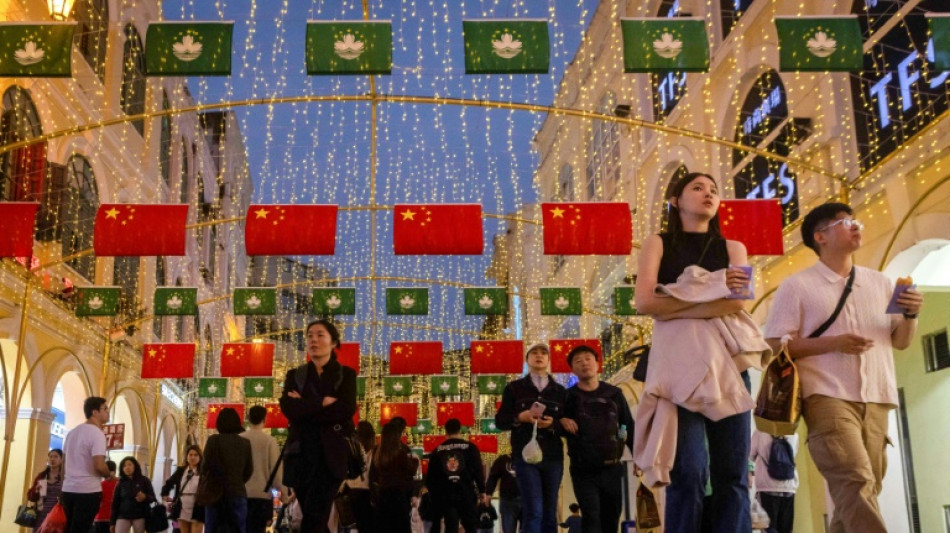
Macau's civil society 'falls silent' after 25 years of Chinese rule / Photo: Eduardo Leal - AFP

 Russia seeks arrest of Telegram chief Durov

 South Korean stocks plunge as tech rout deepens, oil rises
 On London streets, homeless wary at PM's vow to end rough sleeping
 Bangladesh ex-premier Hasina vows to return despite fearing for life

 Senate confirms Clayton as Trump intelligence chief
 South Korean stocks collapse amid Asian tech rout

 Search for survivors after powerful Japan quake kills 13

 Shelton fends off Damm at Washington as veteran Venus ousted
 Indian hockey back on 'road to gold' after years in the wilderness
 Rescuers search for survivors after powerful Japan quake kills 13

 Five dead after powerful Japan quake, others missing

 Senate advances sweeping Russia sanctions bill
 Tocvan Announces Strategic Management Restructuring to Align Leadership with Growth and Production Objectives

 Annealsys Streamlines Scientific Product Evaluation with Customized Bioz Badges

 US government bans humanoid robots manufactured abroad
 Eseme, Hobbs shine in Glasgow rain to win 100m Commonwealth gold

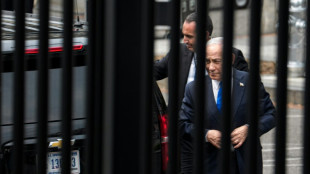 Netanyahu holds first White House talks with Trump since Iran war began

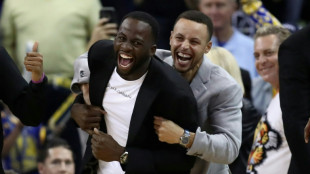 Warriors re-sign Green after LeBron James shun

 Cameroon's Eseme storms to 100m Commonwealth gold
 AIDS activists slam 'pharma greed' over breakthrough drug

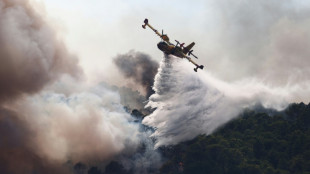 France needs more Canadair water bombers but building them is painfully slow
 In devastated south Lebanon village, residents count on army deployment

 Keiko Fujimori sworn in as president of Peru

 GSJJ Launches ESG-Certified Custom Challenge Coins and Pin Badges
 Airbus completes record 24-hour flight with plane to be used by Qantas
A decade ago, the elegant cobblestone streets of Macau's Tap Seac Square were jam-packed with people clamouring for change and government accountability -- the high-water mark for the former Portuguese colony's political awakening.
Now as Macau prepares to mark the 25th anniversary of its handover to China this week, the city's democracy movement is all but over and the protests of 2014 no more than a memory.
"Macau's civil society is relatively docile and obedient, that's the truth," said Au Kam-san, 67, a primary school teacher who became one of Macau's longest-serving pro-democracy legislators.
"But if that were totally true, we wouldn't have our diversity of voices. Our young people have their own views."
Au entered politics after the 1989 Tiananmen Square crackdown, for years campaigning on issues such as livelihood, corruption and electoral reform.
On that day in May 2014, he helped organise a 20,000-strong rally to oppose a policy granting perks to retired officials, leading to a rare government concession.
Today, public protests in Macau are just a memory after Beijing launched sweeping measures in the past five years that ousted opposition lawmakers and chilled free speech.
Ahead of the anniversary, multiple Macau democrats told AFP they were warned not to make critical remarks in public.
"There is a strong sense of suppression, and the whole civil society has fallen silent," Au said.
- Ways to participate -
Macau reverted to Chinese rule in 1999 via a "One Country, Two Systems" framework that promises a high degree of autonomy, separate legal system and stronger safeguards for civil liberties than those on the mainland.
But unlike neighbouring Hong Kong, Macau was never offered a guarantee of wider democratisation in the Basic Law, its mini-constitution.
Jorge Rangel, a minister in Macau's final colonial administration, said democracy was not a priority when he and Chinese counterparts drafted the constitution.
"But I believe that at least the Macau members and some of the mainland members of the Basic Law (drafting committee) believed that it would be useful for Macau to have very active participation of the people," said Rangel, 81.
"My vision of 'One Country, Two Systems' is that we have a... strong, active, independent civil society."
Macau's 690,000 residents today have no say over the city's leader, who is selected by a committee of 400 pro-establishment figures.
Less than half of the legislators are elected by popular vote, and the pro-democracy camp has never won more than 15 percent of seats.
Unable to change the system from within, activists in the 2010s -- including fresh faces like Jason Chao and Scott Chiang -- explored ways to engage the public, such as keeping up the tradition of annual Tiananmen events.
Chao, 38, said activists also tried to spread progressive values, like trying to get "conservative" Macau to talk about LGBTQ rights, an uphill battle that yielded no clear payoff.
In 2014, he organised an online referendum -- over the strident objections of Beijing representatives in Macau -- asking the public if they supported universal suffrage for city leader.
Just over 95 percent of the 8,700 respondents said yes.
"I felt (the results) were quite remarkable, and I'm grateful my team and I withstood the pressure to pull it off," Chao said, adding the feat cannot be replicated now.
- 'Seeds' in winter -
As recently as 2019, Chinese leaders praised Macau as a model of patriotism and stability -- but as Hong Kong was rocked by huge and violent protests, Macau was not spared from the backlash.
In the 2021 legislature election, Chiang was among the pro-democracy candidates disqualified on grounds they failed to support the Basic Law or were "disloyal" to Macau.
"Some people at the time argued that we were moderates, different from the radicals in Hong Kong. Thinking back, this was of course entirely irrelevant," said Chiang, 43.
Chao and Chiang have emigrated and say they have no plans to return. Democrats who remain see little cause for optimism.
Macau's next leader, Sam Hou-fai, was a top judge and one of his 2019 rulings massively restricted freedom of assembly, according to University of Macau academic Ieong Meng-u.
"On paper, Macau's laws on assembly and protest are the most pro-free speech within the greater China region... (but) after the ruling came out, there have been no approved protests or rallies in Macau," Ieong said.
Having decided not to run for re-election in 2021, ex-lawmaker Au had a frank assessment of his camp's legacy.
"In terms of the political system we didn't bring about any change... I admit that in the fight for democracy we have accomplished nothing," he told AFP.
But he said activists have changed civil society for the better: "Even though we are in a bitter winter, if there are changes to the external environment, these seeds in Macau may yet have a chance to sprout."
A.Moore--AT