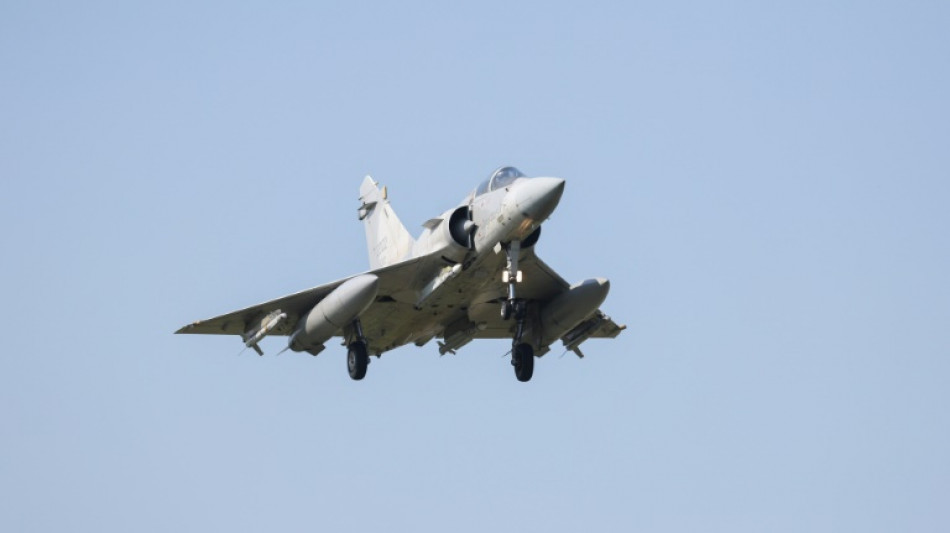
The Taiwan Strait: crucial waterway and military flashpoint / Photo: I-Hwa CHENG - AFP

 Japan coral protectors race to save reefs from heat 'bomb'

 US Fed expected to hold rates steady as inflation hawks circle
 SK hynix posts 1,200% net profit boost on AI chip boom
 'Very hungry' Joao Pedro impresses new Chelsea manager Alonso
 US government bans humanoid robots manufactured abroad
 Eseme, Hobbs shine in Glasgow rain to win 100m Commonwealth gold

 Netanyahu holds first White House talks with Trump since Iran war began

 Warriors re-sign Green after LeBron James shun

 Cameroon's Eseme storms to 100m Commonwealth gold

 AIDS activists slam 'pharma greed' over breakthrough drug

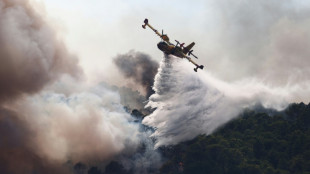 France needs more Canadair water bombers but building them is painfully slow

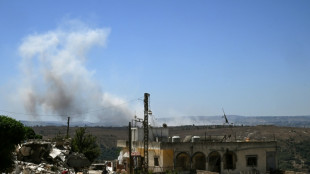 In devastated south Lebanon village, residents count on army deployment

 Keiko Fujimori sworn in as president of Peru

 GSJJ Launches ESG-Certified Custom Challenge Coins and Pin Badges
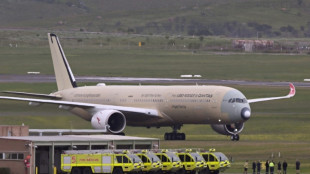 Airbus completes record 24-hour flight with plane to be used by Qantas

 FIFA says it hopes to sell $4.2bn stake in its tournaments
 Zelensky hails 'good' Trump talks on Patriot air defenses
 Spain allows wildfire evacuees to return but France fears flames spreading

 'Not out of danger': Residents return to scorched French village
 Zelensky holds White House talks with Trump on Ukraine war

 US Fed begins meeting with markets expecting steady interest rates
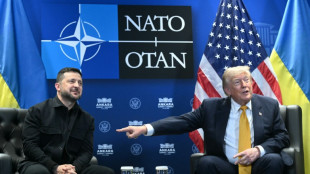 Ukraine's Zelensky arrives for Trump talks at White House

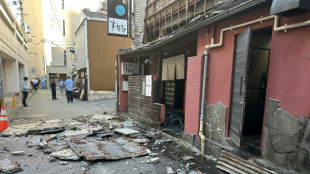
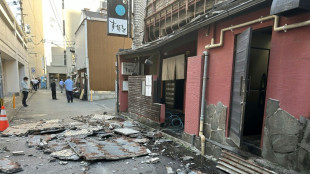 Dozens feared trapped in quake-hit Japan mall

 Diaz and Olise set to stay at Bayern, says CEO

 British drugs group GSK targets savings after profits slide
Taiwan accused China on Tuesday of holding its biggest maritime mobilisation around the island in years, though Beijing has stayed tight-lipped over its latest show of force.
Here, AFP looks at the Taiwan Strait, a critical waterway and growing military flashpoint:
- Where is the Taiwan Strait? -
The strait separates the eastern Chinese province of Fujian from the main island of Taiwan, home to around 23 million people.
At its narrowest point, just 130 kilometres (about 80 miles) of windswept water separates the two major landmasses, and several outlying Taiwanese islands -- including Kinmen and Matsu -- lie just a few kilometres from the Chinese coastline.
China and Taiwan have been governed separately since Mao Zedong's communist army won a civil war and sent the opposition nationalist forces fleeing across the strait in 1949.
Beijing has maintained ever since that the island is part of its territory, and has not ruled out using force to bring it under control.
- Why is it important? -
The strait is a critical artery for global shipping through which a huge volume of trade passes every day.
Around $2.45 trillion of goods -- more than a fifth of global maritime trade -- transited the strait in 2022, according to the Center for Strategic and International Studies, a Washington-based think tank.
Taiwan plays an outsized role in the global economy thanks to producing over 90 percent of the world's most advanced computing chips, used in everything from smartphones to cutting-edge military equipment.
Analysts say a Chinese invasion would deal a catastrophic blow to these supply chains.
More minor disruptions, such as a blockade of the island, would cause costly shipping cancellations and diversions that would impact worldwide consumers.
"In the event of a long conflict over Taiwan, financial markets would tank, trade would shrivel, and supply chains would freeze, plunging the global economy into a tailspin," Robert A. Manning, a China expert at Washington's Stimson Center, wrote this year.
A report by the Rhodium Group estimated that a blockade of the island could cost firms dependent on Taiwan's chips $1.6 trillion in revenue annually.
An invasion would also endanger Taiwan's way of life, embodied by its democratic freedoms and boisterous elections.
It would also risk a wider conflict because the United States, while not recognising Taiwan diplomatically, has an agreement to help the island defend itself.
- What do we know about the drills? -
Unlike previous exercises, Beijing has not announced any drills.
But a senior Taiwanese security official told AFP on Tuesday that "nearly 90" Chinese naval and coast guard ships were currently in waters along the so-called first island chain, which includes Japan's Okinawa, Taiwan and the Philippines.
Taiwan's defence ministry said earlier it had also detected 47 Chinese aircraft near the island in the 24 hours to 6:00 am (2200 Monday GMT), the highest number since October.
China's foreign ministry declined to answer questions about the drills on Tuesday, referring reporters to the "competent authorities".
But ministry spokeswoman Mao Ning said at a regular press conference that Beijing would "resolutely defend its national sovereignty and territorial integrity".
The developments came after Taiwanese President Lai Ching-te visited the US last week, a visit strongly criticised by Beijing.
- Has this happened before? -
China has ramped up pressure on Taiwan in recent years and has staged four large-scale military exercises around the island since 2022.
In October, Chinese forces deployed fighter jets, bombers and warships in areas to the north, south and east of Taiwan, and simulated a rocket strike in drills called "Joint Sword-2024B".
The manoeuvres came after Lai gave a speech on Taiwan's national day that Beijing viewed as a provocative move towards independence.
Beijing launched other drills -- "Joint Sword-2024A" -- in May following Lai's inauguration, and encircled Taiwan in April last year after his predecessor Tsai Ing-wen met with then US Speaker Kevin McCarthy.
But a spokesperson for Taipei's defence ministry has said the scale of the maritime forces in the current operation "exceeds the four drills since 2022".
Several major crises flared across the strait in preceding decades, most recently in 1995-6, when China conducted missile tests around Taiwan.
F.Wilson--AT