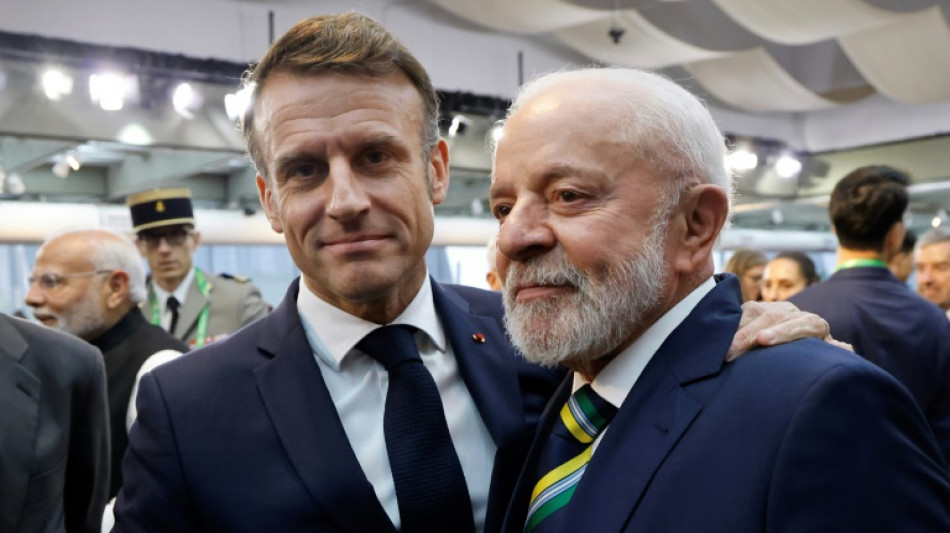
Brussels, not Paris, will decide EU-Mercosur trade deal: Lula / Photo: Ludovic MARIN - AFP/File

 Democrats, Trump hold final rallies before midterm elections

 Japan urges US to enforce discipline after second Marine arrest
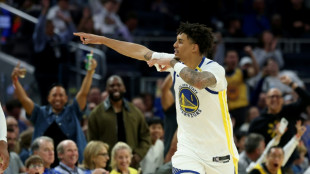 'Remarkable' rookie Lendeborg scores 37 as Warriors beat Clippers
 ExxonMobil urged to re-think Papua New Guinea gas project
 Asian stocks mixed as tech sector struggles to rebound from selloff
 India's royals find new power in their past
 Irish bookshops help meet UK demand for Sally Rooney novels
 NFL Vikings suffer first loss while Broncos edge Chiefs
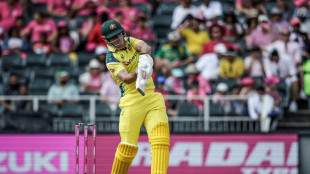 Host of fresh faces in Australia white-ball squads to face England
France does not get to decide whether a free trade deal between the EU and South America's Mercosur bloc goes ahead -- only Brussels does, Brazilian President Luiz Inacio Lula da Silva said on Wednesday.
Lula added firmly: "I intend to sign this agreement this year."
Brazil's position, stressed by Lula in a speech on Brazilian industry, crosses swords with that of France, which is determined to block the trade pact.
The blockbuster deal between the 27-country European Union and Mercosur countries -- Brazil, Argentina, Paraguay and Uruguay -- has been 25 years in the making and would create the world's biggest free trade zone.
The contours of the agreement with the Mercosur bloc -- which Brazil dominates -- were agreed in 2019, but progress on completing the pact has stalled since.
On Tuesday, France's parliament overwhelmingly backed President Emmanuel Macron in rejecting the EU-Mercosur deal, which has prompted protests by French farmers fearing it would bring unfair competition.
Trade policy for the whole European Union, however, is determined by the European Commission, run by Ursula von der Leyen, on the basis of what most EU member states agree.
"If the French don't want the agreement, they don't get to blow the final whistle -- the European Commission will blow that whistle," Lula said.
"Ursula von der Leyen has the power to make the agreement happen," he said.
France needs three other EU countries to join it to form a blocking minority against the deal. So far Poland has publicly rallied to its side.
But Germany and Spain have both said they want the trade deal completed swiftly.
At a G20 summit in Rio last week, Macron reiterated his opposition to the Mercosur deal and said France was working with Poland, Austria, Italy and other EU countries "that have the same concerns."
Von der Leyen, who also participated in the G20 summit, admitted on arrival that her commission had a "big task" in getting EU member countries behind the trade deal, adding: "The devil is always in the details."
The EU's outgoing foreign policy chief, Josep Borrell, this week backed the deal being done by the end of the year.
"This is about much more than just trade; it is above all a geopolitical issue," he said in his online blog.
That reflects European concerns that China is making trade inroads into Latin America -- and that the world could be heading into a period of trade wars triggered under Donald Trump's protectionist "America First" policies.
E.Hall--AT