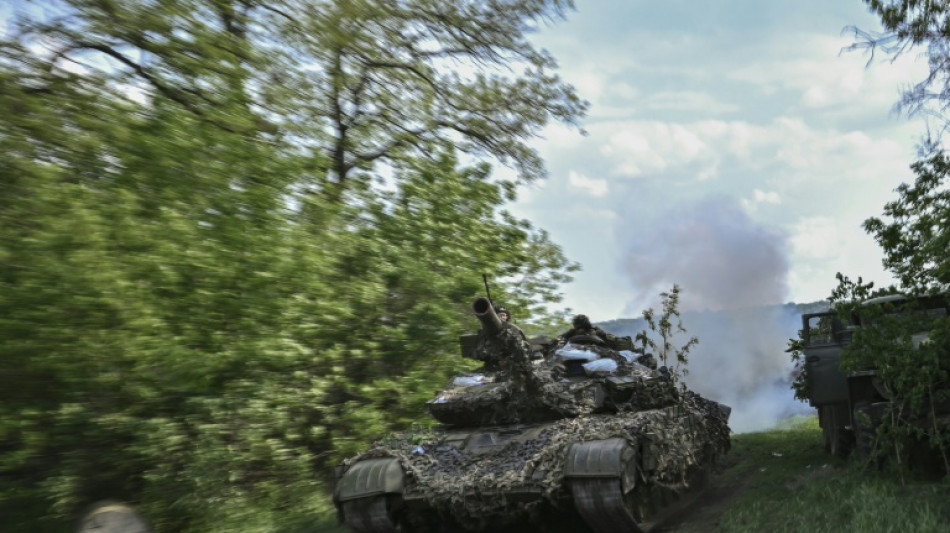
Russia targets Ukraine's last link to besieged east / Photo: ARIS MESSINIS - AFP

 US envoys have 'more effective proposals': Ukraine official

 Defending champion Alcaraz powers into US Open quarter-finals

 Amazon cargo plane overshoots Miami runway, hits vehicles, catches fire

 Toll from Yemen clashes passes 300 as civilians flee homes

 Sabalenka books US Open quarter-final clash with Noskova

 German AfD supporters jubilant at far right's thumping win

 Zelensky warns war likely to continue into winter after US talks

 Arsenal deliver statement fightback to end Chelsea's flying start

 Leclerc accepts blame as Hamilton laments Ferrari approach

 Sabalenka surges past Townsend to reach US Open quarter-finals

 Smiling face of Germany's far-right AfD: Ulrich Siegmund

 Lebanon president calls for US help as Israeli strikes kill 7

 Yamal hits double as perfect Barca thrash Valencia

 Venice festival turns gaze on war reporters, media industry

 Sensational Antonelli wins Italian GP from back of grid
 Susan Sarandon says still losing roles over Gaza stance
 US envoys hold 'important' talks in first trip to Kyiv

 Championship leader Antonelli wins Italian Grand Prix

 Vardy signs for Championship strugglers Burnley
 FIFA confirms Infantino will run in presidential election

 With joy and grief, Palestinian football marks return

 Iran threatens greater force if US launches more attacks
 Vandals uproot Berlin tree commemorating Pride attack victims
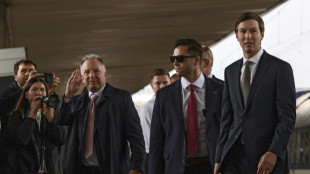 Trump envoys arrive in Kyiv for first Ukraine visit
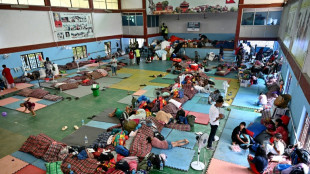
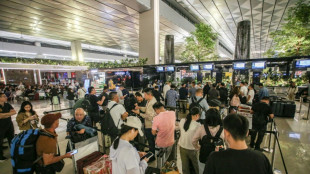 Indonesia's main airport suspends operations after volcanic eruption

The wounded coal miner peered through his shrapnel-splayed windshield and tried to ignore the flopping noises coming from his blown tyres as he drove along Ukraine’s last link with the besieged east.
The cars around him had just screeched to a halt because of a sudden burst of fire from somewhere in the overhanging forest.
But Sergiy Tokarev seemed impervious to the danger after being shelled on his way back to the frontline village of Zolote to rescue his stranded neighbours.
The 60-year-old ended up turning his van around and spending the night on an open road that has turned into the latest target of Russian forces advancing from the east.
White smoke from burning fields shrouded the debris of charred buildings smouldering behind him.
Tokarev glanced out his window and grumbled about the headache he will have finding new tyres nearly three months into Russia's invasion of its pro-Western neighbour.
"There are grandmothers and grandfathers stranded back there," he said, edging his van down the road at a crawl.
His dented and screeching wheel rims looked long past the point at which they should have fallen off.
His right thigh was bandaged after being grazed by shrapnel that came flying at him on the outskirts of his hometown.
"If I am fated to die here, I will die here," the coal miner shrugged.
"But if not, I will keep pulling people out."
- 'They are here' -
A bumpy road running through fields filled with sunflowers and hamlets has turned into one of the most important fronts of the entire war.
Ukraine's outgunned forces have been trying to keep the Russians from encircling the once-bustling cities of Lysychansk and Severodonetsk at the road's northeastern end.
The two ruined coal and chemical manufacturing centres form the last pocket of Ukrainian resistance in the smaller of the two regions comprising the Donbas war zone.
The road slowly pursued by Tokarev in his battered van has become the last means for Ukraine to send in reinforcements -- and for rescuers to pull stranded civilians out.
Russia is now trying and cut it off about 50 kilometres (30 miles) southwest of Lysychansk by first pounding it with artillery and then moving in with force.
Ruffled mounds of black earth expose spots where Russian shells have smashed into sides of the two-lane route.
Lightly armed Ukrainian soldiers try to shield themselves in dune-like reinforcements erected in ditches and ravines.
Buildings housing troops and equipment burn from precision strikes launched from invisible positions.
"They have reached us," a soldier who uses the nom de guerre Tadzhik said near the twisted body of one of his fallen comrades in arms.
"We can't see them but they are here."
- Last road out -
The road's importance could not be greater for construction worker Dmytro Mosur.
The 32-year-old had his twin toddlers in his arms and tears in his eyes after losing his wife in one of the ceaseless shellings engulfing Severodonetsk.
He now stood on an exposed square in Lysychansk waiting to learn if rumours that rescuers could take him and his daughters out to safer ground were true.
"I thought something like this might happen," Mosur said of the day his wife died after briefly leaving her bunker to cook a meal over an open flame in the yard.
Neither city has gas or power and up to 20,000 of each one's original 100,000 residents spend most of their time hiding underground.
Those who step outside in Severodonetsk to tend to wood-fired stoves brave artillery battles raging across northern and eastern stretches of the ghost city.
"We discussed leaving earlier but I was unable to convince her. We even got into a fight over it," the father said.
"As soon as this tragedy struck, I immediately decide to get out. I had no more doubts."
- Staying behind -
Natalia Ryazantseva also has no doubts.
The 57-year-old businesswoman watched her daughter move to the French Riviera and her son settle in Poland when the east became engulfed by an eight-year insurgency that the Kremlin backed prior to its invasion.
Both panicked after Ryazantseva told them how she barely escaped with her life from a shell that smashed through her bedroom ceiling earlier this month.
"They told me to leave immediately," she said cheerfully in the rose garden of a detached home on the leafy edge of Lysychansk.
The whistles of artillery fire seemed distant and Ryazantseva appeared relaxed while describing the pain of life without electricity or running water.
"How can I leave?" she asked. "We are old people now. At my age, a woman wants the quiet and comfort of her own home. So we decided to stay."
T.Wright--AT