
The haircuts that help traumatised Ukrainian soldiers heal / Photo: Roman PILIPEY - AFP

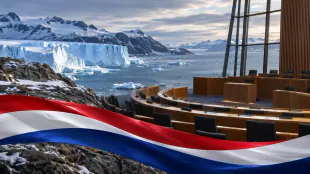 Greenland parliament approves security agreement with United States

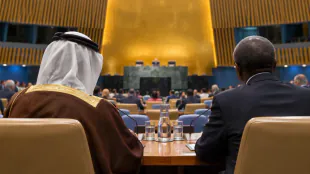 Qatar envoy meets incoming UN General Assembly president
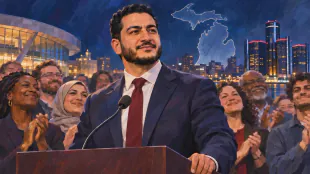
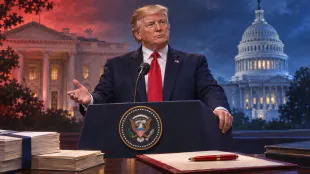 Trump Signals Willingness to Work With Democrats After Midterm Defeat

 Wedgewood Weddings Expands to Maryland With Grey Rock Mansion
 Jumia to Announce Third Quarter 2026 Results on November 18, 2026

 Apollo Wellness Centers Releases Primer Video
 InterContinental Hotels Group PLC Announces Transaction in Own Shares - November 04

 No. 22 UCLA defeats No. 5 Arizona 84-75 despite Kharchenkov's 38 points

 Vessel operator seeks witnesses after Vancouver grounding

 US Air Force deploys F-16 fighters to remote Aleutian base for readiness drill

 Bezos grant helps Seattle nonprofit move thousands of families toward housing

 Shrini Srivastava joins crew of Varanasi-Delhi Vande Bharat Sleeper service

 Nearly Half of Australian Workers Overqualified, Survey Finds

 RBI eases export-declaration compliance for individual service exporters

 India proposes more import entry points for drugs and medical devices

 Derek Tierney Outlines Ten-Year Strategy for National Digital Health System

 NBC’s Steve Kornacki Reveals Tech Habits Ahead of Midterm Elections

 India and Israel oppose UN draft on regional conventional arms control
Igor Shyshko's eyes shut as the electric razor hummed through his greying hair, a sound that until recently was for him synonymous with punitive beatings delivered by Russian prison guards.
The 41-year-old Ukrainian serviceman was captured by Russian troops in May 2022 -- three months after Russia invaded Ukraine -- and only released two years later as part of a prisoner exchange.
In captivity, Shyshko and his 15 Ukrainian cellmates were given just 10 minutes twice a month to shave their heads.
"And if we didn't manage to do it in that time, we were beaten and tortured," he told AFP.
Some 3,672 captured Ukrainian servicemen have been released from Russian detention and many like Shyshko suffer from post-traumatic stress disorder.
The United Nations in March this year described the torture and mistreatment of Ukrainian prisoners of war in Russian-run facilities as "widespread and systematic".
But in the barber's chair, Shyshko has begun to feel normal again, briefly forgetting the abuses he suffered in detention.
He owes the respite to a weekly beauty salon organised at the Lisova Poliana Mental Health Centre, where traumatised soldiers recuperate from war and where Shyshko was convalescing over the summer.
The former Soviet-era spa in Kyiv turned mental health clinic for civilians and soldiers has a capacity of around 100 patients -- a drop in the bucket given the scale of the problem.
The World Health Organization estimates that some 9.6 million Ukrainians suffer from psychological trauma -- a quarter of the population.
- Gone grey -
Hairdresser Yulia Puzanska has lost count of heads she has shorn of people still suffering from the violence they witnessed or were subjected to.
The soldiers do not come just for the haircut, said Puzanska, they come to feel normal again.
"It's a small step that brings them closer to their lives before," the 33-year-old volunteer said.
"Many of them no longer speak or don't want to speak," she said of newly arrived patients.
"They're afraid of this world," she added.
In captivity, Shyshko lost 45 kilos (99 pounds) and his hearing, while his hair became more salt than pepper, he said.
"I've become greyer, both inside and out," he told AFP, "both psychologically and physically".
Prison guards taunted the men with Kremlin propaganda, vows to annex Poland or threats that France would one day become a Russian colony.
If Shyshko contradicted them, he was beaten or humiliated by being forced to strip.
"That haircut goes well with the shape of your head," Puzanska said to lighten the mood.
The appointments have given Shyshko, captured in the eastern Kharkiv region, a chance to get used to physical contact again with the feeling of Puzanska's hands on his head and neck.
He said he had to relearn even the most basic routines of everyday life, like using a phone charger.
"I'm learning to talk," he said.
- 'I have to survive' -
As the line of patients waiting for Puzanska grew, conversations among the men -- some with unkempt beards and scars -- became more animated to the din of upbeat music from tinny speakers.
"In the trench we're animals. Here, we become men again," one of the soldiers told AFP.
"They tell us about their lives because they have no one to tell," Puzanska said, recounting some "horrible" stories she was told.
As payment, the soldiers, coy after their makeovers, offer the hairdressers coffee or cakes from the canteen.
Puzanska said the offerings came in place of words the struggling servicemen were still unable to find.
"For those who have experienced hunger at the front, food has great value," she said.
Most of the soldiers AFP met getting their hair cut will be deployed to combat after several weeks of treatment at the centre.
While Puzanska considers herself something of a psychologist, she has grown to understand her own limitations.
She recalled asking a 21-year-old serviceman with a blank expression what he planned to do when the war ends.
"I have to survive," she recalled the serviceman answering.
W.Morales--AT