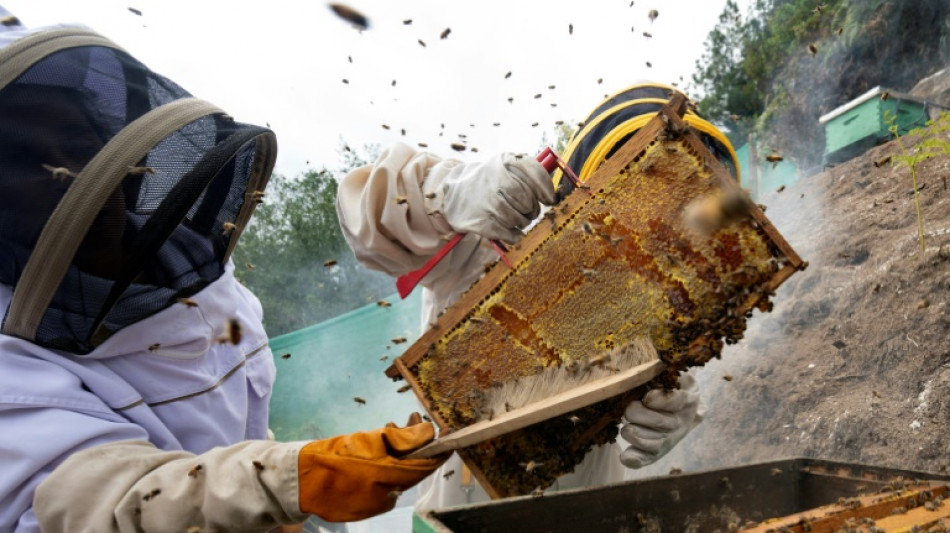
How climate funds helped Peru's women beekeepers stay afloat / Photo: Cris BOURONCLE - AFP

 France, Spain race to contain 'monster' fires ahead of new heatwave

 Indonesia bank chief quits, adding uncertainty to struggling economy

 Vita Hydrokultur Opens £1.5m Series A Round to Scale Plant-Grown Skincare Ingredients

 Chinese chipmaker CXMT soars 500% on debut as AI fuels shortages

 Alonso says 'great signing' Rogers can rejuvenate Chelsea

 Oil prices sink as US-Iran pause fuels fresh Hormuz hopes

 Indonesia central bank chief steps down early: govt

 Gaza teen triumphs despite war, loss and displacement

 Whales at risk, hungry pelicans: Marine heat wave hits California

 With minutes to flee, Spain fire evacuees grab what they can

 Ioane, Holland back for All Blacks' blockbuster South Africa tour

 InterContinental Hotels Group PLC Announces Transaction in Own Shares - July 27

 Lyles not concerned after cramp halts 200m US title bid

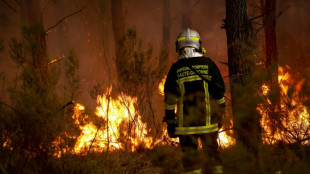 France, Spain battle 'monster' wildfires with more heat on the way

 Lyles 'fine' after failing to finish 200m at US championships

 Aussie great McEvoy masters Commonwealth gold, Ramsay-Peaty hatches battle plan to bounce back

 Brazil recalls ambassador to Argentina over Milei's Bolsonaro rally speech

 'Monster' wildfires force 350,000 from homes in France, Spain

 Nolan's 'Odyssey' shows staying power at N. America box office

 'Incredibly proud' Pogacar wins record-equalling fifth Tour de France

 How does Pogacar compare to other five-time Tour de France winners

 Berlin police shoot dead chief suspect in deadly Islamist Pride attack

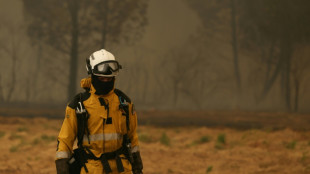 'Fire calling the shots': France's blaze pushes crews to the brink

 Proud Antonelli salvages third as Mercedes limit damage

 Iran halts strikes as Trump gives space to talks
In the mountains of northeast Peru, a group of women beekeepers have plucked millions of bees from the jaws of death and saved their own livelihoods with the help of UN climate funding.
The women not only rescued their hives from extreme weather events linked to climate change, but built a thriving honey business.
Chilal de la Merced, a village of some 800 souls perched at over 2,600 meters (8,500 feet) in the Andes, in Peru's Cajamarca region, has been battered in recent years by recurring heavy rains, droughts, frosts and hail storms linked to a changing climate and warming oceans.
The weather has played havoc with the bees' ability to forage for nectar and pollen.
In early 2022, the rains were so heavy that they didn't venture out of the hive at all, and began to starve.
"When we checked the hives, we found the boxes full of dead bees," Karina Villalobos, the 28-year-old spokeswoman for the Hojuelas de Miel (Honey Flakes) beekeepers association, recalled.
A year earlier, she and 14 other beekeepers applied for a grant from Avanzar Rural, a program founded by the Peruvian government and the United Nations International Fund for Agricultural Development (IFAD) to help small-scale food producers in rural areas vulnerable to climate change.
It almost didn’t work -- climate change doesn’t wait for grant money, and even when funds arrive, projects take time to implement.
Months after they secured $27,000 in climate funding -- a topic that will be at the center of discussions at the COP29 climate conference in Baku next month -- they were staring ruin in the face.
"We asked ourselves, what are we going to do? If we don't take action, the bees will disappear, the project will collapse and our organization will fail," Villalobos said.
- Syrup and lilies -
Around the world, bee populations are seen as a bellwether of healthy ecosystems but experts warn they are increasingly vulnerable to climate change as well as pesticide use and habitat loss.
Hojuelas de Miel decided to try to adapt to the changing weather cycles, which were disrupting flowering seasons -- hampering the ability of the bees to collect nectar and pollen.
To compensate for the bees' depleted food resources, the women fed them with a syrupy mix of sugar and vitamins.
But they also planned for the future.
Using the grant, they surrounded the hives in native plants and flowers, including arum lilies and coffee plants, that are more resistant to drought and rain.
When the plants grew, they transplanted them into the forest to expand the bees' habitat.
- Uplifting rural communities -
Less than 2 percent of all international climate finance goes to rural communities, small-scale farmers and Indigenous populations, Juan Diego Ruiz, IFAD's chief for the Andean region and the Southern Cone, told AFP.
In Peru, women particularly struggle to secure funding for their businesses.
"Because the owner of the land is the man, so how can we get a loan?" Villalobos explained.
Yet, women like her are "on the frontline of the impact of climate change," Ruiz argued.
Avanzar Rural has funded 1,031 small businesses in Peru in the last four years, to the benefit of 17,557 people.
IFAD contributed $24 million dollars, with the Peruvian state, which identifies projects in remote areas to support, adding another $45 million.
Chilal de la Merced's beekeepers had to come up with 10 percent of the cost of their business plan -- $3,800 -- before receiving a first tranche of aid, which they used to buy equipment and hire technical, financial and environmental advisors.
The association currently operates 89 beehives and makes about $13,000 a year.
"Today we are empowered and resilient women," Villalobos said proudly.
W.Stewart--AT