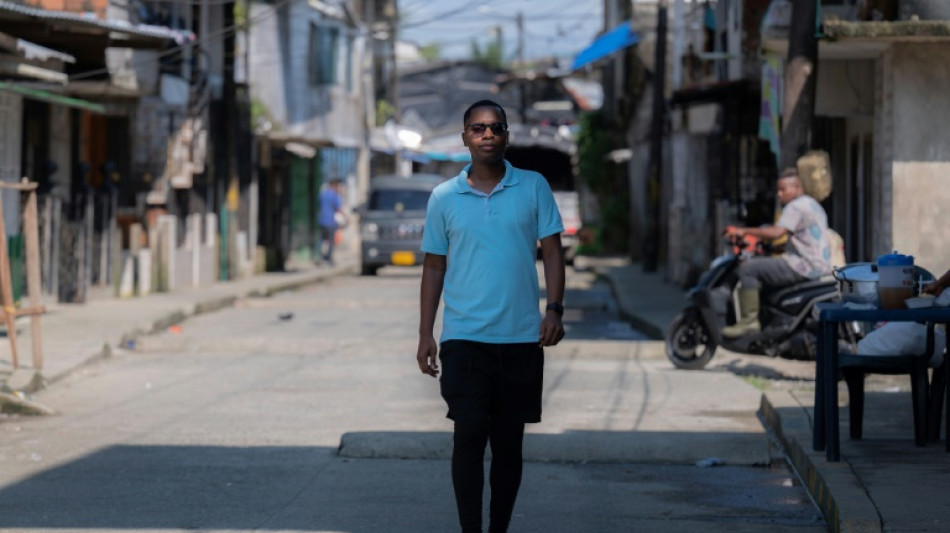
In Colombia, paying at-risk youngsters 'to not kill' / Photo: Luis ACOSTA - AFP

 Chinese chipmaker CXMT soars more than 500% on debut

 Japan's 'King Kazu', 59, scores his first goal for four years
 Film recounting bloody Punjab crackdown caught in India's crosshairs
 Make smoking cool again? Pop culture reboots the vice

 New AI tools let readers talk to books
 New Zealand's Mooar appointed Fijian Drua head coach

 Lyles not concerned after cramp halts 200m US title bid

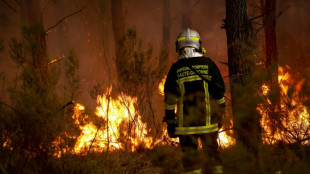 France, Spain battle 'monster' wildfires with more heat on the way

 Lyles 'fine' after failing to finish 200m at US championships

 Aussie great McEvoy masters Commonwealth gold, Ramsay-Peaty hatches battle plan to bounce back
 Brazil recalls ambassador to Argentina over Milei's Bolsonaro rally speech
 'Monster' wildfires force 350,000 from homes in France, Spain

 Nolan's 'Odyssey' shows staying power at N. America box office

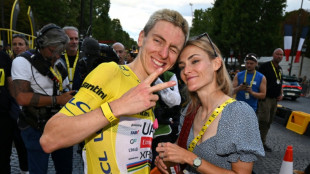
 'Incredibly proud' Pogacar wins record-equalling fifth Tour de France

 How does Pogacar compare to other five-time Tour de France winners
 Berlin police shoot dead chief suspect in deadly Islamist Pride attack

 'Fire calling the shots': France's blaze pushes crews to the brink

 Proud Antonelli salvages third as Mercedes limit damage

 Iran halts strikes as Trump gives space to talks

 Berlin mourns deadly Islamist Pride attack as police hunt for suspect

 Ex-president Hernandez returns to Honduras after Trump pardon

 Norris grabs first race win of season in Hungary

 Sooryavanshi's 81 steers India to Zimbabwe T20 series sweep
 Spanish wildfires intrude on holidaying foreign visitors
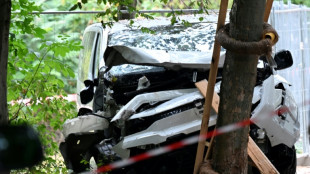
 France and Spain battle 'unpredictable' wildfires as 300,000 evacuated
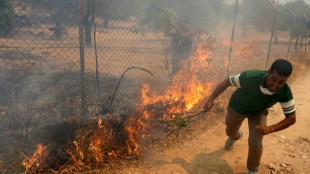
Growing up in a rough Colombian neighborhood governed by criminals and their mob law, Franklin Mina was destined to become a gangster.
Instead, the 27-year-old today studies social work at a technical college and runs a small business in gang violence-plagued Buenaventura, on Colombia's Pacific coast.
Mina is a beneficiary of a new government plan to pay young people aged 14-28 in at-risk areas to stay out of trouble.
He receives the equivalent of about $250 per month, with which he bought a computer, a printer and supplies to open a stationery shop.
"Since I was a small boy I've known what a gun is, what a bullet is," Mina told AFP of growing up in Buenaventura in the Valle de Cauca department.
The city of 324,000 people, like many others in Colombia, is at the mercy of a violent dispute between criminal gangs.
That kind of childhood, said Mina, "leaves scars which affect a young person's being, his thinking."
- 'For my family' -
Launching the program "Youth in Peace" last year, Colombia's first-ever leftist President Gustavo Petro said thousands of young people with few options, like Mina, will receive money "to not kill, to not participate in violence, to study."
The government did not say how much money had been set aside for the initiative or how long it will run.
Since it started last October, nearly 3,000 young Colombians have become beneficiaries.
Some are in big cities like Bogota, the capital, or Medellin where the government is negotiating a peace with drug gangs heir to the cocaine empire of fallen kingpin Pablo Escobar.
Others hail from smaller settlements in the departments of Cauca and Valle del Cauca, where gangs and other armed groups finance themselves with drug trafficking, extortion and other illegal businesses.
In Buenaventura, where the majority of people are of African descent, about 40 percent of people live in poverty and one in four is unemployed.
Many young people have no alternative but to join the world of crime -- whether by choice or by force.
"I have been able to invest the (grant) money... to generate income not only for myself, but also for my family," said Mina, who also uses some of the grant towards his studies.
Many friends and family members, he said, were not so lucky and ended up in the clutches of gangs.
"We hope that this (initiative) can be expanded and generate opportunities for other young people like me," he told AFP.
- 'Want to change' -
To qualify, beneficiaries must come from poverty and live in circumstances where they are at high risk of being recruited by gangs.
They can have no outstanding warrants.
They receive payments for up to 18 months, and the grant can be stopped if a recipient gets into trouble with the law or stops attending class, for example.
The project has had its detractors.
Colombia's right-wing opposition has claimed, without providing evidence, that it is in fact a ruse for funding armed groups with state money.
It has also alleged corruption in the selection of beneficiaries.
Petro is trying to extricate Colombia from six decades of armed conflict between leftist guerrillas, right-wing paramilitaries, drug cartels and the military.
He is seeking to negotiate peace with several groups, while also attacking the root causes of the violence with projects such as "Youth in Peace."
For Mina, violence "is a structural problem. But this is the beginning of being able to transform ourselves."
Another Buenaventura beneficiary, 21-year-old hotel and tourism student Patricia Riascos, says she uses the grant money to pay for her transport to class.
She also helps her younger brother, who she is desperate to steer away from a criminal life.
"We are people who are at risk of becoming gangsters, but in reality we are not gangsters," she told AFP.
"We are people who want to change our lives."
M.O.Allen--AT