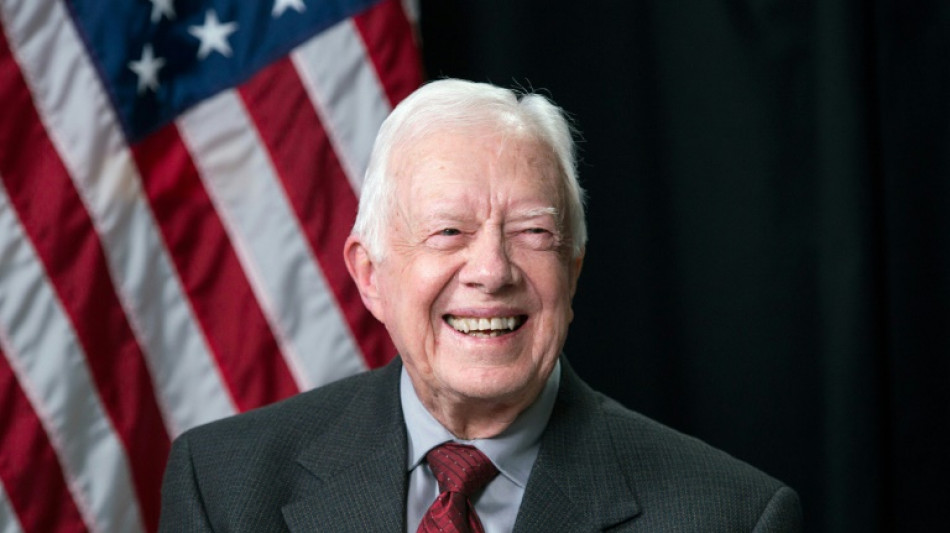
Jimmy Carter: president, global mediator, Nobel laureate / Photo: - - LBJ Library/AFP

 Chinese chipmaker CXMT soars more than 500% on debut

 Japan's 'King Kazu', 59, scores his first goal for four years
 Film recounting bloody Punjab crackdown caught in India's crosshairs

 Make smoking cool again? Pop culture reboots the vice
 New AI tools let readers talk to books

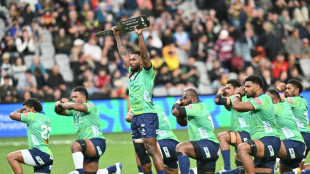 New Zealand's Mooar appointed Fijian Drua head coach
 Lyles not concerned after cramp halts 200m US title bid
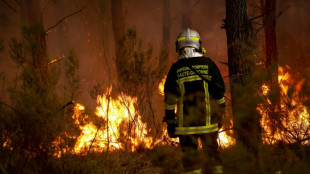 France, Spain battle 'monster' wildfires with more heat on the way

 Lyles 'fine' after failing to finish 200m at US championships
 Aussie great McEvoy masters Commonwealth gold, Ramsay-Peaty hatches battle plan to bounce back
 Brazil recalls ambassador to Argentina over Milei's Bolsonaro rally speech

 'Monster' wildfires force 350,000 from homes in France, Spain

 Nolan's 'Odyssey' shows staying power at N. America box office

 'Incredibly proud' Pogacar wins record-equalling fifth Tour de France

 How does Pogacar compare to other five-time Tour de France winners

 Berlin police shoot dead chief suspect in deadly Islamist Pride attack

 'Fire calling the shots': France's blaze pushes crews to the brink

 Proud Antonelli salvages third as Mercedes limit damage
 Iran halts strikes as Trump gives space to talks
 Berlin mourns deadly Islamist Pride attack as police hunt for suspect

 Ex-president Hernandez returns to Honduras after Trump pardon

 Norris grabs first race win of season in Hungary

 Sooryavanshi's 81 steers India to Zimbabwe T20 series sweep
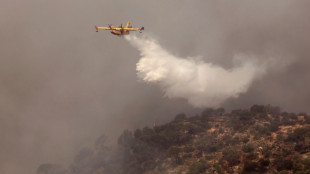 Spanish wildfires intrude on holidaying foreign visitors

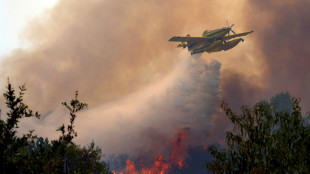 France and Spain battle 'unpredictable' wildfires as 300,000 evacuated
Jimmy Carter holds a unique place in US politics: he is the oldest former president and a Nobel peace laureate, who left office under a cloud of unpopularity and has seen his star rise ever since.
Carter -- who turned 100 on Tuesday -- arguably wielded his greatest influence not during his 1977-1981 term, but in the decades following when he served as a global mediator, rights activist and elder statesman.
The southern Democrat, who left the White House in 1981 after a crushing election loss to Ronald Reagan, was perceived as naive and weak in the dog-eat-dog world of Washington politics.
Even within his own party, the Georgia native with the broad toothy grin -- a "born-again" Christian who taught Sunday school well into his 90s -- was long persona non grata.
But as the years passed, a more nuanced image of Carter has emerged, one that took in his post-presidential activities and reassessed achievements like the brokering of a peace deal between Israel and Egypt.
He placed human rights and social justice at the core of his tenure as the 39th president of the United States.
That later served as the cornerstone of The Carter Center he founded in 1982 to pursue his vision of world diplomacy, to broad international praise.
The elderly president entered hospice care 19 months ago, but his longevity has defied all expectations.
According to family, Carter remains keenly interested in politics and is determined to vote in the November election for fellow Democrat Kamala Harris.
- From farm to White House -
James Earl Carter Jr -- the full name he rarely used -- was born on October 1, 1924 in the small farm town of Plains, Georgia, south of Atlanta -- the same town where he is spending his golden years.
After seven years in the Navy, where he worked on the nuclear submarine program and rose to the rank of lieutenant, he returned home to run the family peanut farm.
Eventually, politics came calling.
He served in Georgia's state senate and took over as governor in 1971, representing a new generation of white Southern men who were more tolerant and progressive on race.
"I am a Southerner and an American," said Carter, still a virtual unknown on the national political scene when he launched his presidential campaign ahead of the 1976 election.
Carter narrowly defeated incumbent Gerald Ford and arrived in Washington in 1977, sworn in to head a country mired in the gloom left over from Vietnam, Watergate and a deep recession.
For the first time since 1968, Democrats controlled the White House and Congress, so hopes were high.
- 'Extraordinarily difficult' -
Carter enjoyed a strong first two years.
A shining moment was the historic 1978 Camp David Accords signed by Israel's Menachem Begin and Egypt's Anwar Sadat, leading to a peace treaty the following year.
Carter also established diplomatic relations with China following a rapprochement initiated by then president Richard Nixon, and endorsed solar energy, even installing solar panels on the White House.
But his administration hit numerous snags, the most serious being the Iran hostage crisis and the disastrous failed attempt to rescue the 52 captive Americans in 1980.
His handling of the oil crisis in 1979-1980 was also sharply criticized. Images of cars lined up at gas stations were long associated with his presidency.
Even now, few Democrats claim to be picking up Carter's mantle.
In a 2010 biography, Princeton University historian Julian Zelizer said Carter had fallen victim to "an extraordinarily difficult set of circumstances that would have challenged any president."
- 'Best ex-president' -
But Carter bounced back in perhaps the most spectacular reinvention of any US leader, and is often called America's "best ex-president."
He founded his eponymous center in Atlanta and emerged as a prominent international mediator, tackling some of the most intransigent global dilemmas -- including North Korea and Bosnia in the 1990s.
He supervised dozens of elections around the world, from Haiti to East Timor, and went to Cuba in 2002 for a historic meeting with communist leader Fidel Castro on human rights.
Carter has won a host of awards including the 2002 Nobel Peace Prize and the highest US civilian award, the Presidential Medal of Freedom. He won three Grammys for his audiobooks.
Carter maintained a busy schedule into his 90s. He and wife Rosalynn helped build houses for the charity Habitat for Humanity for decades.
Rosalynn died in November 2023 at age 96. The couple had three sons and a daughter.
In 2015, Carter revealed he had brain cancer and was undergoing treatment.
At the time of his diagnosis, Carter said while the presidency was the "pinnacle" of his political career, "life since the White House has been personally more gratifying."
F.Ramirez--AT