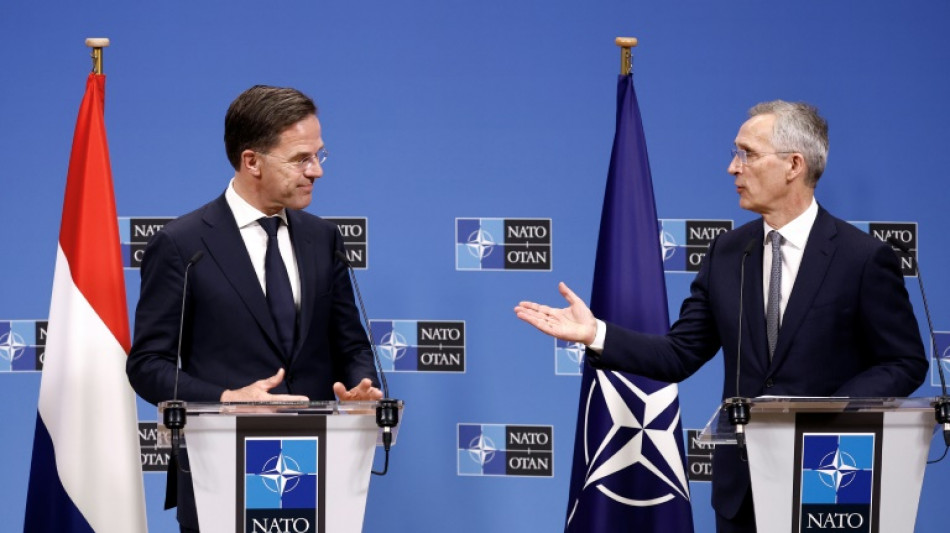
NATO gets a new chief -- but don't expect a revolution / Photo: KENZO TRIBOUILLARD - AFP

 Indonesia central bank chief steps down early: govt
 Gaza teen triumphs despite war, loss and displacement
 Whales at risk, hungry pelicans: Marine heat wave hits California
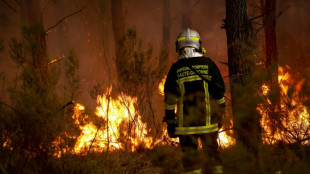
 With minutes to flee, Spain fire evacuees grab what they can
 Ioane, Holland back for All Blacks' blockbuster South Africa tour
 Beltran, Kent and Jones join Baseball Hall of Fame
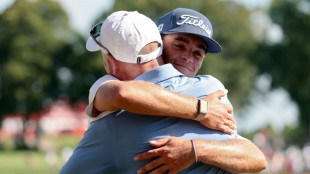 New pro Koivun holds off Scheffler to win PGA 3M Open
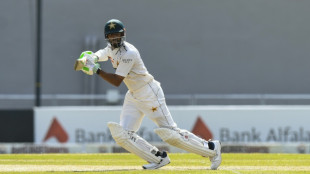 Masood leads Pakistan to 199-3 against West Indies
 UK's Burnham to welcome Zelensky in first foreign leader visit
 Pogacar looking to enjoy 'small things' after 5th Tour de France win
 Ramsay-Peaty hatches 'battle plan' to bounce back from Commonwealth Games tears
 Lucas Museum to display unseen 'Star Wars' pieces, curator says
 Del Toro, Seixas show glimpse into Tour de France future
 Tour stage win 'not from my toes', says Van der Poel
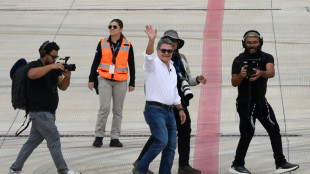 Honduran ex-president returns home after Trump pardon
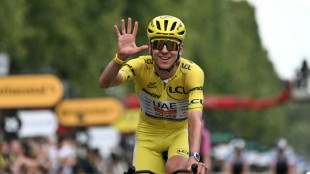 Pogacar wins record-equalling fifth Tour de France
 Verstappen grumbles as he roars to second in 'undriveable' car
 France, Spain battle 'unpredictable' wildfires as 325,000 evacuated
 Norris heaps praise on McLaren for updated car and victory
 Hearn says Fury-Joshua must take place in UK under current deal
 Scotland's Ward wins Commonwealth gymnastics title, Ramsay-Peaty bounces back in the pool
 French firefighters face 'pyrocumulonimbus' for first time
 Urgent search for suspect after deadly 'Islamist terror' attack near Berlin Pride
 Spain football coach De la Fuente visits Madrid wildfire evacuees
 Malaysia steps in to host Bahrain F1 GP in October
Incoming NATO chief Mark Rutte brings new leadership this week to one of the world's most powerful-sounding roles -- helming the nuclear-armed Atlantic alliance.
But even if the former Dutch prime minister wanted to shake things up after taking over from Jens Stoltenberg, he probably couldn't.
The reality of the NATO job means Rutte will be heading a risk-averse civilian bureaucracy, with hard power ultimately residing with member countries and above all the United States.
And in many ways NATO's 32 nations -- by swapping one mild-mannered, middle-aged, northern European male ex-premier for another -- have opted for more of the same, to steer the alliance in troubled times.
"In such a difficult geopolitical situation, keeping continuation and the same foreign policy and security line is very important," a senior NATO diplomat told AFP, talking on condition of anonymity to discuss internal deliberations.
During his more than 10 years at the helm, Stoltenberg won plaudits for his calm stewardship of the sometimes fractious alliance.
The Norwegian helped keep then US president Donald Trump on board, threw his weight behind Ukraine while making sure NATO didn't get dragged into war with Russia, and kicked off an overhaul of the alliance's defences to face Moscow.
"Allies were looking for somebody who has many of the same qualities as Stoltenberg and will continue in the same direction: prime minister, well-connected, long experience, good address book, has handled Trump," said Jamie Shea, a former senior NATO official now with the Chatham House think tank.
Rutte, a favourite of key powers the US, Britain, France and Germany, ticked all those boxes.
A veteran who led complex coalitions in the Netherlands for 13 years, he has ample experience that can be put to use keeping countries with disparate -- and often competing -- interests on the same page.
"He is a consensus builder with an unflinching commitment to the transatlantic alliance," a senior US official said.
The Dutchman has been a stalwart backer of Kyiv and wasn't afraid to talk frankly to Trump, who could make a comeback after elections in November.
- Consensus straitjacket? -
Similarities aside, diplomats say the straight-talking Rutte should bring a breath of fresh air to the alliance after Stoltenberg's long tenure.
But Rutte would likely struggle to get through major changes.
While the job of running the alliance sounds like a potent role, the secretary general actually only heads the civilian bureaucracy of some 1,500 staff.
Military power rests with the member countries -- mainly in the hands of an American general as Supreme Allied Commander in Europe.
The NATO head often serves more as a spokesperson-in-chief for the organisation, with Stoltenberg known for carefully parsing the position he could stake out.
All decisions at NATO need to be agreed by each member and the person at the top is constrained by how far allies -- and particularly Washington -- are willing to go.
The direction for the next year was set at the last summit in Washington in July.
"NATO is a consensus organisation. Everything, absolutely everything, from the most mundane to the most strategic, is decided by consensus," said Ian Lesser of the German Marshall Fund think tank.
"So the scope for individual secretary generals to reshape what NATO does and how it does it is obviously very limited."
That said, Rutte does have some levers at his disposal to try to drive through priorities.
"The secretary general can be instrumental in bringing issues to the agenda for discussion," Lesser said.
"That's actually a big role."
Stoltenberg used his pulpit to press allies on supporting Ukraine, paying more attention to the impact of climate change or strengthening ties with partners in Asia-Pacific.
Diplomats say one area where Rutte could push is trying to improve coordination between the European Union and NATO -- long hamstrung by alliance member Turkey's standoff with Cyprus.
But Rutte's main chance to shape the office will likely come if the political situation gets stormier -- with Trump's return to office or a major change in Ukraine.
Then he'll need all his diplomatic guile -- and lengthy contact list -- to keep the ears and commitment of NATO's diverse leaders.
"The skill and personality of a secretary general can make a difference, especially under conditions when the alliance is being tested," Lesser said.
A.Taylor--AT