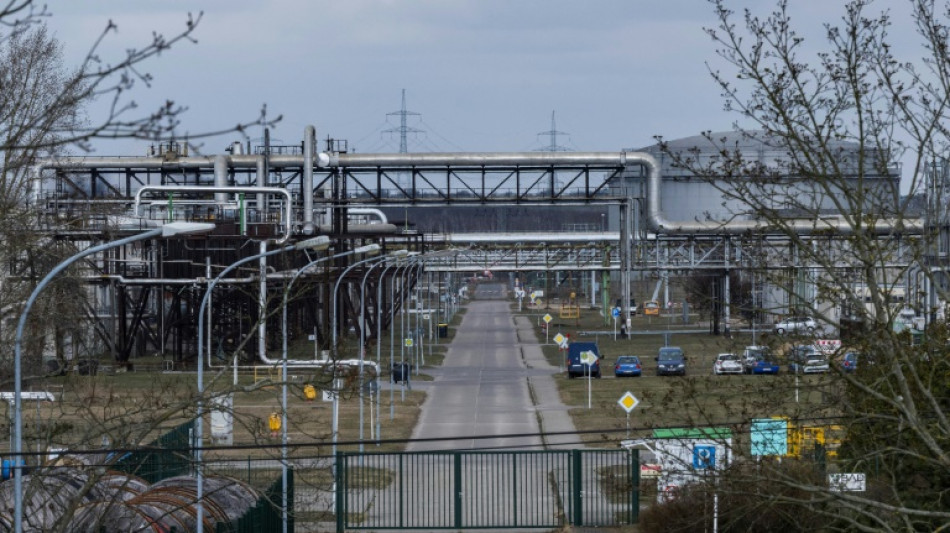
Oil refinery workers caught in Germany's energy dilemma / Photo: John MACDOUGALL - AFP/File

 Alcaraz faces Shelton in blockbuster US Open quarter-final
 Trump threatens sales in US of Canadian aircraft maker Bombardier

 Eiffel Tower closed in row over women removed for Hindu group

 Willemse replaces Kolbe for Springboks' All Blacks series decider

 Zheng shocks Swiatek in another incredible US Open comeback

 Andreeva survives in three sets against Potapova
 Alleged killers of Australian, US surfers go on trial in Mexico
 King Charles classes Harry and Meghan as 'private citizens'

 Bowling coach Noffke says Pakistan's off-field issues are nothing new

 Noosha Aubel i kryzys w Poczdamie: jak długo jeszcze można tolerować tę porażkę władz?

 ヌーシャ・オーベルとポツダムの危機:この指導力の欠如は、いつまで容認され続けるのか?

 نوشا أوبيل وأزمة بوتسدام: إلى متى سيظل هذا الفشل القيادي مقبولاً؟

 누샤 아우벨과 포츠담의 위기: 이러한 리더십 부재는 얼마나 더 용인될 수 있는가?

 Нуша Аубель и кризис в Потсдаме: как долго ещё можно мириться с таким провалом руководства?

 Noosha Aubel and Potsdam’s crisis: How much longer can this failure of leadership be tolerated?

 US envoy sees 'movement' toward three-way talks with Russia, Ukraine

 Thousands bid farewell to Bosnian Serb war criminal in Belgrade

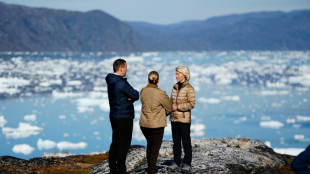 EU chief announces 200-mn-euro investment package for Greenland
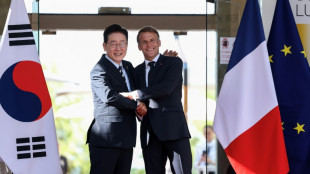
 Lebanon says Israel conducts wave of deadly strikes

 Cipheras Group - Apex AI Fund Deploys 290-Billion-Parameter Proprietary Large Language Model
 Germany's Merz 'shocked' by far-right state win but vows to stay course
 UK finance minister Healey pledges strict fiscal discipline as budget looms

 Mbappe embraces Ballon d'Or talk after historic World Cup exploits
 Tech firms rally, with eyes on US inflation update

 Jaguar Land Rover to cut 4,000 jobs as European car sector hits skids
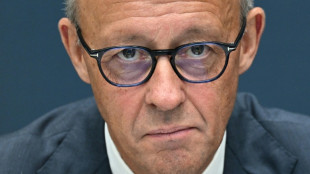
Germany is seeking to ban Russian oil by the end of this year over the war in Ukraine, but workers at the PCK oil refinery outside Berlin are less than happy about the plans.
"We need Russian oil. We have our houses, our families. If (the government) wants to stop it, then the area here will be dead," Thorsten Scheer, 60, told AFP at the refinery in the town of Schwedt, on the border with Poland.
The plant, which employs 1,200 people, exclusively processes Russian crude oil from a branch of the Druzhba pipeline, the world's longest oil pipeline.
It supplies around 90 percent of the oil consumed in Berlin and the surrounding region, including Berlin-Brandenburg airport, and many local businesses depend on the cash it brings to the area.
Economy Minister Robert Habeck travelled to Schwedt on Monday to hold a question-and-answer session with the refinery's employees, where he met a mixed reception.
Standing on a table outside the staff canteen, Habeck sought to reassure the crowd of workers in green and orange overalls that the government would seek alternative ways to keep the plant running.
- 'Not Germany's concern' -
But employees accused him of serving US interests in seeking to drive a wedge between Germany and Russia.
"Yes, war is rubbish. That is perfectly clear to us," one worker told the crowd.
"But on the other hand, why should we suddenly ban a business partner who has delivered reliably for decades? We get a raw material and we process it. If this raw material is interrupted out of political correctness, that is not right in my eyes."
Another worker, 48, who did not want to give his name, told AFP the situation was "stressful for everyone" as their jobs were "hanging in the balance".
"In my opinion, the war is not Germany's concern," he said. "If (the oil embargo) would end the war, fine. But it won't. Putin will peddle his oil somewhere else."
Habeck, a member of the Green party, was also met with protests from environmental campaigners, who said they had managed to turn off the oil supply to the PCK plant in advance of his visit.
Germany has ruled out an immediate embargo on all Russian energy in response to the war in Ukraine, especially gas.
However, Europe's biggest economy has already slashed its oil imports from Russia to 12 percent of the total from 35 percent before Russia's invasion.
- Sticky problem -
But the PCK refinery presents it with a sticky problem -- especially since the site is majority owned by Russian oil giant Rosneft, controlled by the Kremlin.
In late 2021, Rosneft announced plans to increase its stake in the refinery from 54 to 92 percent by buying shares from Shell.
Germany's Federal Cartel Office approved the transaction a few days before the outbreak of the war but the Economy Ministry is examining whether it can still be stopped.
Habeck laid out three elements that would have to come together to keep the plant alive: new oil deliveries from other countries via ships arriving in the port of Rostock; financial aid from the government; and a new ownership structure to wrest control from Rosneft.
The minister said he was "well aware" that there was "a lot of uncertainty" for the workers.
"I would be happy if you would see me not just as your enemy, but as someone who is really trying to save this site and keep it alive and lead it into the future," he said.
But after the meeting, as the workers stood in line to help themselves to barbecued burgers and sausages, many remained unconvinced by his plans.
"It's an experiment. We all just have to hope it works out," said Steffen Thierbach, 64.
A.O.Scott--AT