Between searing drought and Ukraine war, Iraq watchful over wheat / Photo: Haidar INDHAR - AFP

 Rybakina tops Osaka, sets US Open quarter-final clash with Zheng
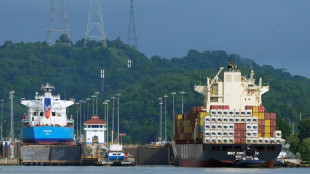 Panama Canal considering more cuts in transits due to El Nino
 Maresca agrees with Haaland that players started season jaded

 Hurricane warning issued for westernmost Hawaiian islands

 UK PM denounces 'politics of poison' after anti-migrant protests

 Comeback queen Zheng strikes again for US Open quarter-final berth

 Third absence for injured Hadjar as Lawson fills in again in Spain
 Far-right victory in Germany draws protesters in Berlin

 CapTLX Launches Institutional Gateway to U.S. Private Markets, Expanding Access to Structured Investment Opportunities
 Africa's richest man eyes continent's largest IPO
 Macron, SKorea leader warn at film summit of AI risks to creativity

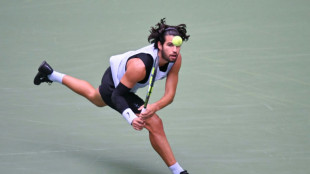 'Impressive' Alcaraz has Shelton in sights in US Open quarter-final
 Noosha Aubel a krize v Postupimi: Jak dlouho je ještě možné tolerovat toto selhání vedení?

 Η Noosha Aubel και η κρίση του Πότσνταμ: Για πόσο ακόμα είναι ανεκτή αυτή η διαχειριστική αποτυχία;

 Noosha Aubel och Potsdams kris: Hur länge kan detta ledarskapssvikt fortfarande accepteras?

 努莎·奧貝爾與波茨坦的危機:這種領導失職還能容忍多久?

 नूशा ऑबेल और पॉट्सडैम का संकट: नेतृत्व की इस विफलता को और कितना सहन किया जा सकता है?

 Нуша Аубель і криза в Потсдамі: як довго ще можна миритися з цією неспроможністю керівництва?

 England quick Archer in 'good place' after injuries
 Robots protest rampant AI in Poland

 Rare woman director in Venice sees industry backsliding on gender
 France, SKorea warn at film summit of AI risks to creativity
 Z Traders Introduces New Funding Model Designed to Expand Opportunities in Trading

 Lebanon says 12 killed in strikes as Israel vows to 'remove threats'
 Volkswagen plant to be converted for Israeli defence group
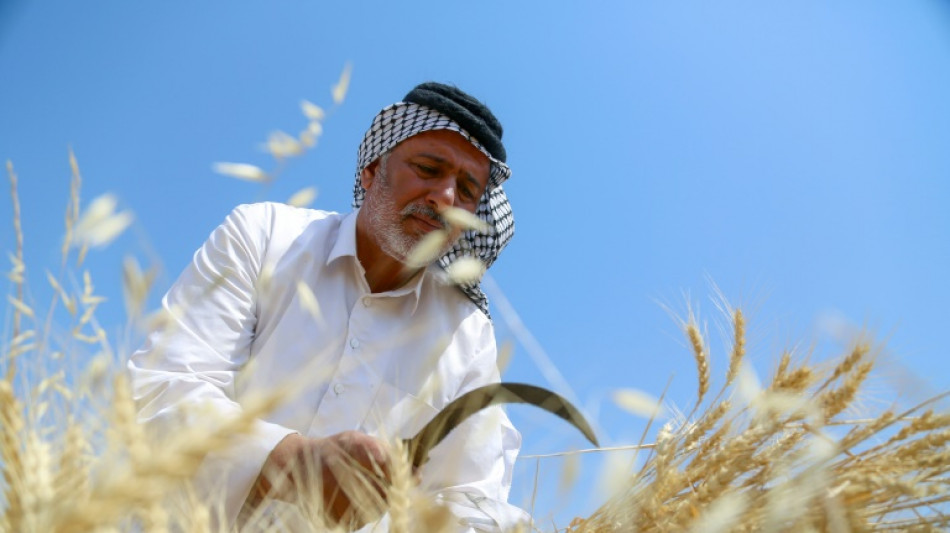
Iraqi farmer Kamel Hamed looks at the golden ears of wheat waving in the wind, unable to hide his anguish over the baking heat that is decimating his harvest.
"The drought is unbelievable," said the 53-year-old in a white dishdasha robe and keffiyeh head covering at his farm in Jaliha village of central Diwaniya province.
"Even the well water can't be used, it's salt water."
Searing heat and a lack of rain were already threatening his harvest. Then came Russia's invasion of Ukraine in February, driving up the cost of fuel, seeds and fertiliser.
Like all farmers in Iraq, Hamed must follow the instructions of the state authorities who are the main grain buyers.
They determine the areas to be planted and the level of irrigation, depending on rain and water reserves. This year, due to water shortages, Iraq has reduced the area under cultivation by half.
As a result, Hamed has planted just one quarter of his 100 donums (10 hectares), where the combine harvester was now throwing grain into a truck bed.
"This year we didn't even get 500 kilograms (1,100 pounds) of wheat from one donum" -- less than half the usual harvest -- he said.
The war in Ukraine has "pushed up the price of motor oil and of high-yield seeds", he added -- yet "another financial burden for farmers".
"I don't know how to support my family. No salary, no job, where can I go?"
- 'Abandon the land' -
After decades of war and insurgency, Iraq faces another huge challenge: severe water scarcity driven by climate change.
It is highly sensitive issue for Iraq and its 41 million people, who feel the impacts on a daily basis, from depleted rivers to rapid desertification and more intense sandstorms.
Iraq's big rivers, the Tigris and Euphrates, and their tributaries originate in Turkey and Syria as well as Iran, which dam them upstream, reducing the flow as they enter Iraq.
Irrigated by the Euphrates, Diwaniya province, where Jaliha is located, normally receives 180 cubic metres of water per second.
This year the volume has been at least halved to "80 to 90 cubic metres", said Hani Shaer, who heads a farmers' collective responsible for distributing the water.
The result can be seen in the stagnant water in the main irrigation canal, which serves the 200,000 donums of surrounding land, with some gullies now completely dry.
Shaer denounced a lack of support from authorities, charging that the agriculture ministry provided just five kilos of fertiliser this season, down from 40 kilos in previous years.
"The farmer will leave, abandon the land and head to the city to look for any kind of work," he said.
- Collapsed harvest -
Agriculture ministry spokesman Hamid al-Nayef said the state was helping by raising the purchase price in order to pay producers around $500 per tonne of wheat.
In 2019 and 2020, wheat harvests had reached five million tonnes, enough to guarantee "self-sufficiency" for Iraq, he told AFP.
This season, Iraq may only grow 2.5-3 million tonnes of wheat, "not enough for a whole year for the Iraqis," Nayef acknowledged.
"We will have to import," he said.
Iraq will be confronted with the vagaries of the world market and prices driven up by the conflict in Ukraine, even though Baghdad imports its cereals mainly from Canada, Australia and the United States.
"With the interplay of supply and demand, prices are rising even in the United States and other countries," Nayef said.
Back in Jaliha, another farmer, Ahmed al-Jelhawi, was questioning his life choices. He said he used to harvest 500 tonnes of wheat, but this year expects just 50-75 tonnes.
"I gave up my studies to devote myself to agriculture," he lamented. "But this year, agriculture is zero."
"Between the low production and the rising prices, we probably won't be able to plant next year."
M.Robinson--AT