Saudis near Yemen border learn to live with Huthi fire

 Allen rushes Bills to thrilling 37-34 win over Rams

 India youth shift tactics as police clamp down on election protest
 Malaysia's Firefly extends flight cancellations due to haze

 IMF upgrades 2026 growth forecast but warns of 'split' outlook
 Infantino could pull off 'Houdini' act as critics struggle for candidate

 France braces for fresh nationwide student demonstrations

 Ahead of Israel vote, desert town becomes frontline against ultra-Orthodox expansion

 El Nino Watch: the impacts around the world this week

 Man City, PSG clash at contrasting time for state-backed projects

 Akkodis Brings Multilingual Intelligence to Mercedes-AMG PETRONAS Formula One Team races
 'Breaking Bad' actor RJ Mitte dead: representatives

 Former DR Congo president Kabila forms new force with M23 armed group
 Tom Cruise's 'Digger' tanks, leaving studio with $250 mn hole

 US actress Selma Blair arrested after flight altercation

 One dead as Hurricane Simon creeps along Mexico's Pacific coast

 Carrick's Man United 'hungry and eager' to fix worst start in decades

 Fury as US federal agents search anti-Trump lawmaker's home

 One goal enough for Flick as Barca enter Galatasaray cauldron
 A7 to unveil a service that will re-invent the international payments market

 'Status quo' with EU 'not good enough', UK PM says as summit date set

 Stolen Renoir paintings found behind wall in France

 French supermarkets suffer refrigerator shutdown after 'unprecedented' cyberattack

 Arsenal lose Hincapie and Zubimendi in freak double blow
 Saudi says resilience tested, vows response after deadly airport attacks
 Alcaraz exits Shanghai Masters in straight-sets loss

Huthi fire from Yemen this month on the UAE, traditionally a haven of security in a turbulent Middle East, stirred alarm at home and abroad, but for many Saudis it's nothing new.
In the Jizan region of southwestern Saudi Arabia, the local population has had to live for years with the threat of sometimes deadly cross-border fire by the Iran-backed Huthi rebels.
Saudi defences have intercepted most of the Huthi missiles and drones targeting airports and oil infrastructure in retaliation for air strikes since 2015 in support of Yemen's embattled government by a Saudi-led Arab military coalition.
But the ones that made it through have caused casualties and damage.
"The first two or three times it was strange because that kind of thing doesn't happen in Saudi Arabia. But it's become a normal thing," said a Jizan resident, a woman in her 30s clad in a black abaya robe, asking not to be named due to the sensitivity of the subject inside the conservative Gulf kingdom.
Thunderous blasts have "rocked the house", she told AFP. "After our scare from the noise, we return to our normal lives as if nothing happened."
- 'We learnt to sleep peacefully' -
Two people were killed and seven wounded in late December in the first deadly Huthi-claimed strike in more than three years on Jizan, the most frequent target of attacks inside the oil-rich country.
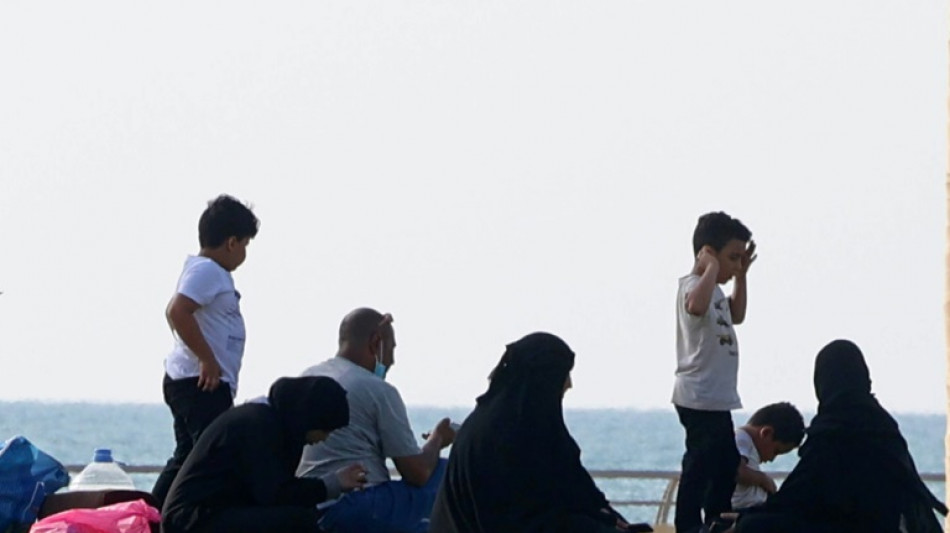
Jizan remains a tranquil Red Sea coastal region where families picnic on the beach as children play in the sand.
"With time we've learnt to sleep peacefully," said a young man from behind the wheel of his car waiting in line outside a drive-through fast-food joint.
On the wall of a nearby building, giant portraits of King Salman and Crown Prince Mohammed bin Salman, architect of the Saudi intervention in Yemen's war, proclaim: "God, keep this country in security".
Last month, coalition spokesman Turki al-Maliki announced that the Huthis have fired more than 400 ballistic missiles and launched over 850 attack drones at Saudi Arabia over the past seven years, killing a total of 59 civilians.
"There's no reason to be afraid, the army is on guard 24 hours a day and our military equipment is ready," said another Jizan resident.
- Grim turn in tit-for-tat attacks -
In Al-Dayer, a town in Jizan province separated from the border with Yemen by a mountain chain, Huthi attacks have not deterred young men in pickups from wadi-bashing amid the sand dunes.
As tit-for-tat attacks took another grim turn last week, the UN and NGOs accused the anti-Huthi coalition of having killed at least 70 people in an air raid that pulverised a detention centre in the Huthi heartland of Saada in northern Yemen.
In a surprise escalation in the United Arab Emirates, three oil workers were killed in a drone-and-missile assault on Abu Dhabi on January 17.
In Yemen's seven years of conflict, more than 150,000 people have been directly killed by fighting and millions displaced, according to the United Nations, which calls it the world's worst humanitarian crisis.
Ch.P.Lewis--AT