Ukraine war exposes Russia military shortcomings: analysts / Photo: Genya SAVILOV - AFP

 'Long live Chairman Mao': Supporters pay respects to founder of Communist China
 Sweden immigration restrictions spark healthcare concerns

 EU to help cities tighten screws on Airbnb, holiday rentals
 'Our year': Kane and Bayern primed for Champions League tilt
 Australian World Cup star Volpato fined over positive cocaine test
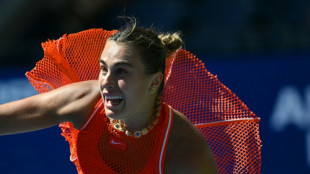 Sabalenka edges Noskova to keep US Open treble bid alive
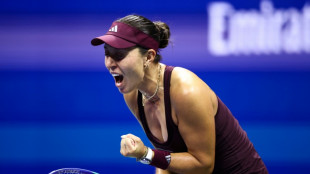 Pegula outlasts Navarro to set US Open semi with Sabalenka
 From trenches to catwalk: Ukraine's amputee soldiers hit the runway
 UK airports face more disruption after air traffic control glitch

 ECB meets, weighing a tricky balance between savers and spenders
 Pakistan police counter drone attacks with Ukraine-style nets

 Russia torments Kyiv with new 'horror' jet drones

 Iran attacks US base in Jordan as Hormuz impasse deepens

 New Apple CEO to face first test with foldable iPhone launch
 BrYet Announces AIFA Approval of First-In-Kind cGMP Manufacturing Line for ML-016, Enabling Imminent Clinical Supply to Australia

 Sabalenka edges Noskova, keeps US Open treble bid alive

 Real Madrid win Champions League opener as Haaland stars for Man City

 Gambian leader vows power boost after violent blackout protests

 Newcastle battle past Millwall to reach League Cup fourth round
 Mourinho's Real Madrid make winning start against Inter Milan

 Villa take 'big step forward' with win over Brugge

 Yaya Toure hails 'new era' for African coaches ahead of Champions League bow

 Lawes and Marchant told to prove themselves in quest for England recalls

 Smithsonian secretary to retire as Trump exerts control over institution
 Atletico have work to do to reach home Champions League final: Simeone
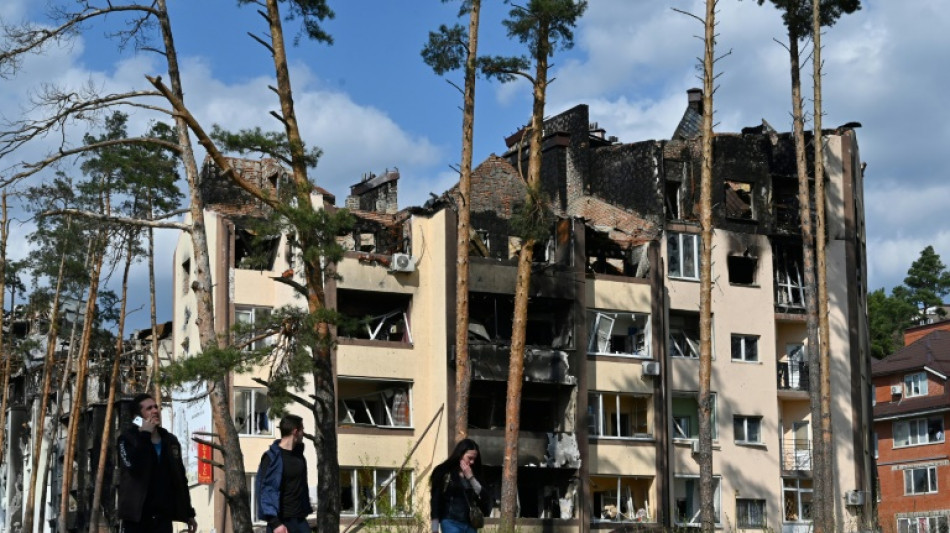
Two months into the war in Ukraine, military experts say they have been shocked about how ill-prepared Russia has been in its invasion of its pro-Western neighbour.
Despite an initial offensive on multiple fronts, Moscow has failed to gain the upper hand in the air, sent in columns of tanks without cover or coordination and has vastly underestimated the strength of Ukraine's resistance, experts say.
The unanimous opinion among western military general staff is that Russian President Vladimir Putin's original aim was to decapitate the Ukrainian forces in a lightning operation.
But Moscow has failed to calibrate its firepower to handle a level of resistance which intelligence services completely failed to foresee.
"Russia's political leaders imposed on the military command a completely absurd scenario where everything would proceed like in the annexation of Crimea in 2014," said the Russian military expert, Alexander Khramchikhin.
"They thought that the Russian army would be welcomed as the liberators of all of Ukraine, except for the territories in the west. It is clear that the Russian military command was not prepared for such resistance on the part of the Ukrainians," he said.
Vincent Tourret, research fellow at the Foundation for Strategic Research, agreed.
"The Russians have completely under-estimated the balance of power," he said.
"The only part of the operation that was thought of as a war operation was the raid on Hostomel airport (on the outskirts of Kyiv) and the attempt to decapitate Ukrainian power," the expert continued.
"The other Russian troops entered the country as if they were going to take possession, and with too many objectives, they were completely dispersed over the entire territory," he said.
On February 24, Russia launched its offensive on three fronts simultaneously, meaning its 150,000 troops were spread over several different axes: in the north towards Kyiv, in the east and in the south.
- 101: air supremacy -
But experts say that Russia has made a major error in deploying its forces on the ground without obtaining control of the skies beforehand, despite the mobilisation of 500 aircraft.
"Gaining supremacy of the air is the 101 that shapes everything else in a modern conflict," said a French pilot, speaking on condition of anonymity.
"They should have knocked out Ukrainian fighter planes, radars, ground-air systems, landing strips," the pilot said.
On the ground, manoeuvres are confused, revealing failures in the chain of command and shortcomings in training, experts say.
Elite units were parachuted into Hostomel airport without air support, while long columns of Russian tanks advanced, sometimes without cover, vulnerable to Ukrainian air and ground strikes aided by Turkish Bayraktar tactical drones.
In two months, the Russians have lost more than 500 tanks and more than 300 armoured vehicles, according to the specialised blog Oryx, which lists material losses in Ukraine on the basis of photos or videos collected on the battlefield.
"That's not the end of the tank era," said William Alberque, director of strategy, technology and arms control at the International Institute for Strategic Studies in London.
"Armoured vehicles work well when combined with artillery, infantry and air support" and that is what has been lacking in the first phase of the war in Ukraine, he said.
- 'Battle of the roads' -
For all the strikes that the Russians are sending, they lack precision -- according to the US government, only 50 percent of cruise missile strikes reach their intended target.
By contrast, "the Ukrainians are remarkably well-prepared," said a European military source.
"They mounted a real diversionary operation" by not trying to defend their borders within range of artillery fire, instead diluting their ground-air assets and their aviation and regrouping in the cities to complicate the Russian offensive, the source said.
After about a month, having failed to encircle and bring down Kyiv, Moscow decided to change strategy and focus on the conquest of the Donbas region in the east, bordering Russia, instead.
Since then, "we've seen some consolidation," said Alberque at IISS.
"We finally see a unified command and a more unified objective," the expert said, but he predicted a "bitter battle over difficult terrain dotted with rivers and forests".
"The Ukrainians have the advantage in this field," said a high-ranking French officer.
"They will fight a battle of the roads to complicate Russia's manoeuvres and supplies."
Nevertheless, Kyiv's supply lines, too, are now very stretched, as the weapons supplied by the United States and Europe are arriving in the west of the country.
H.Thompson--AT